

It’s easy to feel stuck when house decor just adds more things with no real effect. Overstuffed rooms, awkward gaps, and mismatched leftovers often signal a deeper problem: there isn’t a clear plan, just a series of quick fixes. Living with that muddle can make home feel less calm, more like a list of chores that never quite gets done.
Today, you’ll see how to make small, specific choices that help real homes feel finished. You’ll learn what to keep and what to skip. This works especially well in a small bedroom when you have rental limitations because clear, simple choices keep everything focused and peaceful.
The short version: House decor that works in real homes isn’t about adding more objects—it’s choosing a clear anchor, then styling around it with intent. A calm space starts with fewer, well-placed pieces and purposeful materials. There’s no need for guesswork.
Key takeaways
- House decor works when one focal object anchors a room and other pieces take supporting roles.
- Materials like linen, jute, and matte ceramics feel natural and don’t date quickly.
- Unique home decor looks different from neighbours’ homes by switching out high street sets for one or two handmade accents.
- Room decor that feels unfinished usually lacks contrast or collects too many small items.
- Autumn decor doesn’t mean buying a whole set—one or two changes in texture or scent can mark the new season.
- What does house decor actually mean in practice?
- Where this works best
- How do you start when your rooms feel busy but unfinished?
- Small budget, real difference: what should you prioritise first?
- Unique home decor: how to avoid the identikit high street look
- How to refresh for autumn without overdoing it?
- Styling and placement

What does house decor actually mean in practice?
House decor means choosing a few strong, useful pieces that set the mood and shape the space, not just adding more things. Small touches and practical changes matter more than just filling empty corners.
House decor is more than buying trendy objects or matching sets. It means looking at what each room actually needs and choosing one or two items to set the tone—like a woven basket by the sofa or a clay lamp on the hallway table. A space that makes sense always feels better than one trying to impress.
In a family living space with toys and remotes everywhere, a large lidded basket keeps drama at bay. The basket tucks away clutter, softens the corner visually, and can move easily if needed—far simpler than another shelf filled with more small decor. A woven basket outperforms another thin vase here.
Plain glass vases can feel cold on a wooden table, but a jute-wrapped jar adds softness and breaks up the hard surfaces. A single textured piece can do more than layering competing patterns and shapes. The effect works because the eye stops, rests, and still notices something new.
Where this works best
House decor choices made for real homes work best in rooms with too much clutter, limited light, or awkward corners. Focusing on one spot keeps the space calm and easy to use.
Busy family living rooms, small apartments, and entryways with limited storage all benefit from a clear anchor. Choosing one main piece, like a large fabric planter or a handmade bowl, solves the problem of flat, scattered decor and brings a gentle focus. When surfaces compete for attention, rooms feel confusing instead of cosy.
This is practical in rental homes where fixing shelves or painting isn’t allowed. A tall woven basket in a corner or a run of matching natural boxes under a bench sorts loose items without drilling or marking walls. The change is simple and low-commitment. A natural material like wicker rises above plastic bins in the same conditions because it doesn’t stick out or look temporary.
Avoid crowding small rooms with too many small objects lined up—it’s a common mismatch. A bare shelf reads colder than one with a single linen-wrapped book stack or a bulbous clay vase. The key is not to overwork the space or copy every trend seen online.
How do you start when your rooms feel busy but unfinished?
Start by picking one area—like a coffee table or a window ledge—and clear away every object that isn’t used weekly or loved deeply. Then choose one item with a pleasing shape and grounding texture to stay.
A cluttered shelf or tabletop usually signals a lack of decision, not a lack of stuff. Instead of arranging more trinkets, remove everything first. Try one low, chunky bowl or a single candle with soothing scent—in that emptier space, the eye knows where to rest.
People often add more small pieces hoping to fill gaps, but this quickly feels crowded. Removing things shows which corners really need attention and reveals when a surface is better left blank. The biggest difference comes from anchoring a spot with a tactile piece—a glazed ceramic plate or a stack of folded linen—something both practical and pleasant to touch daily.
Unlike adding sets of small figurines or decorative stones, picking one material and repeating it once or twice nearby creates a subtle link across the room. This principle helps keep even mixed styles feeling steady.
Small budget, real difference: what should you prioritise first?
On a small budget, put money into textural basics—a natural fiber rug or good baskets—before accent pieces. Neutral, well-made surfaces bring a room together in a way trendy small decor does not.
Most homes waste money on quick accent pieces that date or break fast. Instead, starting with a jute rug or a sturdy kilim improves comfort and absorbs noise. According to Dunelm’s home decor experts, natural and neutral textiles also match almost anything else you later add, avoiding expensive replacements.
In bedrooms, a single set of cotton bedding in a versatile colour does more than four mismatched throws stacked together. Cotton and linen wrinkle softly after each wash, which makes them look inviting but never shabby. This tactile quality is something plastic-mix fabrics cannot copy—wrinkles soften the whole bed instead of making it feel unkempt.
Compared to scented candles or sculptural bookends, investing in one strong, natural material always anchors the room for longer. A jute rug lasts through trends and brings visual warmth in every season.

Unique home decor: how to avoid the identikit high street look
Unique home decor means using one or two handmade or unexpected pieces instead of matching set decor found everywhere. The room stands out by adding small, characterful details rather than many identical objects.
The “identikit” look happens when rooms copy entire catalogue sets or multipacks from high street chains. These might save time upfront but often pass unnoticed. Instead of buying a full curated set, swap in a handmade vase, a vintage mirror, or a handmade candle holder. A single personal object sparks interest without noise.
Mixing just one or two of these unexpected pieces with simpler basics is enough. A turned wood lamp next to a linen-covered sofa breaks the repetition and draws the hand, not just the eye. Handmade ceramics draw warmth from their uneven surfaces; this slightly imperfect finish is what sets them apart from mass-produced glass.
Rooms using only bright plastic accessories or perfectly matching sets lose character quickly. Instead, one clay bowl or an object with a handmade feel changes the feeling in a subtle way. The change works because difference here is eye-catching, not loud.
| High Street Set | Handmade Accent | Vintage Find |
|---|---|---|
| Common materials | Natural texture | Timeworn patina |
| Often precise, uniform finish | Small imperfections | Visible signs of past use |
| Matches many homes | Looks unique | Feels storied |
| Trends date quickly | Timeless feel | Not widely found |
How to refresh for autumn without overdoing it?
Switching in one or two autumn home decor details—a wool throw or a subtle pumpkin candle—signals the season without clutter or kitsch. Swap, don’t add.
Home decor can shift with the seasons using just one or two changes. For autumn, this could be folding a heavier blanket over an arm of the sofa, or trading out a summer-scented candle for a spiced, warm one. These shifts work best when they don’t add clutter, but simply swap into everyday routines.
People often feel pressure to display themed ornaments or wreaths, but these can make a home feel artificial if overdone. Instead, look for a gentle change—like replacing a lampshade with a textured linen, or filling a bowl with nuts or local apples. Autumn home decor works best when only one feature changes at a time.
Unlike filling every corner with orange or gold, keeping a mostly neutral palette and layering one warmer accent looks deliberate, not forced. A neutral room isn’t boring when mixed with fresh textures and light changes through the season.
Styling and placement
House decor always looks better when items are grouped in small odd numbers, kept at varying heights, and leave at least one-third of a surface clear.
How and where you place decor matters as much as what you choose. A trio of simple objects—say, a bowl, a candle, and a small plant—placed with breathing space works for nearly any shelf or table. Keep the largest in the back and go lower toward the front; this makes the eye move naturally across the group.
Choosing natural materials like oak, clay or woven reed means each object has a noticeable weight and subtle variations in colour. This avoids the flat look that comes from synthetic sets. For example, a wooden tray anchors a cluster of vases so that smaller pieces don’t look scattered or lost.
Plain white walls can appear stark if decor hugs just one side. Bring an item slightly forward or let a cushion lean off-centre to stop it feeling like a catalogue. This trick works because perfect symmetry can feel stiff, but one object at an angle relaxes the whole area.
Quick calm checklist:
- Use groups of odd numbers—three works almost everywhere.
- Mix one heavier and one lighter material in each area.
- Keep at least a third of every display surface open and clear.
- Choose textures you enjoy touching—linen, soft wool, unglazed pottery.
- Let only one piece pull focus on each major wall or table.
To keep a space useful as well as attractive, cluster decor on trays or in bowls that can be moved easily when you need the surface.
A group of vases with different heights works better than lining up five of the same. Use trays to anchor loose items so they don’t drift out of place with daily use. Neutral home decor lets these styling tricks feel calm rather than unfinished.
Placing a single patterned cushion or an oversized candle in a corner can draw the eye, while the rest of the room relies on soothing, plain textures for balance.
What tends to hold up with house decor that works in real homes
Across hundreds of home tours and product reviews, the same advice surfaces: choose fewer decor pieces, but make each one earn its place by feel or function, not just looks. Reviewers consistently favour tactile, natural materials like linen and clay, particularly in rooms with limited daylight or flat paint walls.
Matte finishes get recommended again and again for shelves near windows, because they don’t catch glare the way a glossy tray does. Homeowners also say grouping objects by texture or function helps spaces look stable for months, not just for a photo. Trends fade, but honest materials and slow changes seem to settle in best.
— Mara, Loom & Glow
Common questions
What does house decor actually mean in practice?
House decor means choosing a few strong, useful pieces that set the mood and shape the space, not just adding more things. Small touches and practical changes matter more than just filling empty corners. House decor is more than buying trendy objects or matching sets.
How do you start when your rooms feel busy but unfinished?
Start by picking one area-like a coffee table or a window ledge-and clear away every object that isn’t used weekly or loved deeply. Then choose one item with a pleasing shape and grounding texture to stay. A cluttered shelf or tabletop usually signals a lack of decision, not a lack of stuff.
Small budget, real difference: what should you prioritise first?
On a small budget, put money into textural basics-a natural fiber rug or good baskets-before accent pieces. Neutral, well-made surfaces bring a room together in a way trendy small decor does not. Most homes waste money on quick accent pieces that date or break fast.
How to refresh for autumn without overdoing it?
Switching in one or two autumn home decor details-a wool throw or a subtle pumpkin candle-signals the season without clutter or kitsch. Swap, don’t add. Home decor can shift with the seasons using just one or two changes.
Explore more calm combinations inside our Shop The Look .
Shop the Look
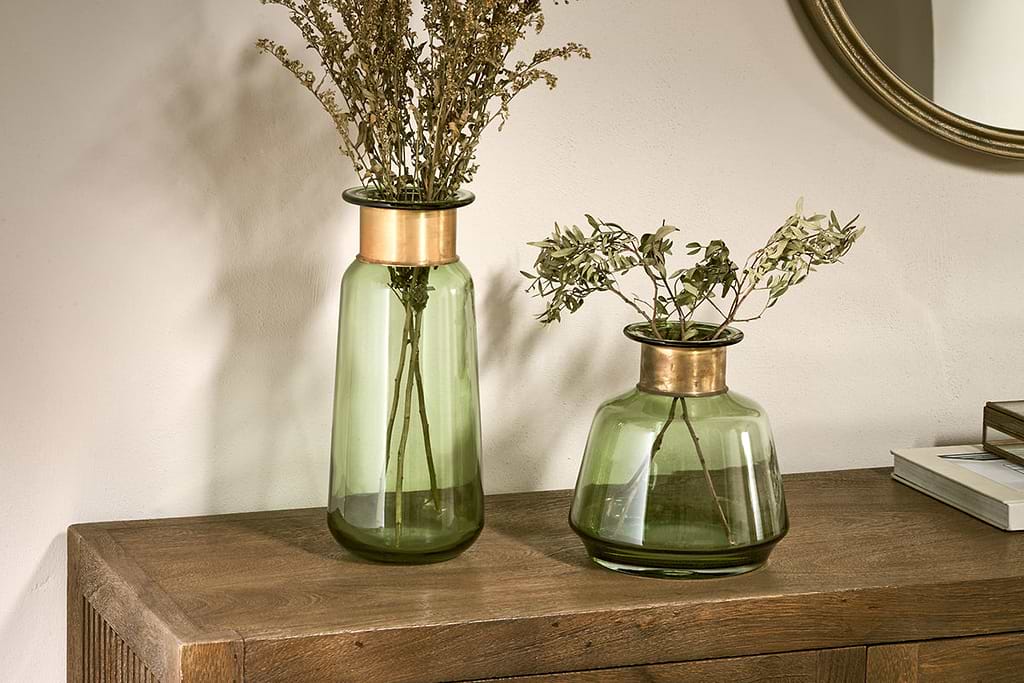
A few Nkuku pieces that layer warmth and quiet focal points throughout your home.
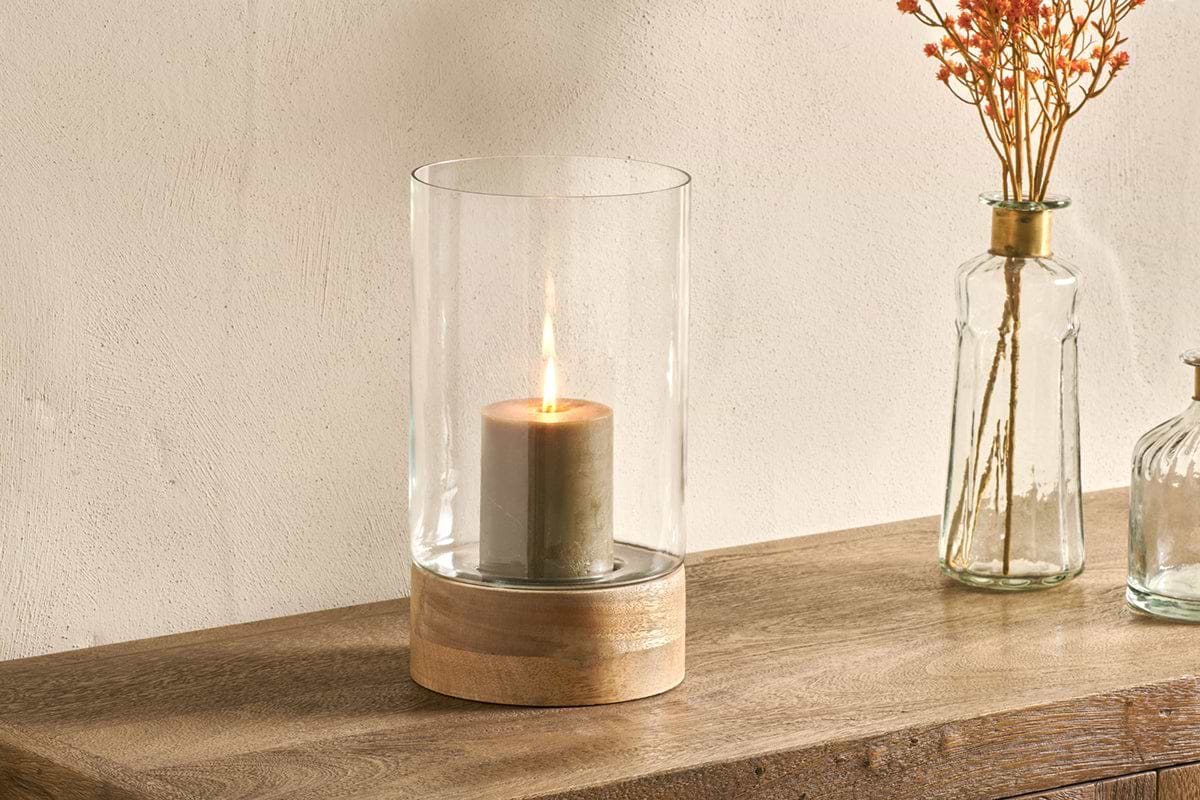
Idha Hurricane Lantern
Straight-sided glass — for candles indoors or sheltered patios.
View at Nkuku →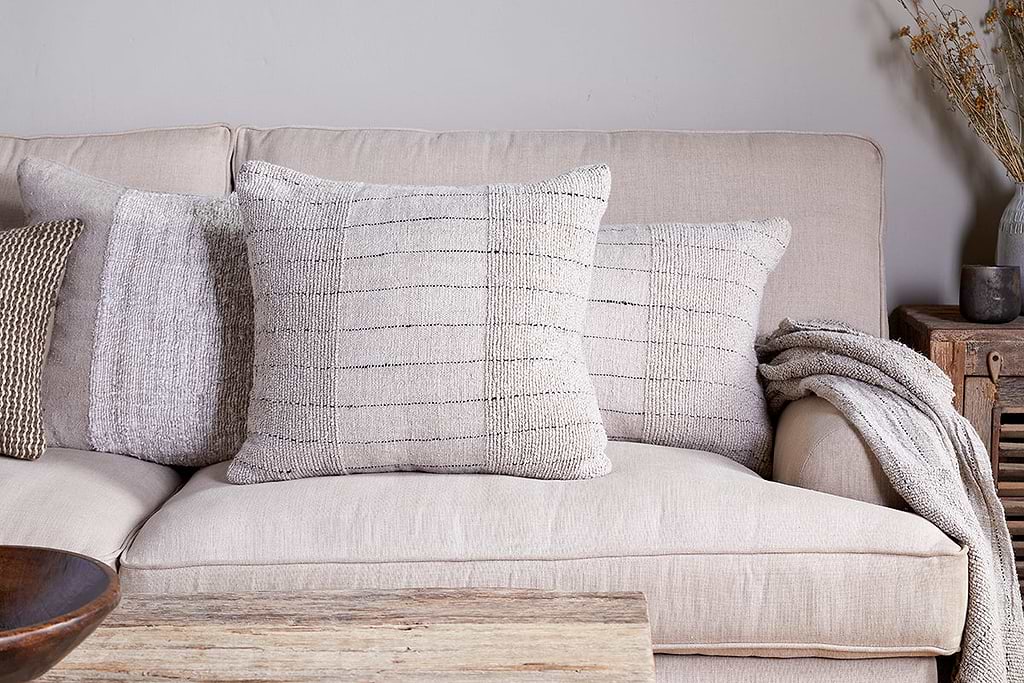
Mayla Cushion Cover
Soft hand-textured cover — instant warmth on linen sofas or chairs.
View at Nkuku →Some links above are affiliate links. If you buy through them we may earn a small commission at no extra cost to you. We only suggest pieces we think fit a calm, lived-in home.
Free guide
The Calm Shelf
12 styling ideas to help you compose calm, balanced shelves in natural texture homes.