

A neutral colour palette creates calm in minimal living rooms by shifting focus to texture, material and form rather than hue. Layering natural materials like linen, wood and clay, combined with warm lighting, builds depth and warmth without visual clutter. This approach works especially well in small spaces where restraint and careful placement of each element transform a basic room into one that feels refined and lived-in.
A blend of wood, linen, and soft lighting creates a home that feels lived in and relaxed. Each element has its own story in a refined design.
The short version: Small additions from nature create a balanced space. Subtle choices in a neutral color palette add warmth and depth without overwhelming the minimal aesthetic.

Mixed Materials in Minimal Living Rooms
A jute basket rests beside a linen armchair. A wooden side table blends into the calm room.
The living room holds a blend of natural materials. A jute basket sits near the window seat, drawing attention to its texture. This mix brings different layers to a minimal space. The use of a textured corners decor trick adds a refined detail.
Choosing varied materials softens the rough edges of modern minimal design. A brick fireplace and smooth ceramic accents complement each other. A soft rug underfoot anchors the natural feel. The calm sequence of elements creates balance.
A change in texture makes each piece stand out. A natural contrast between rough wicker and polished wood adds interest. A calm home decor sense settles as surfaces talk to each other. A simple tweak builds character in a basic setting.
Neutral color palette in Everyday Spaces
A neutral color palette centres the design. Linen curtains and a clay bowl offer subtle charm.
In a space that relies on a neutral color palette, the focus shifts to texture and form. Soft linen drapes and a carefully chosen clay bowl hold the room together. The restraint here highlights natural materials and warm lighting. The link to natural textures interior design shows another way to join nature with design.
Gentle shades expand the room without overwhelming it. A few well-placed pieces add personal warmth to a minimal setting. A calm home decor approach benefits from careful selection. The blend of clear surfaces and subtle hues builds a space that welcomes you.
A limited colour scheme highlights quality over quantity. The role of natural elements becomes clear amidst soft surfaces. A careful choice of material adds dimension. Simple adjustments comfort the view.
Layered Neutrals Building Depth in a Minimal Living Room
Layered neutrals building depth in a minimal living room are achieved with soft throws. A woolen rug and smooth ceramics quietly make a difference.
The room uses layered neutrals building depth in a minimal living room style to keep the focus on subtle beauty. Soft throws over a cool sofa add warmth that pulls the eye. A single low coffee table creates an anchor in the space. If you choose a neutral color palette, then your room feels balanced.
A quiet shift in material adds interest to the space. The calming selection of fabric and stone creates a home that breathes simplicity. The subtle blend of light and shade shows the strength of minimal aesthetic living. The softness of a wool rug contrasts with a sleek metal lamp.
A small table set with a ceramic vase demonstrates care in detail. This interplay of textures builds a uniform yet dynamic space. Natural elements influence mood and style each day. A clear design leaves room for comfort.
Warm Lighting and Natural Materials
A clay bowl catches the glow of warm lighting. A wicker lamp shade softens hard modern lines.
Warm lighting transforms the space with a gentle radiance. Natural materials like clay and wood stand out under soft light. A lamp with a woven shade creates a cozy corner in a modern living area. The interplay of light and matter shows the subtle art of calm home decor.
Evening light brings balance with a gentle glow and soft shadows. The room feels renewed as light falls on a wooden table. A calm atmosphere emerges with every shift in brightness. The warm tone of a wicker lamp contrasts with sleek metal objects.
Lamps scattered around add a cozy atmosphere to the living room. A softly lit room soothes after a long day. Changes in light creates depth and interest in every detail. The presence of a reputed wood glass and soft combination brings an extra layer of tactile beauty.

Styling and placement
A careful arrangement finds a single statement piece. A brass frame rests on a simple wooden console.
Styling and placement focus on where objects sit in relation to one another. A chosen item, such as a treasured brass frame, serves as a focal point in the room. The art of placing a soft throw near a smooth chair makes a difference. A well-thought-out spot helps the space feel more inviting.
How you set a vase or frame can pull the eye to forgotten details across a side table. A quiet balance is achieved when each item meets its mirror in the room. Detailed placement builds a clearer picture of the living room. A small, worn rug near a busy area softens the look.
A simple shelf showcases delicate knick-knacks to full effect. The direction of a soft lamp and a crafted ceramic bowl contributes to a gentle flow. Every green plant paired with a warm light creates a pause.
Quick calm checklist:
- Place a warm light beside a soft, natural element.
- Allow a single statement piece to act as an anchor.
- Keep surfaces clear to let textures shine.
Where this works best
A blend of wood and linen fits snugly in small living areas. A soft jute basket adds a touch in a corner.
This style works well in living rooms, small studies, or dining spaces where space is a concern. Rooms that feel flat or cold need a boost of nature to soften the edges. Soft elements can create a welcome vibe even in an office space. The approach naturally turns sterile areas into inviting rooms.
Everyday routines find ease in these rearrangements. A pillow on a low bench or a ceramic bowl on a side table adds small comforts in daily settings. The warmth of natural fibres works against the stark lines of modern design. A serene harmony appears as one references the idea of natural textures in small apartments.
Avoid using overly bold colours in tight spaces. A lack of restraint can break the flow and make the room feel chaotic. A soft lamp and a natural rattan chair soothe and draw the eye. Each careful choice enhances the room without overloading it.
Small Touches with Context and Care
A small clay bowl rests on a sleek table. A woven cushion soon adds soft detail.
Small touches bring personality and ease to a room. A single piece of natural material, like a clay bowl, can speak volumes in an otherwise tidy setting. The thoughtful addition of a tiny accessory calms the minimal design. Each choice builds a sense of context without overwhelming the space.
Everyday updates, such as switching a cushion cover or adding a jute basket, show care in design. A gentle natural contrast between a smooth linen chair and a rough, artisanal basket creates an inviting feel. These adjustments make the area feel less stark. The method reminds us that little efforts can have a big impact.
A carefully placed detail, such as a chosen ceramic piece on a shelf, pulls the eye and creates a rhythm in daily living. The infusion of natural materials adds soft warmth against hard office furniture. The overall effect is a layered and heartfelt room that speaks of a calm home decor approach.
The practical shift lies in choosing a single statement item and focusing on texture over a wide color range. A reduced palette with a standout piece anchors the room while natural furnishings connect each element. This design decision revolves around clear choices that bring harmony.
The moment a setup feels off, it can be traced to misaligned details or clashing textures. When the space appears colder than expected, it might be time to reconsider object placement and material density.
A frequent mistake is adding too many small knick-knacks, which can clutter a calm room and pull the eye in too many directions. Fewer items allow the texture and warmth to stand out, maintaining a peaceful balance.
Using a single touch of natural material brings ease to the living spaces.
Save this idea for later.

What I’ve come to know about neutral spaces
I have learned that a room speaks quietly when design choices are sparse yet well-considered. I often find that a small jute basket can make a plain corner feel cozy and welcoming. The simplicity of natural materials reassures me in moments of uncertainty.
I like to trust the eye for quality over quantity. Every morning, a soft cup of tea reminds me that calm and care in design often lead to a happier, more relaxed day.
— Mara
Common questions
How does a neutral colour palette create calm in minimal living rooms?
A neutral colour palette creates calm in minimal living rooms by shifting focus to texture, material and form rather than hue.
What natural materials are recommended for layering depth in a minimal living room?
Layering natural materials like linen, wood and clay, combined with warm lighting, builds depth and warmth without visual clutter.
How should warm lighting be used with natural materials in a minimal living room?
Natural materials like clay and wood stand out under soft light. A lamp with a woven shade creates a cosy corner in a modern living area.
What role does careful placement play in styling a neutral minimal living room?
Styling and placement focus on where objects sit in relation to one another. A chosen item, such as a treasured brass frame, serves as a focal point in the room.
Explore more calm combinations inside our Shop The Look.
Frequently asked questions
How do you add depth to a neutral colour palette?
Layering different textures and materials creates the illusion of depth. Combine soft throws, woollen rugs and smooth ceramics with warm lighting. The interplay of rough wicker, polished wood and woven fabrics draws the eye and prevents a flat appearance.
What materials work best in a neutral minimal living room?
Natural materials such as linen, jute, clay, wood and ceramic work together to create warmth. These materials are tactile and visually interesting without introducing bold colours, allowing the focus to remain on form and texture rather than hue.
Where should I place lighting in a neutral space?
Position warm lighting beside soft, natural elements to create focal points and gentle shadows. Scatter lamps around the room and use wicker or fabric shades to soften hard modern lines. Warm light on wooden surfaces and ceramics enhances the natural warmth of these materials.
Shop the Look
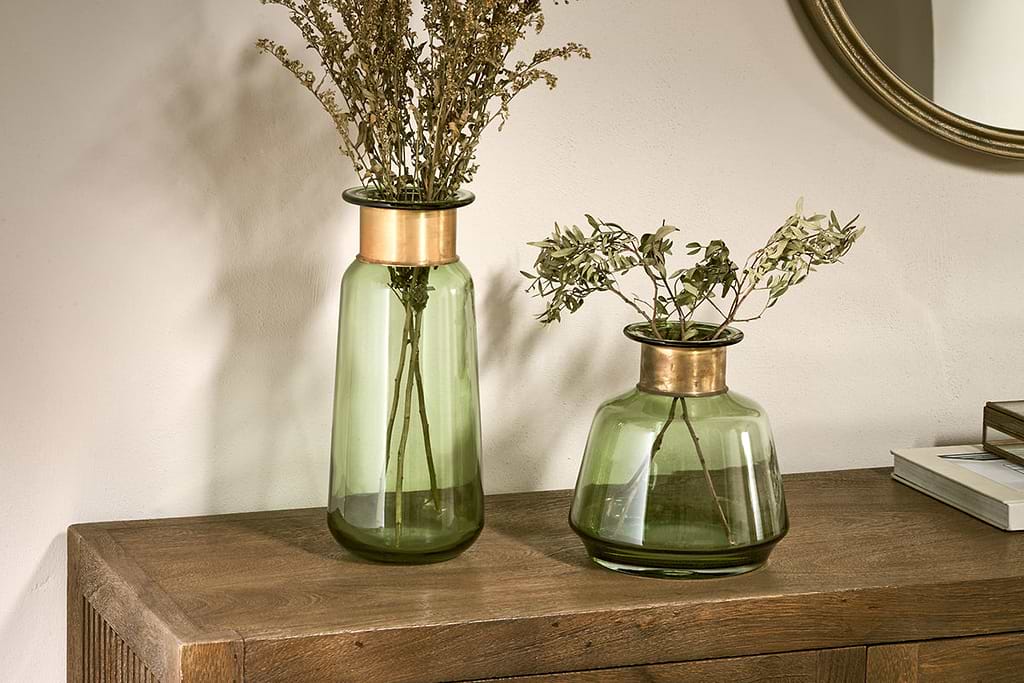
A soft green vase, hand-textured cushion cover and recycled linen cushion layer warmth and subtle texture into neutral rooms.
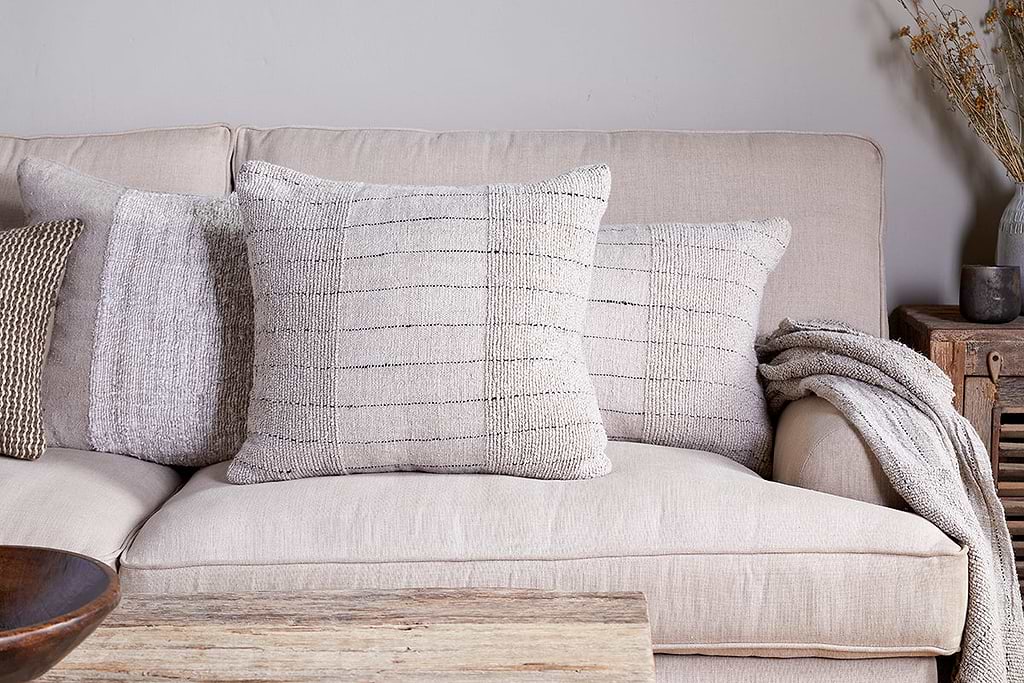
Mayla Cushion Cover
Soft hand-textured cover — instant warmth on linen sofas or chairs.
View at Nkuku →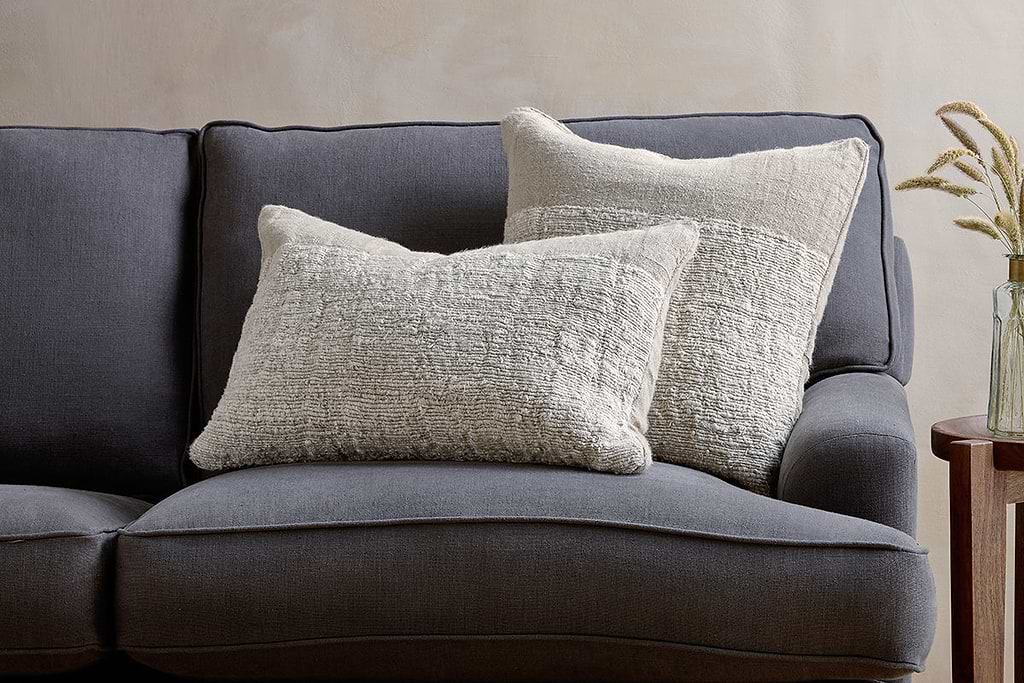
Puli Linen Cushion
Recycled linen in natural — pairs with woven textures and aged wood.
View at Nkuku →Some links above are affiliate links. If you buy through them we may earn a small commission at no extra cost to you. We only suggest pieces we think fit a calm, lived-in home.
Free guide
The Calm Leaf
12 quiet ways to bring dried botanicals, stems, and natural textures into calm spaces.