

Many bedrooms and living rooms have a mix of busy surfaces and not enough practical storage. Sage green wall shelves often end up as a wishlist item, but it’s not clear if they’ll actually tidy things or just add clutter. For renters or anyone managing a small apartment, one more surface can sometimes feel risky or hard to match.
The right shelf can take scattered piles off the floor and make awkward corners useful again. Today you’ll learn exact placements, materials to pick, and habits to ditch so even a plain wall turns calm and steady. This works especially well in open-plan living rooms when you want less mess but also less blank space because sage green sets a clear, gentle boundary without building up weight.
The short version: Sage green wall shelves give softer storage and subtle colour in rooms that feel heavy or unfinished. Choosing the right green, material, and placement reduces clutter and helps everything look lighter, especially on busy or awkward walls.
Key takeaways
- Sage green wall shelves create useful display space without making a room look crowded.
- A floating shelf in sage green works best where there is not enough built-in storage.
- Natural materials like wood soften how the shelf looks and feel warmer than metal.
- Most floating shelves are about 25 to 30 cm deep, a good fit above a nightstand.
- Sage green shelves often appear in nurseries on Pinterest for their calming look.

Why do sage green shelves make a room feel calmer?
Sage green shelves soften the edges of a white or beige wall and draw less attention than bold colours or dark timber. The green blends with most neutrals and gives the eyes somewhere gentle to rest.
Rooms stacked with strong colours or busy prints tend to make shelves stand out, even if you do not want them to. Sage green, being a muted, dusty shade, drops into the background and does not fight the rest of the palette. A plain wall in a hallway or above a desk can seem less sharp and less cold with this colour anchored on it.
Unlike deep green, which pushes forward and looks dramatic, a sage shade holds back. It pairs with tan, cream, or natural linen, so the whole area feels like one piece rather than a patchwork of things. This cuts down on visual noise and keeps the space from feeling chopped up.
Light matters too. Bright whites or deep shadows can leave a room looking flat. Sage green captures soft daylight and looks calm under most bulb tones. People often place sage green shelves in nurseries or calm bedrooms, as seen on Pinterest boards and listing pages, because the tone sits quietly beside soft toys or simple decor. To make a busy entryway less frantic, place a sage shelf by the door. It gives the eye a steady, quiet anchor and hides the mess of mail or keys just enough.
Where this works best
Sage green wall shelves fit in small living rooms, narrow halls and bedrooms with limited storage, especially where you want softer lines and don’t want to drill large brackets.
Compact areas, like an entryway or over a bed, often don’t have the space for freestanding furniture. A slim shelf in sage green can float above a shoe rack or alongside a reading chair without crowding the room. Floating designs keep the floor clear and lighten the look, so a shelf feels more like a feature than an obstacle.
In rental flats, where wall storage comes with rules, a lightweight shelf with simple mounting can go up with removable strips or a couple of screws. Shelf units with built-in drawers, like some sage green wooden wall shelf units, make sense near a desk or dressing table where you need a spot for pens or makeup but don’t want plastic caddies in view.
Avoid putting sage green shelves on walls already painted a stronger shade of green, as the shelf might disappear or clash. Instead, use them where the walls are white, cream, or muted grey so the paint or finish stands out without dominating. In areas with low light, matte or chalk-painted wood works better than shiny lacquer, which can reflect bulbs and draw unwanted glare. To make a windowless hallway feel a little less hollow, anchor one small sage green shelf about eye level for keys and a trailing plant. It adds shape and function in a spot that’s usually empty.
How do you keep a sage green wall shelf looking tidy?
A sage green wall shelf looks tidy if you limit what sits on it and repeat one or two natural textures, such as wood or woven grass, with only a small pop of colour.
Most shelves get messy fast when they try to hold everything, a plant, books, candles, spare chargers, frames. A better rule is to keep about two thirds of a shelf clear and group just three items, each with a clear role: one useful, one decorative, one soft. A single trailing plant and a clay bowl do more than five tiny objects scattered end to end.
Unlike a shelf crammed with souvenirs, a display with breathing room feels calmer. The eye can stop and rest on the green, see the wood grain or matte paint, and move on. Woven baskets or a plain box help gather loose items and keep them tucked away. Visual clutter drops and the surface reads calm, not busy.
The shelf finish shapes how tidy things look too. A matte or chalk paint hides fingerprints and small marks better than gloss, so upkeep feels easier. According to current Etsy listings, most small sage green shelves are meant to float, which means they collect less day-to-day mess and need lighter dusting. Above a desk or by a bed, anchor a sage shelf low and keep the surface lean. One handmade ceramic or a favourite book cover keeps it feeling clean all week.
How to choose between metal and wood shelves?
Metal sage green shelves give a crisp, modern line and reflect light, while wooden shelves bring warmth and hide scuffs, working best with soft decor or in high-traffic rooms.
Metal shelves in sage green, including small circle floating types, suit kitchens and bathrooms because they resist water and wipe down easily. These shelves often have a powder-coated finish that does not peel or show fingerprints quickly. A metal wall shelf pulls the eye for a short stretch but feels lighter than a black or brass option.
Wooden sage green shelves, with or without built-in drawers, feel steadier and adapt to almost any room: bedrooms, living spaces, nurseries. Their texture softens daylight and holds up to small bumps. Over time, minor scratches in painted wood blend in, where metal starts to chip or dull. If you want to store keys, books, or small baskets, a wood shelf with a shallow lip or side wall keeps things from sliding off.
Compared to metal, which can read colder or industrial, wood always feels softer when paired with linen curtains or jute rugs. In a small open-plan flat, mount a wooden sage shelf over a shoe bench near the front door. It makes the area look gentler, holds mail or a basket, and doesn’t call too much attention to itself.

Styling and placement
A sage green wall shelf needs only two supporting colours and at least one natural texture for a balanced, subtle display that doesn’t fight the room layout.
Where you place your shelf has more effect than you might think. Over a radiator, the green adds freshness without blocking heat; by a couch, it frames the seating area and gives somewhere soft for a lamp or a trailing ivy. Low placements let shelves double as side tables in cramped bedrooms, holding a book and glass where a bulky nightstand wouldn’t fit.
Colour matters as much as what sits on the shelf. A rule of thumb: sage green works best with tan, white and natural wood, the fewer accent colours the better. Repeat a basket or a mug in off-white, and the whole shelf feels steady. Avoid lots of mixed colours, which break up the calm the shelf brings.
Quick calm checklist:
- Stay with matte or chalk painted finishes for fewer fingerprints and a quieter look.
- Leave about one third of each shelf open rather than filling every gap.
- Limit the palette to one green and two or fewer neutrals.
- Add one tactile object (woven, wood, stone) to soften the shelf surface.
Mount a sage shelf above a neutral shelf styled dresser for a soft visual anchor, or next to a couch for reachability. A bare shelf feels unfinished, but crowding it looks heavy. Midway, and the spot starts to look more settled.
What’s the right height for a wall shelf in each room?
Hang a sage green wall shelf just above head height in entryways, centred over tables, or beside eye level in living rooms for easy access and a balanced look.
Placement shifts the shelf from helpful to awkward. In a bedroom, set a low shelf right above the nightstand where you can reach it from bed. Floating shelves above a dressing table or desk work best at sitting eye level so you can grab a brush, small plant or cup without reaching too far up.
For an entry or hallway, shelves should be high enough not to knock, close to shoulder or top-of-door height. That clears space beneath for bags, umbrellas or shoes. Make sure the shelf’s depth does not block open doors. Most floating shelves are about 25 to 30 cm deep, enough for a few books or a medium-sized basket, as noted by product listings on Etsy.
Compared to a bracket shelf, which often sits lower and sticks out farther, a floating wall shelf in sage green creates a slimmer profile and more visual breathing room. Anchor one above a console table to give small bowls or mail a place to land as you come home.
How to use sage green shelves for subtle storage?
Sage green shelves tuck small items away without adding bulk and can double as display, especially on blank walls with no built-in storage.
In homes with limited closets, wall shelves often take on extra jobs. A sage green shelf fits above a nursery changing table, in a kitchen end wall, or beside a work nook, making space for baskets or jars that would usually pile up elsewhere. The soft colour lets the shelf fade back so stored objects do not look like clutter.
Unlike heavy bookcases, which dominate with their weight and bulk, a slim wall shelf leaves most of the wall empty while still holding what you need. Drawers built into wooden sage green shelves, as seen in some designs, add hidden storage for small daily-use items, perfect above a home workspace where wires and bits otherwise drift everywhere.
To keep a nursery or soft seating area from filling up with loose things, mount one or two sage shelves over a cupboard or near a window seat. They hold baskets or soft toys, leaving the floor open and the room easier to keep clean. A shelf’s matte finish proves forgiving for smudges, so upkeep stays simple and the look never turns busy.
Most people who try to add helpful storage notice the difference straight away, but sometimes something still feels slightly off. The surface is clear, the colour matches, but the wall looks unfinished or the shelf seems to float awkwardly. This is the point where a small, steady change in palette or placement can shift the whole room from scattered to settled.
A common mistake is crowding the shelf with too many little objects or picking a finish that fights the other surfaces. If the shelf looks busy or too shiny, the room reads off-kilter, even if nothing is out of place. Nearly every home has at least one shelf that draws the eye for the wrong reason, too bare, too overloaded, or just the wrong tone. When you balance the finish and spacing, the room feels easier right away.
Once placement and palette are right, clutter drops and the shelf stops feeling like a leftover. Everyday cleaning is faster, and the area feels steady through every season.
Save this idea for later.
What actually stands the test of time with sage green shelves?
Sage green stays steady because it neither fades too quickly in strong daylight nor falls out of trend when wall colours change. Shelves with a matte finish, especially painted wood, get consistent praise for blending chips and marks smoothly over the years instead of showing every scratch.
Decorators often suggest repeating a soft, natural green like sage where you want gentle order but not a sharp statement. Reviewers repeatedly report that shelves in this muted colour help rooms with mixed storage (open bins and closed drawers) look less busy, while glossy or highly coloured finishes rarely last as favourite features. A shelf that balances storage and display, with simple lines and a soft surface, stays useful through many changes in furniture and function.
Mara, Loom & Glow
Common questions
What colours go with sage green shelves?
Sage green shelves pair best with white, cream, tan, natural wood, and muted grey. Soft pinks or terracotta add warmth without clashing. Avoid bold red or strong blue, as they distract from the natural calm sage green brings to a shelf or wall.
Are sage green shelves easy to clean?
Sage green shelves are easy to clean, especially in matte or chalk finishes that hide smudges. A gentle wipe with a damp cloth works for wood, while metal shelves tolerate more frequent cleaning. Regular dusting keeps the surface soft and even, without much effort.
Can I paint my own shelves sage green?
You can paint your own shelves sage green using water-based, matte, or chalk wall paint. Prepare the surface by sanding and priming for best colour coverage. Many hardware stores mix sage green paint on request, so matching your shelf to the room’s tone is simple.
Where is the best place to hang a sage green shelf?
The best place to hang a sage green shelf is on a light neutral wall near daily-use spots: above a nightstand, beside a reading chair, or in an entryway. Keeping shelves near eye level makes them practical and avoids making a wall look crowded or overlooked.
Explore more calm combinations inside our Shop The Look .
Shop the Look
A handful of Nkuku accents that sit comfortably on a sage green shelf.
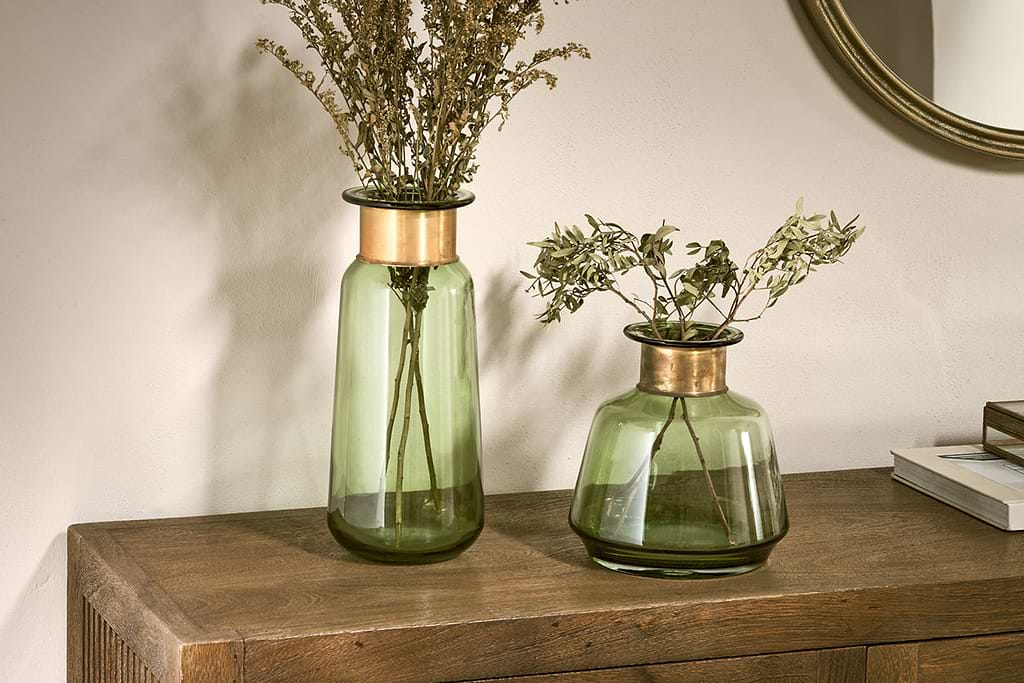
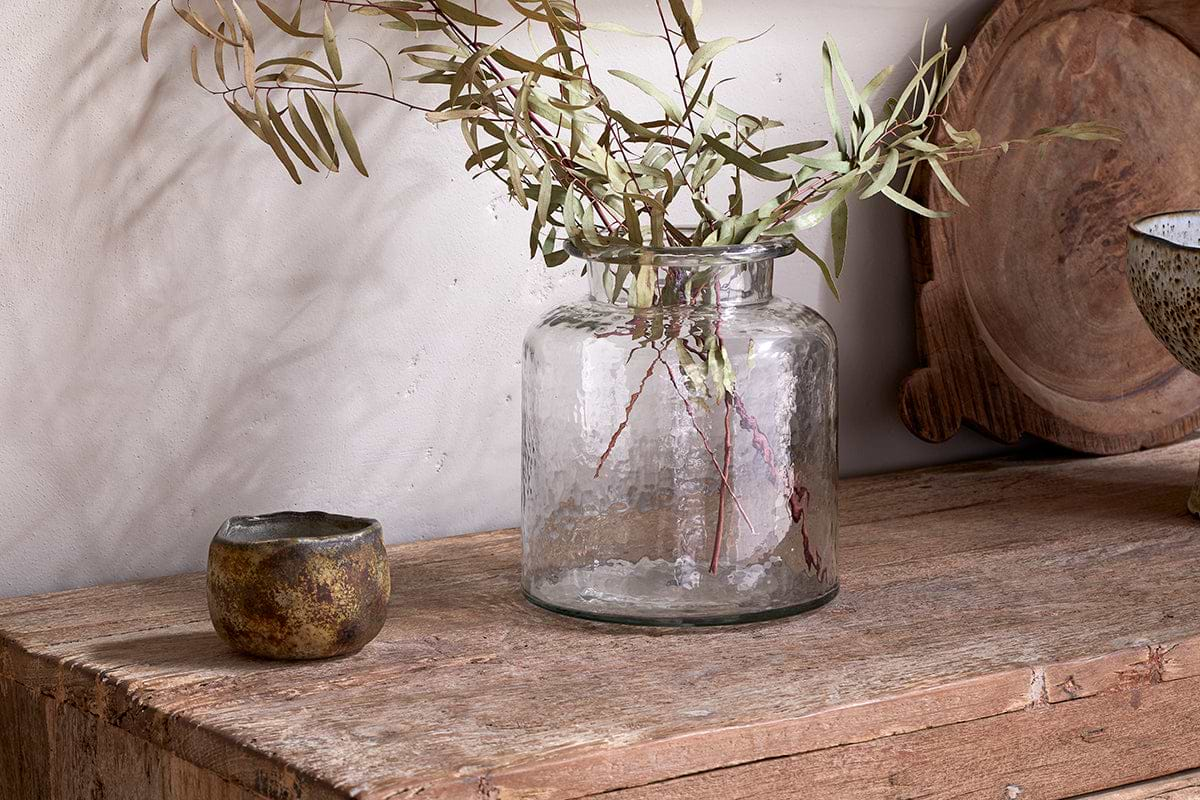
Akra Recycled Glass Vase
Clear cylindrical glass, pairs with stems or sits empty as a quiet accent.
View at Nkuku →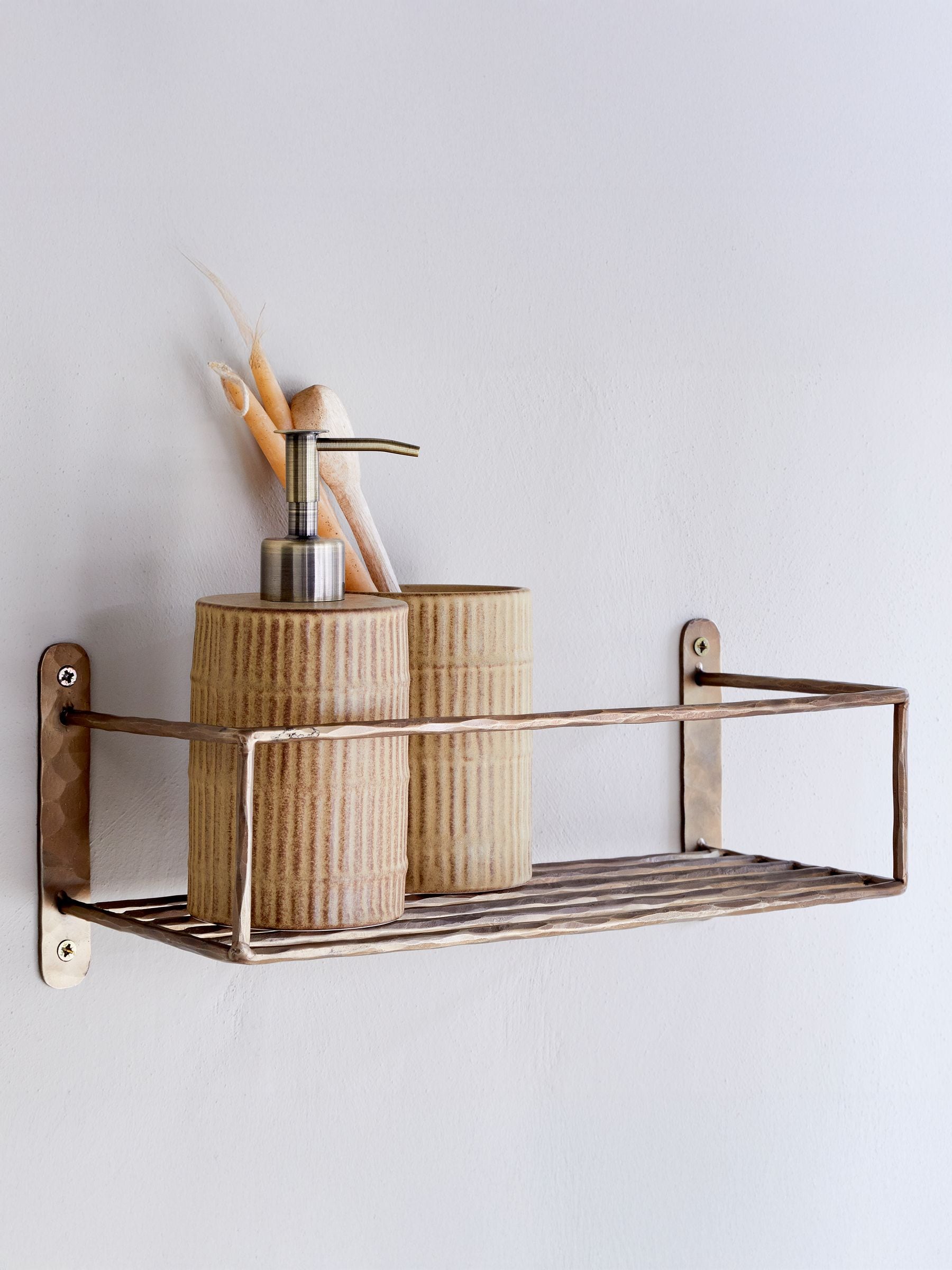
Some links above are affiliate links. If you buy through them we may earn a small commission at no extra cost to you. We only suggest pieces we think fit a calm, lived-in home.
Free guide
The Calm Shelf
12 styling ideas to help you compose calm, balanced shelves in natural texture homes.