

Trailing cables, crowded pots, and uneven clusters, these are what many UK homes encounter when trying to add more greenery. Using living wall systems uk can solve that scattered look but often, what feels lush on social media ends up making small rooms feel cramped or restless in real life.
This guide offers clear steps for a calmer, cleaner way to bring plants into tight British homes. You’ll see what to look for, how to set it up, and which choices prevent the usual clutter. This works especially well in a narrow hallway when floor space is tight because the wall takes the weight, leaving the flow open.
The short version: Living wall systems uk create vertical gardens that keep greenery lush without filling your floor or adding clutter. By planting up, not out, small British homes gain a soft focal point and less visual noise, making rooms both livelier and calmer at once.
Key takeaways
- A living wall system adds greenery without taking up needed floor space in compact homes.
- Modular panels with self-watering reservoirs reduce daily plant care and keep plants consistently hydrated.
- Slimline steel options, such as SlimWalls, work where depth is limited, staying just 11cm from the wall.
- Choosing one main vertical green area helps calm messy corners and prevents scattered plant displays.
- Most DIY kits for home use are designed to be wall-friendly and rental-possible, limiting the need for major changes.

What exactly is a living wall system?
A living wall system is a structured frame or modular panel that lets you grow live plants directly on a vertical surface. Unlike shelves lined with pots, a living wall gathers plants into a single flat plane, reducing clutter and combining soil, structure, and water in one neat unit.
Typical living wall systems come as modular kits or steel frames, offering a fixed spot for each plant. The goal is a full pocketed or panelled surface, where plants root into pouches or trays along the wall. This means no pots to tip or scatter, every green leaf stays in its place.
The most common UK options include PlantBox units (with built-in watering), and SlimWalls, which keep a low profile. According to SlimWalls, their systems are just 11cm deep, so they don’t jut out or overwhelm a small room.
Compared to pots scattered on every ledge, a living wall delivers a tidy, intentional look and frees up your sideboards or windowsills. Install one in a low-light hallway or entry wall for the biggest impact in awkward spaces.
Why do living wall systems feel calmer than potted plants?
A single living wall draws the eye as one unified green field, so there’s less visual busyness than a patchwork of plant pots everywhere. Vertical planting brings order, especially for rooms where every bit of surface matters.
Potted plants, when spread over tables and window ledges, each compete for attention and create many small shapes that break up sightlines. Living wall systems UK gather all the greenery in one focused area, leaving other zones clear and less distracting.
The effect works best in rooms with limited space, like boxy lounges, where stray objects quickly pile up. Instead of bumping into stands or having blocked views, the upright garden sits flush, calming the overall look.
Unlike a scattered shelf of mismatched pots, a planted panel reads as one gentle statement. Choose smaller-leaved varieties for even softer texture in busy zones like home offices or dining nooks.
Where this works best
A living wall works best in spaces where you lack floor or surface area, such as entryways, landings, or even bathrooms with good light. Not every spot supports heavy plants or direct wall mounting, but most dry interior walls do.
Small flats with narrow corridors or loft apartments often struggle to offer enough space for more than a compact side table or lamp. Planting up the main blank wall, often by the front door, stairs, or opposite a kitchen window, gets the greenery in view without blocking the way. Even in a shared living-diner, the right living wall can define a backdrop and create a break from the clutter.
Bathrooms with enough daylight are another strong candidate. The moisture helps houseplants thrive and the wall frame keeps everything off the floor. Choose plants suited to humidity, like ferns or pothos, for best results.
Avoid positioning a living wall directly above soft furnishings or anywhere with no practical way to catch stray drips. In busy lounge areas, stick to a single living panel on an unused expanse, trying to cover every wall dilutes the calming focus.
How do you pick the right system for your home?
Most UK homes do best with lightweight modular panels or slimline steel frames, as they need little depth and are easy to fit. Consider the wall strength, sunlight, and maintenance needs before settling on a type.
Modular options like PlantBox units work well because they’re easy to stack or expand, and their built-in self-watering reservoirs (about 1.8 litres each) lower fuss over daily watering. These suit renters or anyone keen to build a green patch in a predictable, contained way without mess.
For extra tight spaces, SlimWalls offer panels as slim as 11cm in depth, ideal for galley kitchens or a landing wall. Steel kits tend to be more robust but need solid fixing, avoid plasterboard if you’re unsure on load.
Compared to a shelf or old-style pot rack, new living wall kits are easier to swap out if you move. Many come as all-in-one sets, needing just a few wall fixings and no invasive plumbing.

Styling and placement
Placing a living wall in line with an existing architectural feature, like a doorway or window, gives a room a clear focal point without busying the edges. Keeping the plant palette simple further reduces visual clutter.
In a small home, a single vertical planting makes the most sense opposite a dining table, framing a hallway view, or anchoring the end of a kitchen galley. Place the living wall where you look naturally, too low and it drops off the line of sight, too high and it feels tacked on.
Soft textures such as trailing pothos or small-leaf ferns add gentle layers. If you mix in a strong framework, like the Kiko Brass Frame, the subtle shine breaks up the soft green, adding shape without heaviness.
Quick calm checklist:
- Stick to one or two plant textures for unity (bushy + trailing, never spiky + broad-leaf together).
- Don’t overfill: leave some visible wall so the green reads as an accent, not wallpaper.
- Choose natural, neutral-toned planters or frames, matte finishes work best for soft daylight.
- Align the frame with existing wall lights, windows, or ledges for an integrated look.
Compared to randomly clustered table plants, a well-placed living wall feels like part of the home, not an afterthought.
How much does a living wall cost in the UK?
The cost of living wall systems in the UK depends on the brand, size, and level of finish, but options range from roughly £70 for small modular kits up to over £1,200 for larger, steel-frame panels.
According to SlimWalls, a 100cm wide ultra-slim living plant wall kit comes in from just above £310 and can reach £1,294 (excluding VAT) for more complex designs. These suit those wanting a robust, permanent feature in an open space.
For more flexible or rental-friendly setups, PlantBox Green Wall System modules are available in bundles, with a 3-unit starter pack costing about £70 (excluding VAT). These are stackable and can be expanded over time as your budget or space allows. Delivery for the PlantBox can take up to 15 working days, since it comes directly from the supplier.
Professional design and install services push the total higher, especially with bespoke plant choices or built-in irrigation. Self-assembled kits remain the most affordable entry point for most small homes.
| System | Starter Price | Typical Depth |
|---|---|---|
| PlantBox (3 units) | ~£70 | Compact, modular |
| SlimWalls (100cm kit) | ~£310, £1,294 | 11cm |
| Pro Install | Varies, £1,000+ | Custom |
Using a kit solution, you avoid the bulk of fitted cabinetry and the disruption of water pipes, keeping costs predictable and surfaces intact.
What should you know before installing a living wall?
Before installing a living wall, check your wall’s strength, the available light, and where water might drip or run. Planning the plant mix for your conditions prevents quick die-off and keeps maintenance simple.
Most ready-made systems, such as PlantBox, are designed to be lightweight enough for standard brick or solid internal walls. You’ll want to avoid mounting on unreinforced plasterboard or surfaces easily marked by moisture. If you’re renting, confirm that any anchor points can be patched later or that adhesive alternatives exist.
Check for the nearest window, as a wall in shadow won’t suit sun-loving types. Ferns and other shade-tolerant plants make indoor north walls viable, while south-facing spots let you try flowering or trailing greens.
Compared to outdoor or garden planting, indoor walls are less forgiving, water spills and leaf drop can mark paint and floors. Plan for a mat or catch tray below, and check trays weekly to avoid odours or mould.
A successful living wall works best when the lighting, water access, and weight support are all considered at the start.
What tends to hold up with vertical planting and calm small-space layouts
Vertical planting in tight UK homes consistently rewards restraint. Reviews often show the rooms that feel cleanest nearly always group their greenery on a single main wall, sticking to a tight plant palette and using flat-backed frames or slim modular panels. Matte planter finishes, not shiny plastics, avoid bright spots and visual noise, helping the green look soft from every angle.
Decorators tend to recommend testing the wall with a temporary frame before full planting, just to see how the shadows and leaf shapes behave in real daylight. Physical samples of both living wall kits and planter fabrics often reveal how quickly a look can get busy or stay quiet. Most feedback highlights fewer gaps and a restrained placement for keeping the vibe gentle.
, Mara, Loom & Glow
Common questions
What is the best living wall system for a beginner?
The best living wall system for a beginner in the UK is usually a modular kit like PlantBox, which has built-in self-watering. The pre-formed pockets and simple stacking make it easier to start and maintain with minimal fuss, so the first attempt feels calm and doable.
How much does a living wall cost to install in the UK?
The average living wall system in the UK ranges from around £70 for a basic set of PlantBox units to £1,300 or more for a large steel-frame SlimWalls kit. Professional installations or custom irrigation cost extra, but modular panels give an affordable entry for most small homes.
How long does a living wall last before it needs replacing?
A well-cared-for living wall can last several years before needing any major refresh. Most wall-mounted systems just require routine plant trimming, occasional replacement of tired plants, and a check on the watering system to keep everything healthy long-term.
Are living walls worth the investment for a small home?
Living walls are often worth the investment for small homes that want greenery without clutter. A vertical system provides more plant life with less mess underfoot, and many renters find it easier to maintain than a cluster of pots or floor planters.
Explore more calm combinations inside our Shop The Look .
Shop the Look
A couple of planters that sit just as well on a small balcony as beside a living wall.

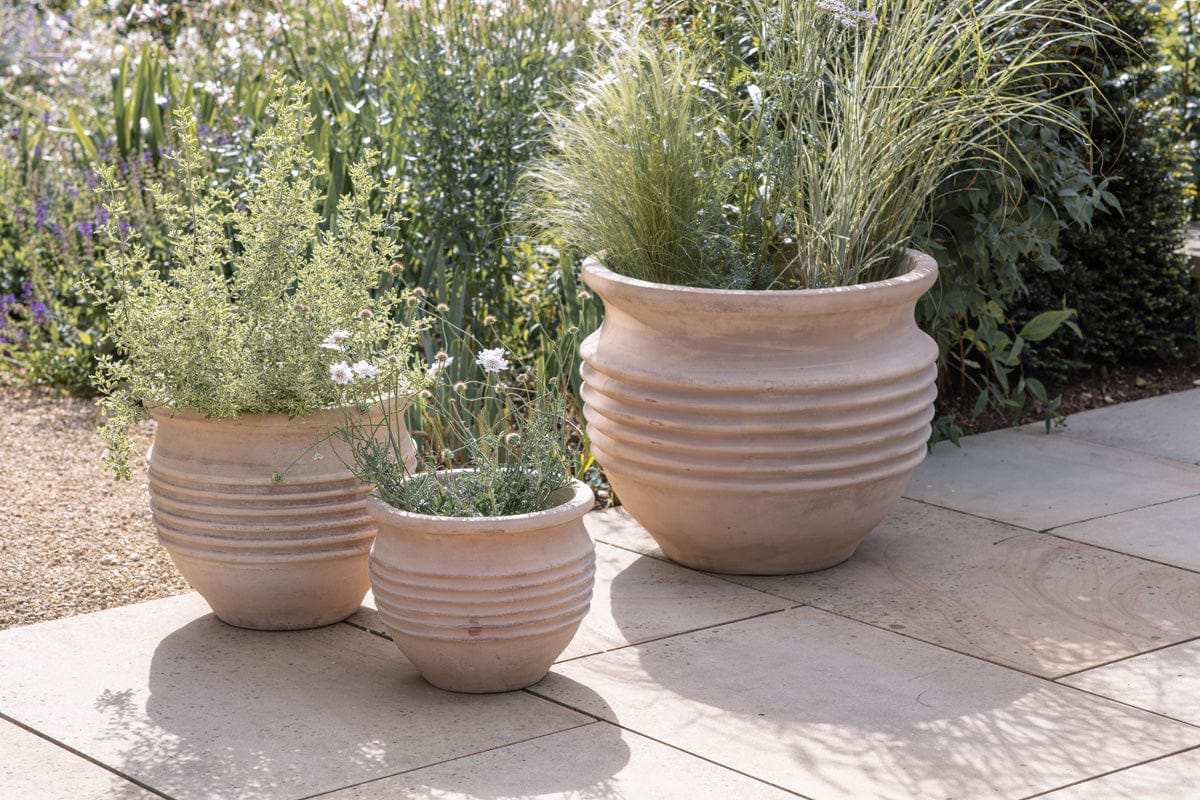
Ullu Terracotta Planter
Classic terracotta in warm earth tone, Mediterranean balcony foundation.
View at Nkuku →Some links above are affiliate links. If you buy through them we may earn a small commission at no extra cost to you. We only suggest pieces we think fit a calm, lived-in home.
Free guide
The Calm Shelf
12 styling ideas to help you compose calm, balanced shelves in natural texture homes.