

If your shelves feel busy no matter how you arrange them, you’re not alone. Many living room bookshelf decorating ideas focus on adding things, but it’s often the mix of books, objects, and colors that leaves the room feeling noisy instead of calm. Small apartments, rentals, or just a mismatch of heights and textures all play a part when your shelves never quite look peaceful.
This guide offers a practical way to make your bookshelf look collected and calm, without stripping it bare or starting over. You’ll see what to leave out, where to anchor the eye, and how a few quiet choices change the entire shelf, especially in a shared living room with limited daylight when storage is tight because every detail counts.
The short version: The simplest living room bookshelf decorating ideas group books and objects by color, shape, and height, and use one focal point per shelf for calm. Keeping backgrounds clean and repeating natural textures makes shelves feel restful even when holding a lot. These changes work in any style.
Key takeaways
- A calm bookshelf uses the rule of three to balance objects and open space on each shelf.
- Mixing textures such as wood or linen with books absorbs glare and softens visual noise.
- One warm light source on or near the shelf changes how every item looks and feels.
- Built-in, vintage, and open shelves all benefit from leaving at least one-third of the space clear.

What is a calm bookshelf, and what isn’t?
A calm bookshelf puts clear space between groups and repeats color or shape within each shelf, while a noisy shelf mixes unrelated tones and heights.
Many bookshelves feel busy because every object fights for attention, frames lean, candles peak above books, stacks tilt, and colors change from shelf to shelf. Instead of one story, your eye jumps everywhere at once. This is what visual noise looks like.
A shelf feels restful when the background is clear and book spines align with baskets or bowls of similar height. Soft edges, like a linen-wrapped box or a rounded vase, help connect groups so there’s a steady rhythm all across. A single deep-toned bowl on an empty end keeps the eye from drifting off the shelf, and that’s a reason shelves in homes with a lot of books look more settled: there’s always a finishing anchor.
Unlike the “bookshelf wealth” trend, which fills every inch, a calm look always leaves open space between clusters. If everything is displayed in a long, even row, the shelf feels flat. When you repeat both space and shape, every item gets some breathing room.
This approach works for built-in shelves, open cubbies in a rental, or a narrow wall unit at the end of a hallway. The effect, more space to focus, less restless energy, shows up right after you group and edit.
How do you keep shelves from looking cluttered?
A shelf avoids clutter when every row has a break in the line, one group as a focal point, and a clear visual pause between sections.
Living rooms with open shelves often become storage by accident: stacked mail, old mugs, half-burned candles. Clutter appears first in the form of objects left without a “job.” Anything without a reason to stay is the first to make the shelf look messy.
Compared to a full bare shelf, one with a single large object or tightly stacked books pulls the eye and creates order. This is why “one focal point per shelf” is a rule decorators recommend: your eye settles, the shelf feels quieter, and there’s less searching for what’s missing. According to the ‘six core composition rules’, groups of odd numbers (the rule of three) are most restful, because your mind recognizes the pattern.
A room with pale floors and lots of indirect light does best with low, wide objects instead of tall, scattered ones. Place a small stack of books, a smooth stone, and a round basket together on one shelf. It works because every object rests close to the surface, not reaching up or out of line.
Where this works best
Living room bookshelf decorating ideas work best in shared spaces, small living rooms, or anywhere extra storage is needed without crowding the room.
Bookcases built into living room walls, vintage freestanding units under windows, and even cube shelves beside sofas all benefit from clear, calm styling. The approach also helps most in rental spaces or open plan rooms, where visual chaos piles up fast. When you share a living room with others or need extra spots for objects and books, a tidy approach saves the whole room from looking busy.
Keeping objects similar in height and spacing between groups is one way to avoid heavy corners or top-heavy shelves. If books are stacked tightly at one end and nothing at the other, the shelf droops visually. A calm arrangement repeats shapes and spaces so the shelf feels balanced, not lopsided.
Avoid matching every shelf exactly, rows that repeat the same pattern look staged rather than relaxed. Unless the entire unit is open on both sides (like a divider shelf between rooms), keeping a bit of difference from shelf to shelf creates a more natural feel.
Try this idea on any living room shelf with books and at least one object you want to display. It works best when the whole wall holds less than two-thirds books, with open space for a bowl, a basket, or a photo beside them.
The six composition rules for any style
Six simple composition rules, balance, groupings, negative space, repetition, varied height, and anchored color, keep any bookshelf, from mid-century to Scandi-japandi, looking calm and finished.
Rooms with built-in shelves or wall-mounted units benefit from a consistent method. According to the six core composition rules, the most reliable approach is to group objects, repeat similar colors or textures, use vertical and horizontal stacking, and always leave open “negative” space beside each group.
The logic works the same in a coastal or mid-century setting. If you balance soft and solid pieces, like pairing a woven basket with a glazed vase, neither pulls all the attention. Placing the tallest books or objects at the center, or at one end of a shelf, changes the shelf’s vertical rhythm and helps the eye relax as it moves.
Unlike random placement, a mindful mix based on these rules always gives the shelf an organized pattern. If every object sits at the same height and depth, the shelf looks like a grid. Groups that play with both vertical and horizontal lines draw the eye and make even open shelves look settled.
When applying composition rules, pause after each section to see if one group or object stands out by accident, a shelf reads calm when no item breaks the flow or jumps forward too strongly.

Styling and placement
Placement shapes the room’s mood: objects that sit close to the wall with space between them, and a checked mix of shapes, make any shelf look thoughtful instead of crowded.
Styling changes more than just the shelf. Low, round baskets absorb light. Glazed bowls reflect a soft glow into deeper corners. Staggering books by height, or stacking some vertically and some horizontally, adds interest and takes away the hard-edged look found in most store displays.
If you place all your favorite pieces in the center, the shelf will feel top-heavy and dark at the edges. Instead, choose one shelf per section for a slightly bolder object, like a dark clay bowl or vintage camera, to anchor your line of sight. Every other shelf gets a quieter object off-center.
Objects that sit on shelf risers or inside small boxes stand out too much if used everywhere. A bookshelf works best when one or two highlights pull the eye, and the rest fall into the background. A bare shelf reads colder than one with a single jute basket tucked at the end. Anchoring the eye with a textured object always makes the room feel more finished.
Quick calm checklist:
- Stick to three main colors or tones across the whole shelf.
- Mix at least two textures (wood, linen, matte ceramic) on each shelf.
- Keep similar heights together instead of mixing tall and short in one group.
- Leave gaps between clusters about as wide as a fist for spacing.
- Add a single warm or aged object to keep the shelf from feeling flat.
Use these ideas on any living room shelf with collectibles, photos, or books you love, especially in rooms with neutral walls and low afternoon light, where objects need shape and texture to stand out quietly.
How do neutral tones and natural craft settle a shelf?
Neutral tones and handmade objects settle a shelf because soft beiges, greys, and raw textures blend distractions and play off the light without glare.
Neutral shelves nod to Scandi-japandi and coastal styles, and they work because every tone shares a low saturation. Linen-bound books, clay bowls, and raw wood frames keep the view gentle, even with several colors on display. A shelf with glass, metal, and painted objects looks sharper and colder than one with woven or unfinished items.
A plain pale wall behind a shelf acts as negative space. Without a strong background color, every small object, like a coral fragment or ceramic animal, feels more relaxed. If you use two or three textures per shelf, grouped near the books, there’s less contrast and the group reads as one.
Unlike glossy painted trays, a soft bamboo basket catches light without becoming a focal point. Shelves in low-light rooms or in homes with a lot of old paperbacks gain warmth from a linen bowl or a thick pottery mug among the books.
This method is easy with any mix of pieces: use neutral shelf styling to keep the arrangement quiet, and start with what you have.
Why does ‘one warm light source’ matter so much?
A single warm light source, like a table lamp or a candle, changes shelf objects from flat to inviting, helping textures stand out and reducing harsh shadow lines.
In a living room with overhead lighting or a bright window, books and objects often look washed out. Hard shadows and flat surfaces make everything appear colder and less inviting. The rule of thumb: a shelf works best when a lamp or candle sits nearby, so the objects “soften” at the edges. Shelf corners that stay dark catch dust and make the whole shelf seem less tidy, even after cleaning.
Unlike daylight, a lamp with a linen shade or a small string of fairy lights picks up the true color of wood, stone, and paper. The room feels warmer and the shelf pulls less attention than when spotlights or task lights are used. According to bookshelf decor guides, color temperature plays a big role, most designers aim for soft white instead of blue-white bulbs.
This matters most in small living rooms or windowless nooks, where shelves serve as both storage and display. Place your light source on a shelf nearby or on a side table, and choose a low, wide lamp for a gentle mood. Even a small change like this makes a difference in daily use, especially at the end of the day.
What tends to hold up with living room bookshelf decorating ideas
Across many styles, mid-century, Scandi-japandi, anything with open wood, applying less instead of more keeps the shelves from feeling cluttered year-round. Editors see strong patterns: leaving one shelf mostly empty is a fix decorators routinely recommend. The cleaner the facing edges, the less often a shelf needs tidying.
Matte finishes are suggested for shelves near daylight, since glossy items can look busy and give off distracting reflections. Mixing real-woven baskets and old books consistently helps soften harder lines, and that mix manages to look inviting even as objects change over time.
, Mara, Loom & Glow
Common questions
What should you put on living room shelves besides books?
Living room shelves look best with a mix of books, baskets, bowls, framed art, and small decorative objects. Adding materials like clay, linen, or wood breaks up rows of spines and softens the look. Avoid filling every shelf, leaving space helps each piece feel chosen and calm.
What are the foundational rules for styling a bookshelf?
Six core composition rules, groupings, repetition, negative space, color balance, varied height, and one focal point per shelf, guide bookshelf styling. Mix textures (such as matte and woven), use two or three tones, and be sure to leave space for the eye to rest. Editing objects regularly helps keep shelves organized and welcoming.
What are some creative ways to arrange objects on a bookshelf?
Creative bookshelf arrangements include stacking books both vertically and horizontally, using baskets for storage, placing artwork behind objects, or adding a low lamp. Natural textures, wood, stone, linen, help move the eye gently from shelf to shelf. Switch up group sizes and heights for interest without too much busyness.
What to put on shelves in living room ideas?
The best living room shelf ideas combine books, handmade pottery, simple art, a basket or two, and a few items with personal meaning. Place taller items at ends or in the center for balance. Keep a third of each shelf open to avoid a crowded look and make cleaning easier.
Explore more calm combinations inside our Shop The Look .
Shop the Look
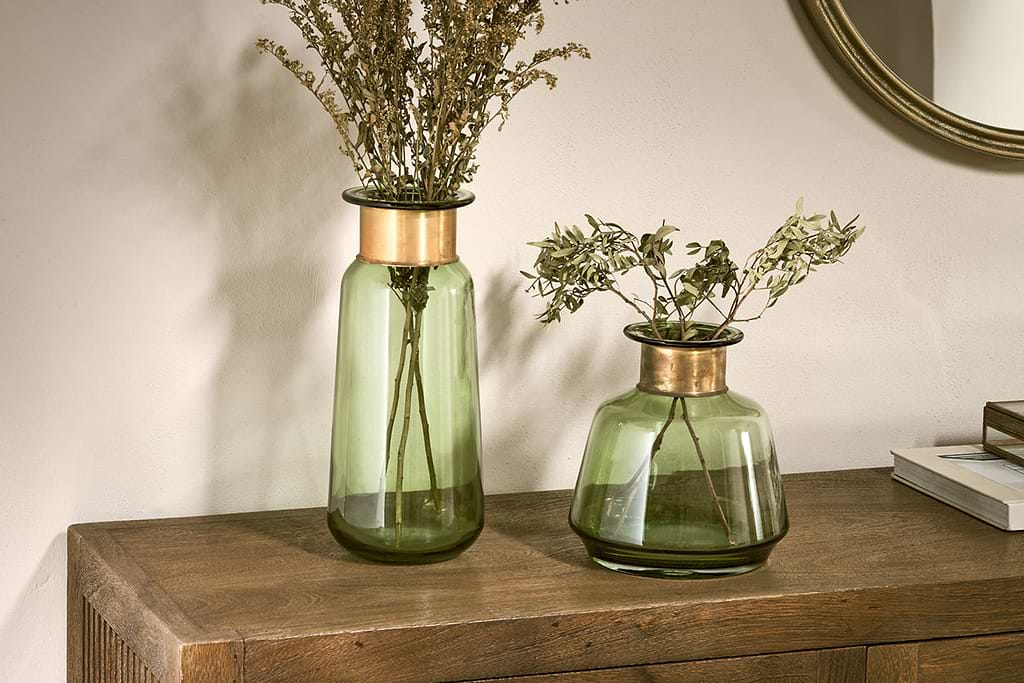
A handful of Nkuku objects that bring texture and calm to a styled bookshelf.
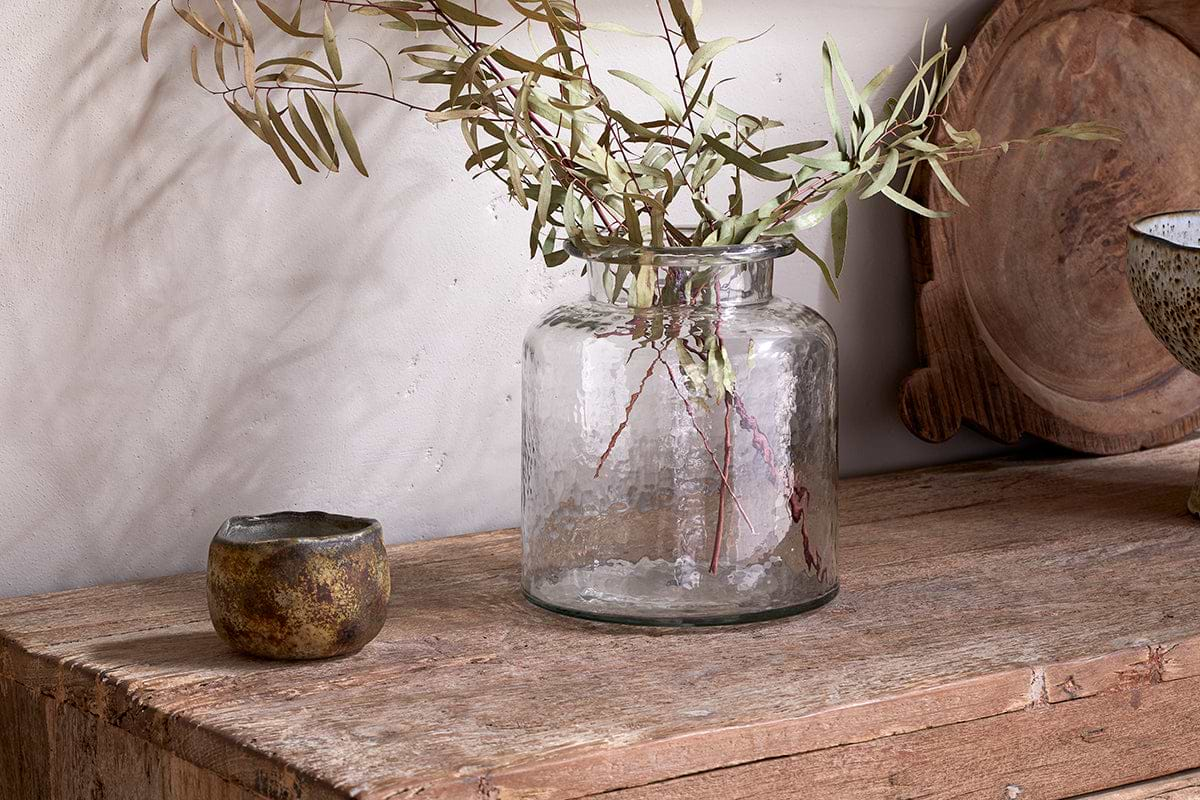
Akra Recycled Glass Vase
Clear cylindrical glass, pairs with stems or sits empty as a quiet accent.
View at Nkuku →
Some links above are affiliate links. If you buy through them we may earn a small commission at no extra cost to you. We only suggest pieces we think fit a calm, lived-in home.
Free guide
The Calm Shelf
12 styling ideas to help you compose calm, balanced shelves in natural texture homes.