

Rental homes often come with awkward gaps, cluttered corners, or walls that seem impossible to use well. Standard bracket shelves rarely solve these problems: custom wall shelves, despite the name, are usually the only shelves that actually fit, but most renters default to what’s cheapest and easiest. The result is rickety displays, mismatched finishes, and nowhere safe to put anything heavier than a candle.
By swapping out off-the-shelf hardware for made-to-measure shelves, anyone can create calm storage that feels part of the room, not an add-on. Today you’ll learn what to remove, what stabilises a shelf, where custom choices work best, and how to avoid minor damage that could cost a deposit. This works especially well in a small apartment kitchen when clutter builds fast because a single strong shelf replaces a whole row of ugly metal brackets.
The short version: Custom wall shelves solve both the look and function issues of rented spaces, fitting awkward walls and supporting what standard shelves cannot. A well-chosen shelf blends with your room, reduces visual noise, and stores more weight safely with less damage to the wall.
Key takeaways
- Custom wall shelves fit awkward areas that standard shelves cannot properly use.
- Solid timber shelves last longer and feel sturdier than MDF or veneer, according to top UK retailers.
- Choosing one consistent wood tone cuts down visual clutter across multiple shelves.
- Floating shelves with hidden fixings support more weight on fewer wall holes.
- Leaving two-thirds of shelf length open keeps a rental from looking crowded.
- Why do standard shelves fail in rented homes?
- How do you measure for shelves that actually fit?
- Where this works best
- What’s the difference between solid timber and veneer?
- Which natural finish shelves work with any wall colour?
- Styling and placement
- How can you get a floating shelf look without specialist tools?

Why do standard shelves fail in rented homes?
Standard bracket shelves often wobble and rarely match the existing walls, while custom wall shelves can be made secure without extra holes or stress. Most rental damage comes from overloading weak MDF or using too many mismatched fixings.
A typical rented flat has walls of uncertain strength, often with hidden pipes or wiring behind the plasterboard. Standard shelves use generic brackets that require precise alignment with studs or risk pulling out under weight. This often leads to a series of small holes as renters adjust placement, a headache at move-out.
Many off-the-shelf units use MDF or particleboard, which doesn’t hold screws as well as real timber. A heavy hand in the kitchen or a shelf loaded with too many books can split the screw holes, sag the shelf, or even rip a chunk from the wall. Unlike purpose-made natural wood shelves, these feel lightweight and temporary.
Clashing bracket styles create visual noise, especially where metal hardware clashes against painted walls or existing woodwork. Compared to a seamless floating shelf, a bracket shelf pulls the eye and breaks up the wall surface. Repeated across a whole room, the effect adds to the feeling of busyness.
To anchor an entryway or add reliable storage to a utility space, swap out thin, bright brackets for a custom shelf made to blend with the room’s tone.
How do you measure for shelves that actually fit?
You measure for custom wall shelves by sizing the shelf to fit either an alcove, a specific gap, or by matching to studs, not just the wall’s total length. This avoids wasted space and reduces the risk of drilling near hidden utilities.
Hallways and living rooms in rentals often have alcoves between chimney breasts, radiators, or built-in storage. Unlike standard shelving kits, made-to-measure shelves are cut for the exact width, not wider, not overhanging. Most product listings filter shelves by shelf width, overall width, and depth, so matching the width of your wall is as simple as measuring the clear inside edge and checking the closest ready-to-ship size.
To avoid damage, scan the wall for studs with a simple handheld stud finder. Mark their position lightly with masking tape. A shelf fixed to two studs can hold more, so always check where they fall before ordering or drilling.
Compared to “eyeballing it” or using a generic sizing guide, measuring lets you avoid both the ugly overhang of a too-wide shelf and the wasted corner when a shelf comes up short. A shelf that sits flush to an alcove gives a permanent look, even in a rental.
Fit a shelf low along a hallway, especially above shoe storage, to keep floors clear in a tight space.
Where this works best
Custom wall shelves work best in rooms with limited built-in storage, awkward wall lengths, or where other brackets feel temporary or out of place. Fitted shelves blend with features like alcoves or pantry walls to create real, usable storage.
Living rooms in older rentals usually have at least one alcove by a chimney breast, which collects stacks of books, boxes, or electronics. Small kitchens often have wasted wall space above the worktop. Minimalist floating shelves suit these gaps, providing space for ceramic jars, wooden utensils, or a line-up of plates within reach.
In family rooms or dining areas, one strong shelf above eye level allows for art or trailing plants that are safe from children or pets. The difference comes from shelf length, made to the exact fit, so nothing looks stuck on. Compared to a leaning bookcase, wall shelves reclaim vertical space without crowding the floor.
Avoid forcing a floating shelf between walls of very different colours, as any mismatch in finish or shelf depth can stand out sharply. Stick with one pale wood in a bright room to keep the shelf backgrounded.
Use a flush shelf inside a utility room, grouping cleaning supplies out of immediate sight but easy to hand.
What’s the difference between solid timber and veneer?
Solid timber shelves are made from one block of wood, whereas veneer shelves use a thin real wood layer over a core of MDF. Solid timber looks natural longer and resists sagging under more weight, based on shelf makers’ comparisons.
Most solid oak floating shelves use 100% genuine timber, giving a dense grain, warm tone, and natural durability. Veneer options, a top layer of oak, cherry, or walnut, are pressed over MDF, so they look like wood but feel lighter and don’t hold fixings as securely for heavy items.
When a shelf will hold proper weight, such as full dinner plates in the kitchen, a solid wood slab is less likely to sag over time. The difference shows after months of use: veneer gets nicks that cannot be sanded out, while solid timber can be refreshed with a gentle sanding and new oil.
A solid timber shelf can read softer or warmer than a glossy laminate edge. Compared to veneered MDF, the grain of real wood changes subtly with light, so the shelf doesn’t “sit” on the wall but settles in. Choosing pure oak or a soft white-oiled pine is a quiet, reliable upgrade.

Place a solid oak shelf above a stove to hold glass jars; leave a veneer shelf for lighter decor only.
Which natural finish shelves work with any wall colour?
Natural wood shelves in oak, pale ash, or mid-tone cherry fit with almost any colour on walls, light or deep, because the wood grain softens the contrast and hides dust. Oak, especially, works well with both white and greige paint.
Entryways in rental homes are often painted off-white, while bedrooms lean towards pastel or grey. Stained woods can look heavy in these spaces. Unfinished or clear-matt sealed oak has a raw, soft look that disappears against pale backgrounds and pairs nicely against navy, sage, or blush walls.
Cherry wood offers a subtle red touch that lights up near cream and pale pinks, but never clashes with earthier shades. An ash shelf, with its even, pale lines, reads less “yellow” than classic pine and suits rental walls commonly repainted by landlords.
Compared to black or dark walnut, which pull the eye and show dust quickly, oak remains most forgiving. One shelf in a consistent tone is less jarring than a patchwork of mismatched woods or painted surfaces. Most customisation options for shelves include colours like white, mocha, latte, and black in gloss or matt, but natural oak is usually the easiest choice for visual calm.
| Wood Tone | Blends With Light Walls | Hides Dust/Smudges |
|---|---|---|
| Oak | Yes | Yes |
| Pale Ash | Yes | Moderately |
| Cherry | Yes | Yes |
| Walnut/Dark | No | No |
| Painted | Depends | Low |
Mount a single oak shelf in a pale living room, and keep the area clear of dark objects for a soft, blended effect.
Styling and placement
Styling custom wall shelves is simplest when using solid shapes, a bowl, a stack of books, a glass jar, and stopping well before the shelf feels busy. A calm shelf leaves about two-thirds of its length open for air and light.
Bedrooms get cluttered quickly with too many competing objects. A shelf with a vase and one small group of books feels lighter than one packed end to end. A woven basket softens angular lines, while a rough ceramic mug adds visual texture without extra colour.
Unlike gallery-style shelves that try to fill every gap with frames or plants, a shelf styled with restraint fades into the background. Instead of adding another ornament, leave space at each end, using only low, wide objects for weight.
A shelf looks more intentional (and less like a catch-all) when objects are grouped in uneven numbers, following the “rule of three.” Three solid shapes, spaced out, keep the look both stable and relaxed.
Quick calm checklist:
- Choose natural wood or matt paint for a soft, dull finish that hides fingerprints.
- Keep spacing wide; group no more than three objects per shelf for easy breathing room.
- Limit the palette, match just one object to the wall’s main shade, or stick to neutral ceramics and glass.
- Anchor long shelves with a low, wide basket or a stack of books on one end only.
- Repeat one texture, like woven rattan or rough stone, across several shelves in the same room.
Style a short shelf above a desk with a white clay cup, a narrow picture frame, and one scented candle for a soft, focused look.
How can you get a floating shelf look without specialist tools?
You get a floating shelf look by using shelves with hidden support rods or simple “keyhole” fixings, needing just a screwdriver and wall plugs, rather than complex hardware. Floating shelves read calm and built-in, especially where bracket shelves felt makeshift.
In most UK rentals, floating shelves use hidden rods secured to wall plugs or studs, so nothing hangs under the shelf. Some floating shelves arrive pre-drilled on the reverse; you slot the shelf over the rods and tap gently in place. Drilling three holes in a line is less disruptive than mounting a large bracket.
Unlike DIY bracket shelves that reveal gaps at the back, a floating oak or ash shelf fits flush, casting a thin shadow line. Compared to heavy-duty mounting strips, floating shelves call less attention to themselves, making small kitchens and narrow entryways look lighter.
A standard shelf supports about 10kg if fixed to studs. Always double-check how to find wall studs for shelf mounting before drilling in plasterboard.
Use a floating shelf above the washing machine to keep detergent clear of splashes and out of reach from kids.
Most people know right away when a room doesn’t feel finished, maybe shoes pile up under the only shelf, or the brackets never sit straight, and something always looks temporary. There’s an itch to straighten or retouch, and nothing quite feels settled. Often, this feeling lingers even after a clean.
The biggest mistake is overloading flimsier MDF shelves or adding clutter atop mismatched brackets, which makes the wall read busier and the room feel smaller. Rooms like this get dustier, with more to move at cleaning time.
Once the shelf actually fits, the whole wall looks calmer and holds what you need, not just what fits by default.
Save this idea for later.
What tends to hold up with custom wall shelves and natural wood
Shelves that use thick timber, especially with a matt finish, resist everyday knocks and fingerprints better than glossed MDF or laminate. Reviewers consistently mention how floating shelves stay put and feel solid under weight, with no wobble. Decorators often recommend staying one shade lighter than your wall if sunlight is strong, as it hides dust and puts less visual strain on the room. A shelf that spans an entire alcove always looks more permanent than a short, standard option hung in empty space.
These patterns show up over years, not weeks. Rooms with natural, unvaried shelves age better and stay calm, even when personal objects come and go.
, Mara, Loom & Glow
Common questions
Why do standard shelves fail in rented homes?
Standard bracket shelves often wobble and rarely match the existing walls, while custom wall shelves can be made secure without extra holes or stress. Most rental damage comes from overloading weak MDF or using too many mismatched fixings. A typical rented flat has walls of uncertain strength, often with hidden pipes or wiring behind the plasterboard.
How do you measure for shelves that actually fit?
You measure for custom wall shelves by sizing the shelf to fit either an alcove, a specific gap, or by matching to studs, not just the wall’s total length. This avoids wasted space and reduces the risk of drilling near hidden utilities. Hallways and living rooms in rentals often have alcoves between chimney breasts, radiators, or built-in storage.
What’s the difference between solid timber and veneer?
Solid timber shelves are made from one block of wood, whereas veneer shelves use a thin real wood layer over a core of MDF. Solid timber looks natural longer and resists sagging under more weight, based on shelf makers’ comparisons. Most solid oak floating shelves use 100% genuine timber, giving a dense grain, warm tone, and natural durability.
Which natural finish shelves work with any wall colour?
Natural wood shelves in oak, pale ash, or mid-tone cherry fit with almost any colour on walls-light or deep-because the wood grain softens the contrast and hides dust. Oak, especially, works well with both white and greige paint. Entryways in rental homes are often painted off-white, while bedrooms lean towards pastel or grey.
Explore more calm combinations inside our Shop The Look .
Shop the Look
A few Nkuku pieces that sit quietly on open shelves.
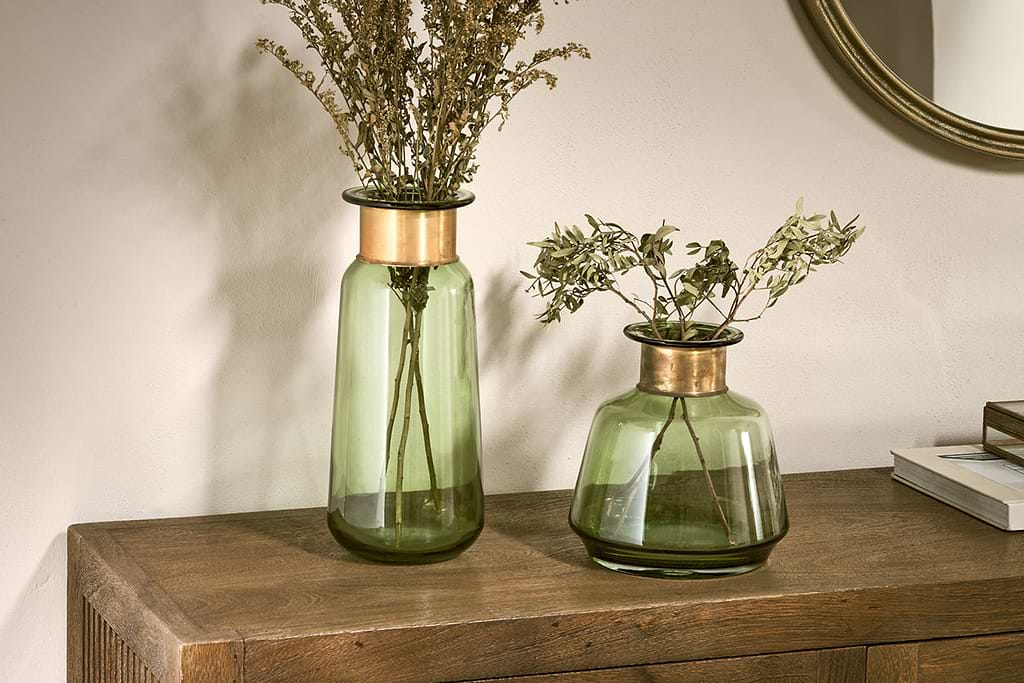
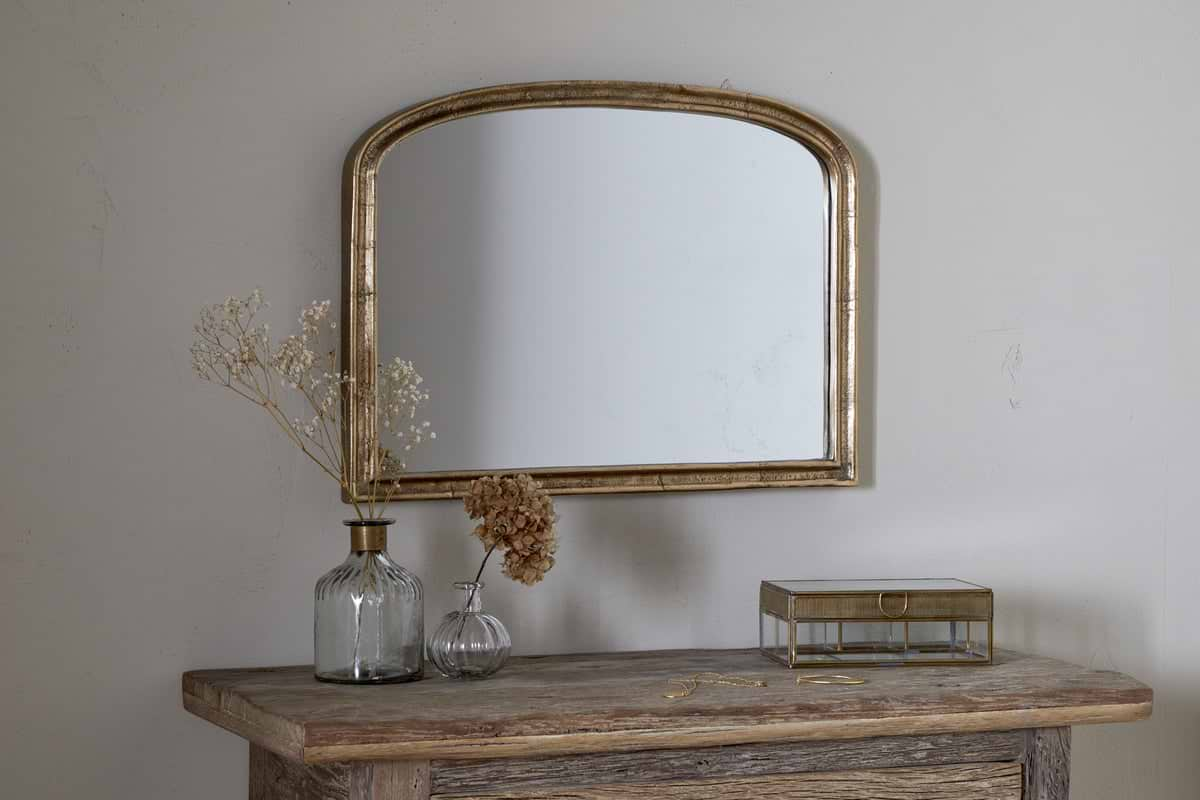
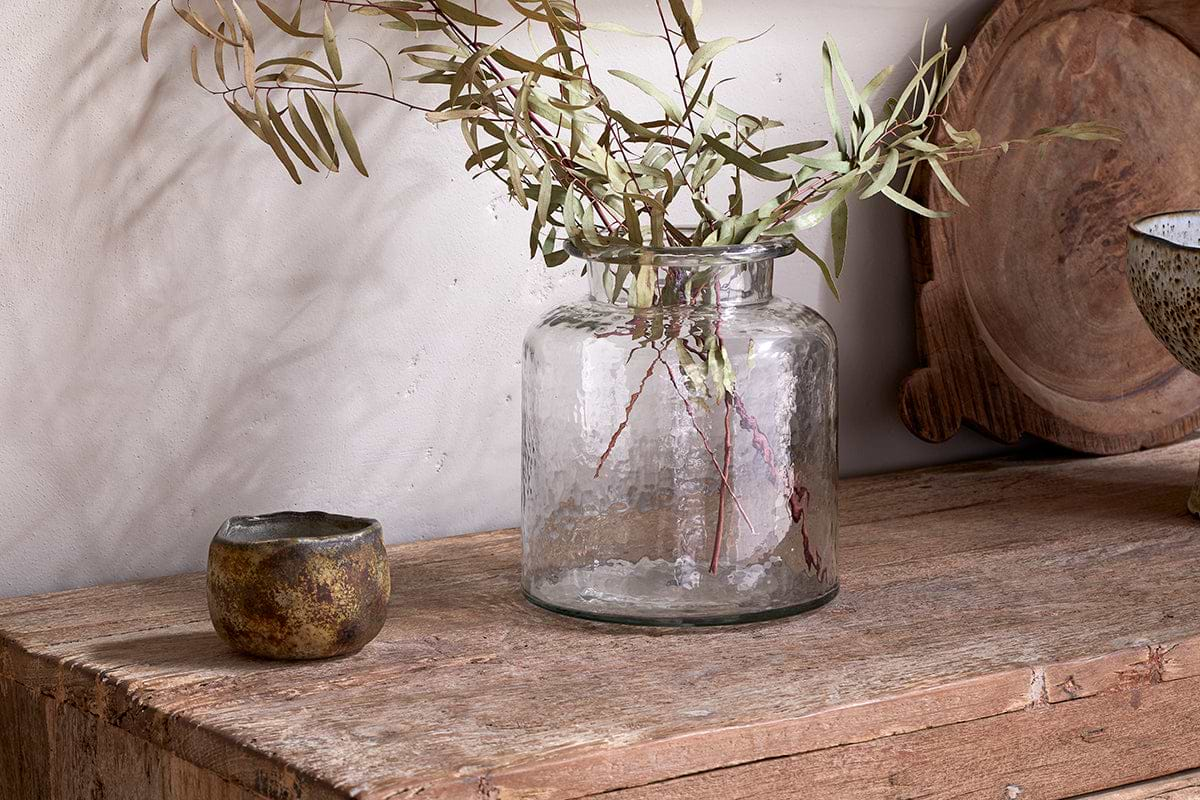
Akra Recycled Glass Vase
Clear cylindrical glass, pairs with stems or sits empty as a quiet accent.
View at Nkuku →Some links above are affiliate links. If you buy through them we may earn a small commission at no extra cost to you. We only suggest pieces we think fit a calm, lived-in home.
Free guide
The Calm Leaf
12 quiet ways to bring dried botanicals, stems, and natural textures into calm spaces.