

Many people start with good intentions when styling Kallax shelves, only to find the cubes overloaded with books, random baskets, and scattered keepsakes. The effect, instead of feeling open or tidy, looks crowded, especially in a rental or compact living room where every bit of space matters.
Today you’ll see how to pare down, group, and display objects so your shelf feels calm instead of messy. This works especially well in a small apartment entryway when the Kallax unit is the only open storage because it gives back breathing room and lets other objects stand out.
The short version: The key to styling Kallax shelves is to keep part of each cube empty, use closed storage for loose bits, and stick to one color story. Less on each shelf means everything feels lighter, and lets you turn clutter into order with just a few small shifts.
Key takeaways
- A Kallax shelf looks calmest when at least one cube per row is left empty.
- Closed baskets or boxes hide loose items and cut down visual clutter.
- Repeating one warm material per row keeps cubes from looking cold or cheap.
- Open cube layouts show best in rooms with simple walls and a clear color palette.
- The 2×2 Kallax is the easiest model to tidy quickly, according to Food52.

Why do Kallax shelves become cluttered so quickly?
Kallax shelves fill up fast because the open cubes invite loose objects and mismatched items, making every shelf look busy. The simple grid tempts you to use every inch, but that creates visual noise.
In an everyday living room, a family often uses Kallax as a catch-all between books, baskets, and toys. Each cube fills up, and the mix of visible things can quickly turn chaotic. A Kallax unit set along a hallway is especially prone to becoming a drop-zone for paper piles and spare cords.
Because every cube is exactly the same size, the eye doesn’t get a break, unlike an uneven bookshelf with staggered heights or varied compartments, which naturally limits what you add. A full set of small objects packed tight leaves no place to rest the eye.
In contrast, a classic Billy bookcase with doors hides much of the clutter, while a bare Kallax shelf creates more visual distraction. The open grids reward careful editing, but punish overfilling.
The effect is most obvious in open-floor layouts where the shelf is visible from several rooms. Even one overstuffed cube pulls focus and makes the area look untidy. Leaving one or two cubes empty keeps the overall feel cleaner and more organized.
Where this works best
Calm Kallax styling makes the biggest impact in small apartments, rental spaces, or open-plan living rooms where clutter shows quickly. The look holds up best with light walls and simple furniture.
Shared living rooms and multipurpose bedrooms often rely on Kallax cubes for quick-access storage. These spaces have limited spots to stash away everyday items. In a white or pale-tone room, the grid stands out more, making it especially important to prevent overcrowding.
A Kallax used as a room divider between kitchen and lounge shines if a consistent palette and closed storage are used. The open cubes can easily separate into “display” and “hidden” zones, letting you keep things that look nice on show, while tucking away messier bits.
Avoid using a bright-colored Kallax, or one lined with too many storage boxes, in a space with bold or patterned walls. The shelf competes with everything else and can overwhelm a small dining area.
Leaving a few cubes empty or with just a simple vase or stack of books works well in both spacious and tight layouts, especially when you want the rest of the room to feel tidy and bright.
How do you keep Kallax cubes from looking busy?
A Kallax shelf looks open instead of crowded when you use fewer, larger objects per cube and keep at least one cube per row empty. Spacing things out stops the grid from feeling heavy.
When every single cube is filled with a different color or small item, the shelf starts to look like storage, not display. Grouping a few books flat, pairing a clay pot with a plant, or placing a woven basket in only some of the cubes gives the eye direction. Unlike stuffing each cube with tiny random things, this lets the structure feel lighter.
Most stylists recommend filling about half to two-thirds of each shelf, while keeping the rest open, according to simple shelf styling principles. If every shelf contains a bit of empty space, the whole piece becomes a subtle background, letting special objects anchor the view. A single open cube on each row acts like a visual pause, making colorful vignettes feel less abrupt.
Compared to adding more objects or trying to fill in gaps with small trinkets, leaving space around each main piece makes the entire Kallax feel less like a catch-all and more like a calm feature.
For day-to-day use, try putting one object with height (a lamp, tall vase, or leafy plant) in just one cube per row. The rest can hold baskets or books, but skipping a cube in between is what makes the styling calm instead of crowded.
Styling and placement
Placing Kallax cubes against a simple wall and limiting the variety of objects per shelf keeps the unit from dominating a small room. The right arrangement brings more calm than more storage.
In an entryway, a Kallax can act as both console and storage, if you hold back on how much you add to each cube. Open cubes closer to eye level should display one or two taller items, like a linen-covered box or a stoneware jug, rather than lots of little pieces. Lower cubes do better holding baskets, so the top draws focus instead of shoes and tech.
The effect of grouping one color, one height, and one material per row is that the Kallax’s structure becomes the star, not the contents. Using too many different shapes or putting three tall things next to each other breaks this flow, making the shelf feel lopsided or unsettled.
| Placement | Best Use | Avoid |
|---|---|---|
| Against wall | Entry, bedroom | Messy, oversize decor |
| As divider | Open living/dining | Overfilling both sides |
| Window nearby | Plants, glass | Dark, heavy bins |
A Kallax shelf works best when you position it where people linger but keep sightlines clear. For floors, woven baskets on the lowest shelf catch clutter, while open display above highlights lighter, more special pieces. The further you move away from mixing too many styles, the sharper your shelf appears.
Quick calm checklist:
- Use woven, linen, or uncoated wood bins for closed storage.
- Keep one or more cubes empty on every level.
- Stick to three main tones, one neutral, one accent, one natural.
- Pace tall items so only one per row stands above the rest.
- Avoid mixing plastic bins and baskets in the same view.

Which inserts hide clutter, and which make it worse?
Woven baskets and solid boxes hide loose items best, while clear bins or mesh inserts reveal clutter and add visual noise. The right insert type changes the whole look of the shelf.
IKEA sells specific boxes and baskets, like the BRANÄS container, that are made to fit Kallax cubes snugly and hide away everyday mess. These are handy for toys, cables, and anything that won’t stack neatly. Lidded options or rigid bins work especially well for things you don’t want to see daily.
Plastic or clear boxes might seem practical, but in a living space, they show off their contents and amplify the clutter problem. Unlike soft, textured baskets, clear bins make every tangle more obvious. Mesh screens do a similar thing, what’s hidden from one angle pops into view from another.
If you’re solving a storage issue in a studio or bedroom, choosing the insert sets the tone. A line of open baskets or well-fitted doors keeps things tucked away, letting the rest of the Kallax stay open and calm. Just one mismatched box, though, makes the whole grid feel less tidy.
For renters, who may not want to drill or paint, going for well-made fabric bins with a neutral palette delivers closed storage and blends with most apartments. This tip works anywhere you want more order without committing to permanent changes.
What materials stop Kallax looking cheap?
Natural fibers, textured ceramics, and aged wood inserts add weight to Kallax cubes and keep them from looking plasticky or out of place in a main room. Material choices create the calmest shelf.
A shelf unit made of particleboard can feel out of sync in a grown-up living room or organized rental. Mixing in a raw-edge wooden photo frame, a matte clay bowl, or a jute basket instantly upgrades the look and gives the shelf more presence. Most stylists lean toward one warm material per row to balance the uniform lines.
Compared to clusters of bright plastic bins, linen baskets look softer and bounce less light, keeping the cubes from looking harsh. According to IKEA’s own guides, the Kallax was designed with basket storage in mind, making woven options a practical and fitting add-in for both style and function (source).
Plants in rough clay pots also absorb more sunlight and look less stark than colorful glazed ones. Mixing at least one material with a tactile surface per row helps the overall shelf read as more expensive and considered.
For best results, add only one strong texture per row, a heavy seagrass basket, a ribbed glass vase, or a wool storage box. More than that starts to compete rather than support the calm look.
Styling a 2×2 Kallax: the renter’s fix
A 2×2 Kallax is easiest to keep tidy by using just one basket, one tall object, and leaving one cube open. Less really does look better here.
Many renters start with a compact 2×2 Kallax because it’s light and fits anywhere, from entry landing spots to the foot of a bed. According to Food52, this is the most portable version, often moved from dorms to first apartments.
Setting the 2×2 flat under a window keeps its impact low. Two cubes can hold bins, one for quick-grab scarves or shoes, the other for keys or chargers. One cube can show a favorite book or a scented candle, while the last stays empty, giving the whole piece relief. Unlike stuffing every space, this “one open, one show, two hide” principle works every time.
If you’re struggling with limited floor space, stacking the 2×2 Kallax vertically works as a nightstand or a makeshift side table. The trick is to skip filling every square, use only what you need, and the rest keeps the room feeling open.
For color blocking, try repeating finishes from elsewhere in the room, a tan linen curtain backed by a jute cube, for example. Keeping the palette linked makes the cube unit fade into the background, supporting the rest of the decor instead of stealing attention.
What tends to hold up with styling Kallax shelves
Across many sources and reader questions, one pattern is clear: calmest results come from choosing fewer objects and sticking with soft materials. Open cubes reward holding back, not stocking up. Most people say their shelves feel “busy” until they remove half of what’s there and change one detail, often just switching three plastic bins for woven ones.
Decorators regularly recommend matte finishes near windows, since reflective bins catch daylight and look brighter and harsher compared to linen or cane containers. In the long run, fabric and wood wear in quietly, picking up less dust than glossy surfaces.
Letting empty space work for you is the one habit that stands up even as storage needs shift season by season.
, Mara, Loom & Glow
Common questions
Why do Kallax shelves become cluttered so quickly?
Kallax shelves fill up fast because the open cubes invite loose objects and mismatched items, making every shelf look busy. The simple grid tempts you to use every inch, but that creates visual noise. In an everyday living room, a family often uses Kallax as a catch-all between books, baskets, and toys.
How do you keep Kallax cubes from looking busy?
A Kallax shelf looks open instead of crowded when you use fewer, larger objects per cube and keep at least one cube per row empty. Spacing things out stops the grid from feeling heavy. When every single cube is filled with a different color or small item, the shelf starts to look like storage, not display.
Which inserts hide clutter, and which make it worse?
Woven baskets and solid boxes hide loose items best, while clear bins or mesh inserts reveal clutter and add visual noise. The right insert type changes the whole look of the shelf. IKEA sells specific boxes and baskets, like the BRANÄS container , that are made to fit Kallax cubes snugly and hide away everyday mess.
What materials stop Kallax looking cheap?
Natural fibers, textured ceramics, and aged wood inserts add weight to Kallax cubes and keep them from looking plasticky or out of place in a main room. Material choices create the calmest shelf. A shelf unit made of particleboard can feel out of sync in a grown-up living room or organized rental.
Explore more calm combinations inside our Shop The Look .
Shop the Look
A few Nkuku pieces that help keep cube shelving calm and tidy.
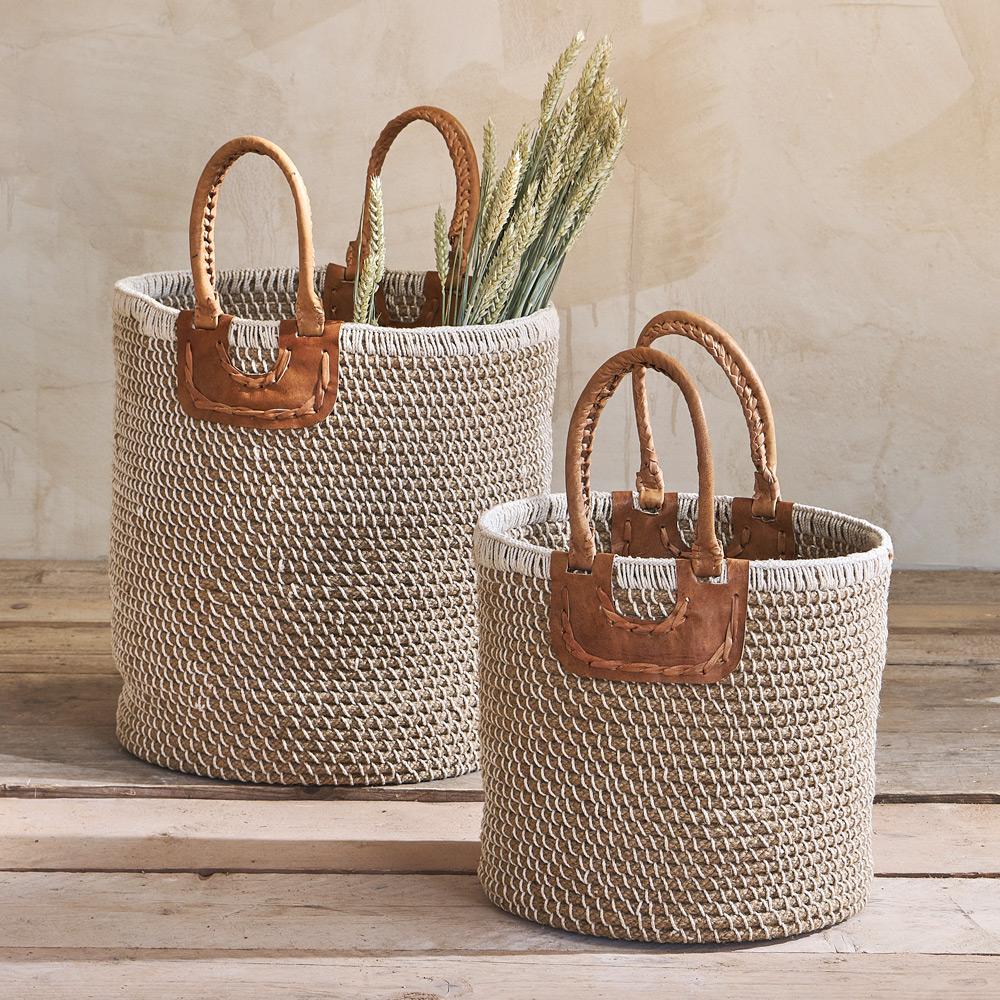
Indra Coil Basket
Natural coil weave, neat enough to leave out, large enough to hide clutter.
View at Nkuku →
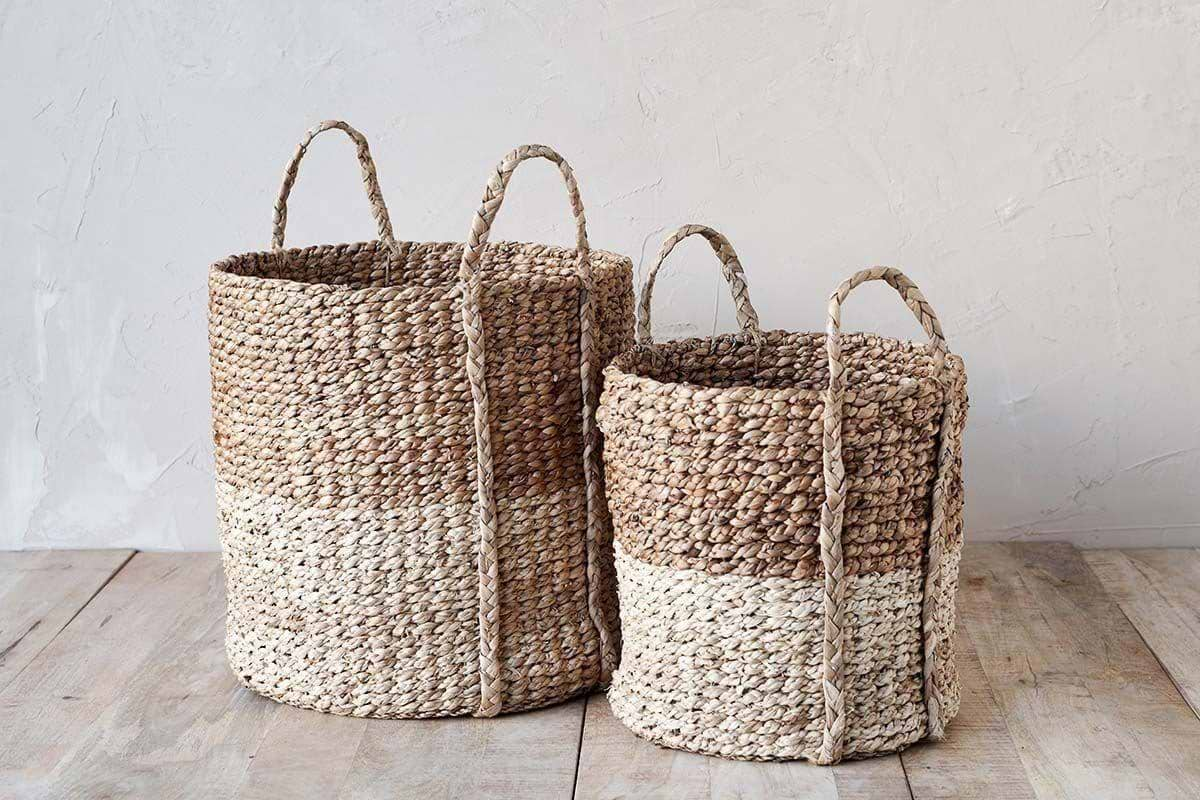
Nkomi Basket
Woven storage with a calm silhouette, works open or tucked under a console.
View at Nkuku →Some links above are affiliate links. If you buy through them we may earn a small commission at no extra cost to you. We only suggest pieces we think fit a calm, lived-in home.
Free guide
The Calm Shelf
12 styling ideas to help you compose calm, balanced shelves in natural texture homes.