

Polished plaster walls are smooth, textured interior surfaces made from a mix of lime and marble dust, applied in thin layers and burnished to a soft sheen. They differ from paint by offering a denser, more tactile finish that reflects light softly, creating a sense of calm and depth. This makes them ideal for creating a focal point in small living rooms or transitional spaces where a subtle, non-glossy texture is desired. The finish is achieved through patient application and careful trowel work to minimise visible marks.
Many people want the depth and texture of a polished plaster wall, but feel blocked by the thought of complicated specialist tools, mess, and high costs. When the current wall finish feels flat or dull, the idea of changing it can seem out of reach or risky, especially if you’re working with tight budgets, rentals, or narrow rooms.
Today, you’ll get a clear view of the material options and the exact steps for a textured, calm plaster finish that reads as subtle, not showy. This works especially well in a small living room when the light is low because the finish softly bounces brightness without glare or hard lines.
The short version: A polished plaster wall gives you tactile depth and calm texture at home without professional training if you use the right mix, tools, and step-by-step method. Polished, Venetian, and lime finishes each look different, so matching the technique to your needs keeps the process smooth and results clean.
Key takeaways
- A polished plaster wall is smoother and less patchy than a painted wall or limewash.
- Venetian plaster mixes marble dust into lime for extra shine and visual depth.
- Tadelakt, gesso, and limewash offer pale, matte alternatives with less gloss and easier upkeep.
- Burnishing with the right trowel gives the surface a subtle shine and hides some marks.
- Most polished plaster wall finishes are applied in two or three layers, not just one (according to Wikipedia).
- What makes a polished plaster wall different from paint?
- Polished plaster vs Venetian plaster: which is right for you?
- How do you get a calm finish without visible trowel marks?
- Where this works best
- Styling and placement
- Budget alternatives: can lime and gesso mimic the look?
- Caring for a plaster wall so it stays clean and calm

What makes a polished plaster wall different from paint?
A polished plaster wall reflects light in a soft, varied way because of its mineral content and hand application, while painted drywall gives flat, even color. The surface feels cool, dense, and slightly touchable compared to a chalky wall.
In a hallway that gets filtered daylight, a painted wall may look dull by afternoon, but a polished plaster surface will show soft movement as the sun shifts. Marble dust and lime in the plaster create both a sheen and a stone-like density. This contrast catches the eye at a glance but never shouts.
Most people expect plaster to be heavy and cold, but the warmth comes through in the hand-burnished finish. The process leaves faint traces, a subtle swirl or cloud that reads richer than a plain wall. Unlike latex paint, which sits on the surface, polished plaster merges with the wall for a solid feel.
A bedroom wall with matte paint can feel calm, but adding a layer of wall decorative plaster changes how lamps and morning light move across the space. The result feels intentional but relaxed, suited to rooms where quiet detail matters.
When you want to soften a long, blank wall or upgrade a dining area without heavy decor, this finish makes the space feel more finished with limited extra objects. A polished plaster wall works best where the eye needs an anchor but not a distraction.
Polished plaster vs Venetian plaster: which is right for you?
Venetian plaster mixes lime and marble dust for a slightly glossier, deeper finish than standard polished plaster; both need layering and careful burnishing, but the look and maintenance differ. Picking between them depends on the feel and upkeep you want.
Venetian plaster is made from slaked lime and marble dust, applied in thin coats that can be tinted almost any color. According to Wikipedia, the layers are burnished for a subtle sheen and illusion of depth, so the surface appears like stone but is cool and smooth to the touch.
Polished plaster covers a wider group of finishes, from soft, almost matte stuccos to high-gloss mirror effects. Venetian plaster sits at the shiner, more decorative end. Unlike rough lime plaster, Venetian is prized for its slippery, fine appearance and ability to make a narrow room feel wider by bouncing light.
Choosing between the two often comes down to cleaning and visual weight. Standard polished plaster walls work well where you need a forgiving, touchable finish, while Venetian plaster wall ideas serve best when you want a dramatic yet still subtle accent in a living room or entry.
If your house has pets or young children, a less glossy finish can disguise everyday marks. In a bathroom, the extra wax coating of Venetian plaster sheds splashes and lifts the feel of a small, windowless space.
| Finish | Look | Care |
|---|---|---|
| Polished Plaster | Matte to satin, subtle | Wipe with soft cloth |
| Venetian Plaster | Glossy, deep, smooth | Wax coat, gentle cleaners |
| Limewash | Cloudy, powdery matte | Repaint touch-ups |
Add a pale Venetian plaster wall in a dark stairwell to open up the area without any new lighting or large mirrors.
Compared to paint, you gain not just color but a sense of dimension and lived-in warmth.
How do you get a calm finish without visible trowel marks?
Getting a clean plaster finish means applying thin coats, letting each layer dry fully, and using a wide trowel at a slight angle to polish, not scrape. This softens edges and avoids unwanted lines.
When updating an old plaster wall texture, the urge is to pile on thick layers to cover flaws. This often makes things worse: deep trowel marks and uneven patches that catch the light in a bad way. Instead, focus on patience between coats and polishes.
Applying interior plaster wall finishes goes more smoothly with practice, but a gentle hand matters more than speed. Choosing a trowel with rounded corners reduces scratch lines. If the plaster starts to pull or break, mist with water and continue. The trick is soft hand pressure and noticing when the surface starts to shine on its own.
Unlike fast-drying paint, plaster takes longer between steps, allowing differences in texture to blend instead of compete. A steel trowel works best when burnishing is needed for a glossy finish, according to Wikipedia, but microfibre pads can help smooth and cloud a surface for a quieter look.
Try practicing on a test board before touching a main wall. Place the board in low light to see whether marks show. Once the best technique settles in, a corner or alcove is a smart next step for confidence.
Adding a pale plaster section above a sideboard blends old and new: a repaint looks static, but a gentle hand-finish reads as meant-for-this-space.
Where this works best
Feature plaster walls work best in transitional spaces, curved corners, and places where natural light shifts through the day. Small rooms, alcoves, and behind shelving are ideal for a calm effect.
Open-plan living areas sometimes lack a focal center, so placing a polished plaster wall behind the sofa or dining table anchors the view. Even in rentals or narrow hallways, using a plaster finish in a smaller zone makes the space feel deliberate without overwhelming it. Apartments with limited light benefit most: the surface glows gently and hides marks better than glossy paint.
Bathrooms often feel cold thanks to tiles and glass, but a tadelakt or Venetian finish above the sink absorbs and bounces light softly. In a bedroom, using wall decorative plaster for just the bed’s backdrop draws focus and means you need fewer pictures or framed art to complete the space.
Avoid using polished plaster on every wall in a room, too much texture can look busy, not calm. A kitchen splashback or an accent niche is enough. Large, blank stretches in corridors handle the finish best when paired with other flat surfaces like cabinetry or matte doors. Instead of finishing full walls, try an arched or curved plaster wall to break up rectangles. Surfaces subject to lots of splashes (like near cooktops) demand the most resilient waxed finish.
Curved plaster wall details, like around windows or creating an arched opening, work because the shadows fall gently across the shape, hiding seams and adding interest.

Styling and placement
A calm plaster wall looks best when styled with natural textures, loose groupings, and a palette that stays two or three shades apart. Avoid crowding the wall or using glossy competing surfaces nearby.
Open shelving in a kitchen with a polished plaster background needs less decoration. A single clay bowl or a woven basket adds dimension without visual weight. Where a painted wall would need bold art, the tactile finish holds its own, it softens stark spaces and warms cool metals or glass.
Many try to style these walls with small gallery frames, but busy clusters break the flow of color and make the plaster seem more fussy. Instead, anchor one large print or hang nothing at all, letting the texture serve as the focal point. Compared to a stacked display, a bare expanse reads as relaxed and modern.
A single anchor piece in wood, ceramic, or linen works with the wall, not against it. Placing a wool throw on a bench or a cane chair near the finish uses contrast to offset any coolness in the plaster. In a long entryway, repeated elements (a group of three simple vases, spaced) work better than many mismatched knick-knacks.
Quick calm checklist:
- Use natural, touchable objects like linen, clay, or unfinished wood in front of the wall.
- Keep at least half the wall surface clear, avoiding oversized frames or shiny art.
- Choose a limited palette, two calm shades and one accent at most.
- Repeat one texture in both the wall finish and a nearby object (e.g., matte bowl, basket).
For living rooms, wall decorative plaster behind a low bookshelf draws attention without busyness. In bathrooms, style with a round stone tray and clear glass for an easy, grounded look.
Budget alternatives: can lime and gesso mimic the look?
Limewash and gesso give a similar soft, layered effect for a lower price, but they have a powdery feel and show brushstrokes more clearly than real polished plaster. They work best for gentle texture without shine.
Limewash, a simple blend of slaked lime and water, creates a cloudy, breathable finish that settles into tiny changes in the wall. It is ideal for rental-friendly projects or trial runs since it is more forgiving and easy to touch up. A single small tub can cover a feature wall with enough variation to mimic much costlier materials.
Gesso wall finishes, common in art studios, are known for a luminous chalk-white appearance. While not as common for full walls, they offer a matte base for subtle sculptural effects or calm light diffusion in awkward corners. Unlike polished marble finishes, these alternatives do not resist stains and need occasional repainting.
Compared to traditional Venetian plaster wall ideas, these budget options demand fewer tools but require an honest approach to imperfection, texture and minor patches show more clearly. For rented spaces or low-traffic bedrooms, this can actually bring more warmth, as the surface ages and wears gently.
In family areas, the low cost means you can experiment on a single wall, and repaint if the color or finish does not work with your furnishings. Use for temporary or seasonal refreshes rather than high-touch entryways.
Caring for a plaster wall so it stays clean and calm
Polished plaster and Venetian finishes last longest when dry-dusted weekly, not soaked, and protected from sharp furniture corners. Avoid harsh cleaners to keep the surface from going patchy.
Mild stains lift with a soft, barely damp cloth. For glossy Venetian finishes, a clear wax layer protects against smudges and water. Where kitchens or bathrooms face more splash risk, this sealant is essential and needs re-applying each year to prevent dull spots. Regular daylight keeps the color consistent and prevents moisture buildup on cold days.
A standard painted wall may show finger marks quickly, but a well-burnished plaster wall hides these with its slight sheen and mottling. Unlike tile, there are no grout lines to collect dirt. Deep marks from shoes or bags should be gently buffed, never scrubbed, a microfibre pad is best.
Care differs by finish: limewash needs touch-ups where traffic is highest, while tadelakt and Venetian need more care when furniture is moved. In rental homes, stick to sections behind furniture or in lower-traffic zones to reduce risk.
Hallways and bedrooms are simplest: keep the wall open, choose dry dusting once a week, and avoid overly heavy decorations that might scrape or mark the finish.
What tends to hold up with calm plaster wall finishes
Across many rooms and product reviews, one pattern stands out: calm finishes last and stay gentle when they’re not overloaded with competing decor. Most decorators advise keeping only one true plaster focal wall per space, as more can make the room feel heavy or nervous. Matte or softly polished textures get recommended for areas that see midday light, since they don’t glare, especially near large windows.
Many readers report the surface stays smoother and hides marks best in low-traffic areas or alcoves. Specialist tools like rounded trowels and microfibre pads are common picks to avoid sharp edge lines. The main maintenance lesson is consistency: light dusting and occasional touch-ups matter more than deep or frequent cleaning.
, Mara, Loom & Glow
Common questions
How do you polish a plaster wall?
To polish a plaster wall, wait until the plaster is partly dry, then rub the surface with a special steel trowel at a shallow angle to bring out the sheen. Use wide, overlapping motions to avoid sharp lines. Some finishes need a protective wax coat afterwards for water resistance and extra shine.
What is polished plaster also called?
Polished plaster is also called Venetian plaster, Italian plaster, or stucco lustro. Each uses a base of lime mixed with marble dust or fine sand, with differences in shine and finish. Several techniques exist, including marmorino and tadelakt, each named for the region or specific recipe used.
What is the average price for a polished plaster wall in the UK?
The average price for a polished plaster wall in the UK ranges from £80 to £130 per square metre, depending on the finish and complexity. Specialist finishes or curved surfaces can increase costs. Materials such as marble dust or high-end waxes make up much of the price, along with skilled application.
What is the difference between polished plaster and Venetian plaster?
Venetian plaster is a type of polished plaster made mostly from lime and marble dust, giving a glossier appearance and more depth, according to Wikipedia. Polished plaster includes a range of finishes, from flat matte to shiny, with various textures. Both rely on hand application and multiple coats.
Explore more calm combinations inside our Shop The Look .
Shop the Look
Pieces with quiet presence that sit well against a textured plaster feature wall.
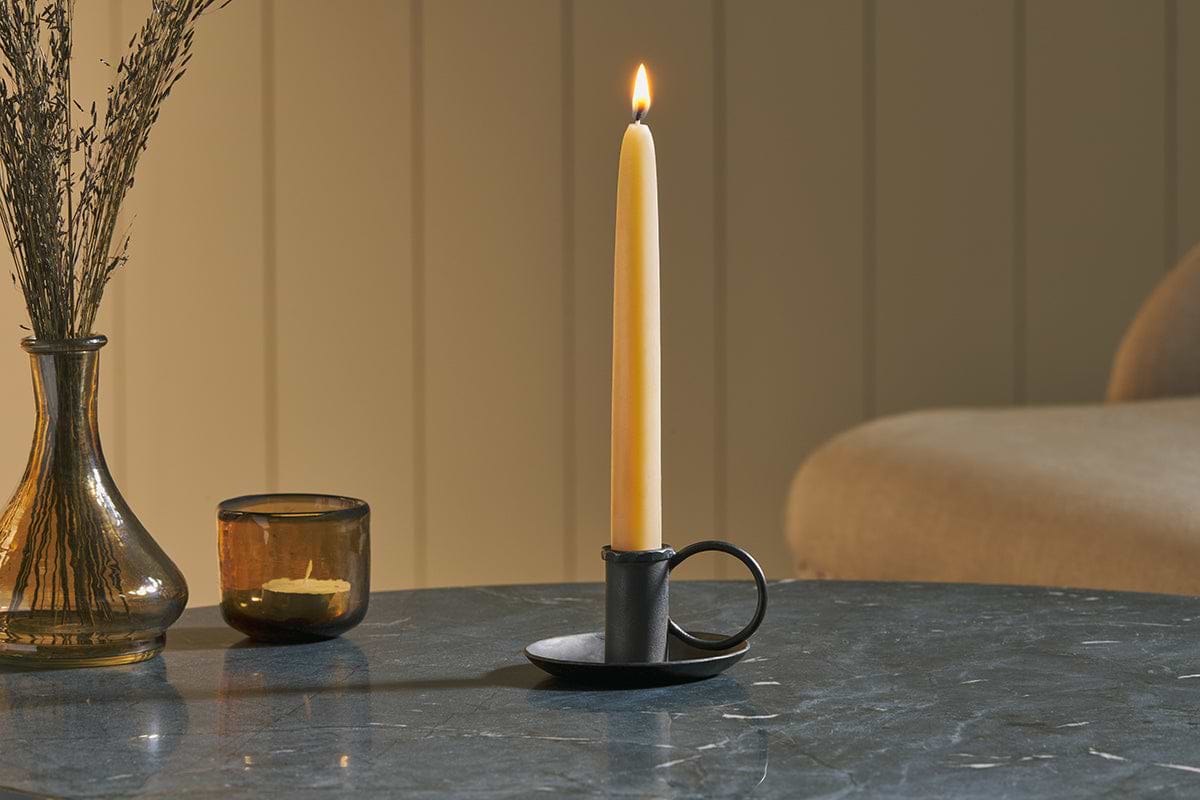
Amri Iron Candlestick
Slender iron with quiet presence, works alone or in clusters of three.
View at Nkuku →Some links above are affiliate links. If you buy through them we may earn a small commission at no extra cost to you. We only suggest pieces we think fit a calm, lived-in home.
Free guide
The Calm Leaf
12 quiet ways to bring dried botanicals, stems, and natural textures into calm spaces.