

Small apartments can feel cramped, especially when the windows sit awkwardly or light is patchy. For many, dark wood blinds seem risky, there’s a worry they’ll make the room look even smaller or block too much sun. But the problem isn’t always the color; it’s how most blinds are chosen and placed, ignoring texture, slat width, or how light really moves through the space.
Today, you’ll see exactly how dark wood blinds can clear visual clutter while giving you better control over light and privacy. You’ll learn what to swap, where to trim back, and which details matter most. This works especially well in a small living room with limited light when you want to keep the decor calm and natural because darker wood handles visual weight better and hides everyday marks.
The short version: Dark wood blinds give better light control and texture without crowding a small space if you choose the right slat width and placement. Blinds with visible grain feel less flat, let you block or soften sunlight, and help a cramped room feel more finished.
Key takeaways
- Dark wood blinds in small rooms work best with slat widths that match your window and light needs.
- Texture in the wood lowers the visual weight, avoiding a heavy or flat look on the window.
- Real wood blinds stay warmer to the touch and fit dry rooms, while faux wood is better in kitchens and bathrooms.
- Some companies offer a five-year guarantee on blinds, according to Wooden Blinds Direct.

Why do dark wood blinds work in small rooms?
Dark wood blinds in a small room add texture and create a clearer boundary at the window, instead of making the walls feel busier. Real grain helps the surface feel natural, which means the window looks intentional, not crowded.
In a small apartment living room, visual clutter shows fast. Many people reach for pale blinds to make the space feel bigger, but these can end up looking bland or washed out next to dark wood floors or a dark grey couch. The window zone then feels like a leftover.
Dark wood blinds draw the line for where light stops and wall starts. The edge is clear but not harsh, so your eye settles on the frame rather than darting between mismatched whites or plastics. This works because the material signals “done” without the need for extra trim or curtains.
A flat plastic blind fights with a wood bookshelf and makes all the lines look hard. By using real wood texture, you lower that visual tension. Even with deep color, the grain breaks up the surface so the window isn’t a black hole. Place them where you want to zone off a reading corner or define a bed area in a studio.
Where this works best
Dark wood blinds are most helpful in rooms where window size and awkward placement call for a strong, clear line but not too much bulk. This fits especially well with low-light small bedrooms, narrow kitchens, and oddly-placed living room windows.
Small bedrooms often have only one window, sometimes tucked into a side wall or under an eave. Using a deeper wood tone there keeps the focus on the bed rather than the window, especially when teamed with pale walls and natural textures. In narrow kitchens, dark wood blinds at the window add calm by breaking up the run of counters and giving the window a finished edge.
If you’re working with a living room that has one window near a corner, using dark wood blinds, especially Venetian blinds with real slats, controls both privacy and glare, making it easier to use the space any time of day. The grain of real wood shades lets in slivers of light while muting harsh sun.
Avoid using very dark wood blinds in bright, glossy white bathrooms if you want a light-drenched look. The sharp contrast can pull focus away from subtle tile or stone, and may read as heavy against modern fixtures. Pairing blinds with similar depth to the floor or cabinets makes the shift less sudden.
How do dark wood blinds control light without closing in the space?
Dark wood blinds control the quality of daylight by using slats you can tilt, letting you block harsh sun or soften window glare. The texture of real wood scatters light a bit, so rooms feel softer, not boxed in.
Many people fear that dark window coverings will swallow up what little daylight they have, but this depends more on slat width and finish than color alone. A well-chosen blind can actually give you better morning and evening light, especially with a matte finish that keeps the light gentle, not blinding.
Venetian blinds, especially with wood grain, work well because you can tilt the slats up or down to set the amount of light across your floor, walls, or sofa. Unlike roller shades, which always create one big block, blinds let you fine-tune the look hour by hour.
If the room has only one window, you’ll notice glare bouncing off light colored roller blinds, making the space feel harsh. A dark wood finish absorbs some of this, but the visible grain keeps the window from reading as a dark spot. For rooms that shift from bright morning to shaded evenings, this flexibility is a daily win.
Real wood vs faux wood: what’s best for your window?
Real wood blinds add warmth and a true grain, making them perfect for dry living rooms and bedrooms, while faux wood is more stable in kitchens and bathrooms where heat and moisture rise.
Real wood blinds bring real character: you see the grain, spot the color changes, and feel a slight warmth to the touch. They last well in dry rooms and people like them for reading corners and bedrooms. However, wood doesn’t always match up to steamy kitchens or bathrooms where water spots or splashes can leave marks.
Faux wood blinds have improved: now, many carry a fine printed grain that looks convincing from a short distance, and they don’t warp when steam or condensed water builds up. This is why so many kitchens use them. Dark wood blinds in faux finishes suit window areas near sinks, or if you like to keep your plants close to the sun.
Unlike real wood, faux wood can handle quick temperature swings, so if you open a window daily or the radiator sits beneath, these hold their shape. The main visual difference: real wood’s depth softens the window, while faux reads a little more uniform, especially up close. In high-humidity rooms, faux wood is a calm, low-maintenance pick.

Styling and placement
Place dark wood blinds so they end flush with the inside frame for a clean look, or slightly outside the mount to bring added presence if the wall feels blank. Reinforcing the frame with matching materials just outside the window connects the blind to the rest of the space.
Whether you’re updating a small guest room or styling a main living area, the way you mount and pair your blinds changes how finished, or unfinished, the window looks. An inside mount keeps edges tight, which works best on trim, while outside mounts add presence in a plain white space.
If your room already has a deep color base, echo the blind tone in a nearby frame, planter, or tray. Compared to using all white, repeating one wood accent connects the eye and makes the room look intentional, not scattered. For kids’ rooms or anywhere hands may grab the blind, cordless dark wood blinds keep the space safer and free from hanging cords.
Quick calm checklist:
- Choose real or faux wood for the right room: real for dry, faux for damp.
- Keep other window objects (plants, books) back so lines stay clear and dust doesn’t gather.
- Limit accent colors nearby; work with two/three main tones for a grounded feel.
- Echo the blind’s finish in a nearby object (tabletop, frame, or lamp).
A calm window uses the same wood tone no more than twice in view. Let the slats do most of the work: skip heavy curtain layers unless privacy is an issue.
How do you choose the right slat width?
Most dark wood blinds come in either 35mm or 50mm slat widths, with narrower slats diffusing light gently and wider ones creating stronger lines and more view when open.
For small spaces or narrow windows, 35mm slats break up light without blocking much of the window. They let sun in small stripes, which softens shadow edges on furniture. Cleaning is easier too, since dust doesn’t gather as quickly in smaller slats.
Wider 50mm slats are better for large living room windows or those where you want a clear outdoor view while the blinds are open. They cast stronger striped patterns on floors and draw more attention to the window itself. This works well when you want the window to act as a feature, especially in rooms with less on the walls.
| Slat width | Light effect | Best for |
|---|---|---|
| 35mm | Softer light, more privacy | Small rooms, narrow windows |
| 50mm | Bolder light, wide view | Large windows, statement feel |
Retailers like English Blinds make both options in a range of colors, and most let you try free samples of each. In a low-light bedroom, opting for 35mm keeps the light soft and the mood calm all day.
How to pick the best dark wood tone for your walls
Match dark wood blinds to your wall color by choosing a tone that blends with your floor or contrasts softly with your paint, avoiding sharp jumps from wall to window.
In a room with warm neutral walls, think pale taupe or off-white, a dark walnut blind repeats the warmth and keeps things relaxed. Walnut often has gentle red or yellow knots, which glows against similar undertones.
Cool grey or clean white walls work with deep oak or espresso tones for the blinds. Dark oak has less red, so the transition reads smoother and less busy. Using matching wood on the floor and on the blind makes a small space feel like there is less going on overall.
If you notice the blinds are “popping” too hard and making the window jump out, add a second object (a frame or the Kiko Brass Frame) within sightline, matching either the warmth or darkness. Rooms feel more settled when major tones repeat only once or twice across a wall.
Even a low daylight room looks richer when the wood of the blind is honest rather than glossy or heavily stained, and using a matte finish reduces harsh reflections after sunset. For wall-to-blind pairing, test two samples and watch them change through the day, especially if you use lamps at night. Retailers like Blinds Direct provide free samples (up to 8) to help with these choices.
The moment that feels off is usually when you pull back and see the blinds stand out as the only dark object on a pale wall, or the sunlight leaks around clumsy edges. Rooms look cluttered when there’s no link between window dressing and floor or furniture. Many spaces miss calm because the window treatment seems like an afterthought rather than a material choice.
The shift happens when you pick a slat width and wood finish that connect quietly with the rest of the room, no single element screaming for attention. Bedrooms stay less busy, living rooms look grounded, and the view outside feels sharper but not harsh. This makes it easier to style the rest of the room around the window zone.
Save this idea for later.

What tends to hold up with working with natural textures
Looking at many finished rooms, one thing is clear: the blinds that still look good over the years are not the ones that call attention to themselves but those that work with the other hard finishes in the space. Matte wood blinds, in particular, win out in rooms with mixed texture, clay bowls, wool throws, or linen curtains, because they don’t catch glare and show fewer smudges day to day. Most decorators recommend minimizing the number of shiny finishes near windows, since sunlight highlights every streak.
Reviews consistently bring up the peace of not worrying about fingerprints or dust showing, especially in busy kitchens and children’s bedrooms. The blinds that do best are the ones you don’t have to fuss over every weekend. Simple choices in texture and color stay calm, that’s the rule that keeps getting repeated.
, Mara, Loom & Glow
Common questions
What is the newest trend in blinds?
The newest trend in blinds is cordless operation, which removes visible cords for a safer, streamlined window. Darker wood finishes and real grain textures are also more popular, softening the boundary between indoor and outdoor views. These details give rooms a cleaner look without much effort.
Should blinds be lighter or darker than walls?
Blinds can be either lighter or darker than walls, but the best look comes when the color gently relates to the floor or furniture. Dark wood blinds work especially well if you want to anchor a bright room without drawing harsh contrasts. Repeat tones only once or twice for a calm effect.
Are wooden blinds still in fashion?
Wooden blinds remain in style, especially those with real grain and matte finish for added depth. They stay popular because they work in most rooms and can be matched to many paint or floor tones. The trend is toward simple, durable choices with subtle texture.
Do wooden blinds block out all light?
Wooden blinds don’t block all light, but their tilting slats let you control how much sun enters the room. Small gaps around the edges and between slats will let in some light, but most people prefer this look for bedrooms and living rooms because it avoids a shut-in feeling.
Explore more calm combinations inside our Shop The Look .
Shop the Look
Natural wood and iron pieces that complement the warmth and restraint of dark wood blinds.
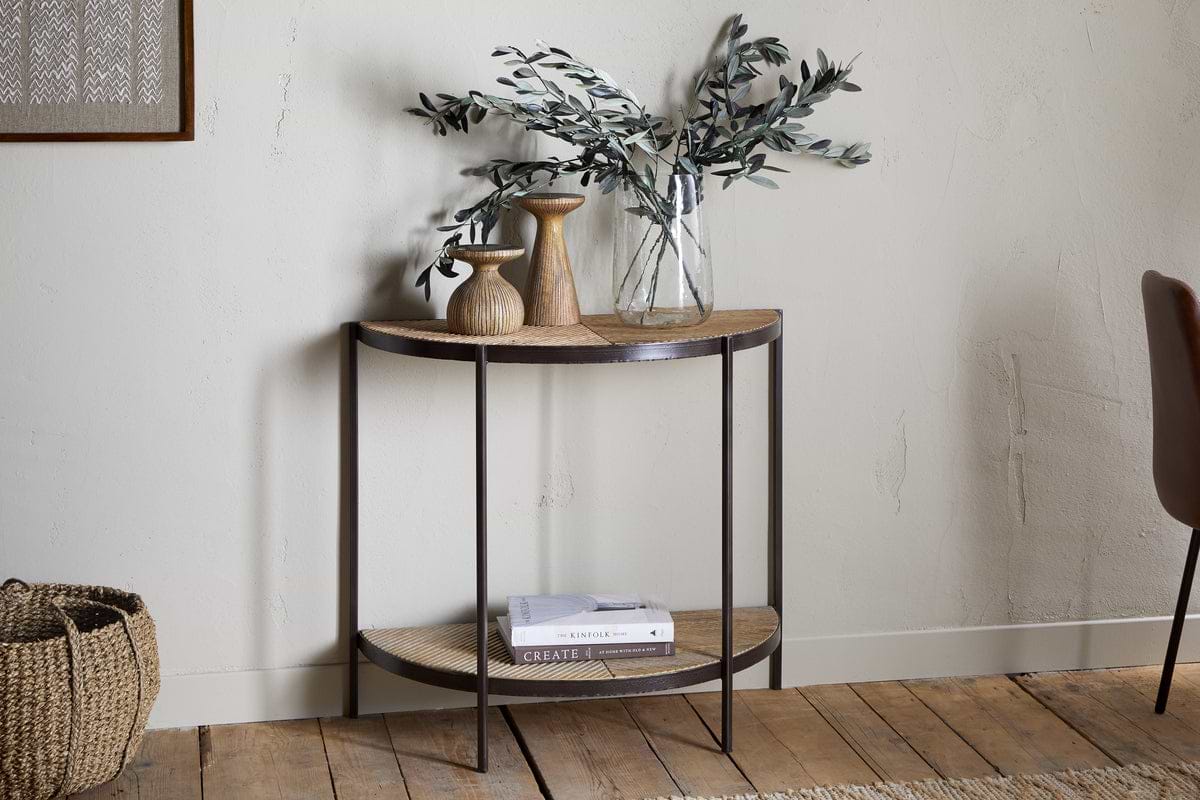
Aasha Console Table
Half-moon silhouette in mango wood; anchors entryways and narrow walls.
View at Nkuku →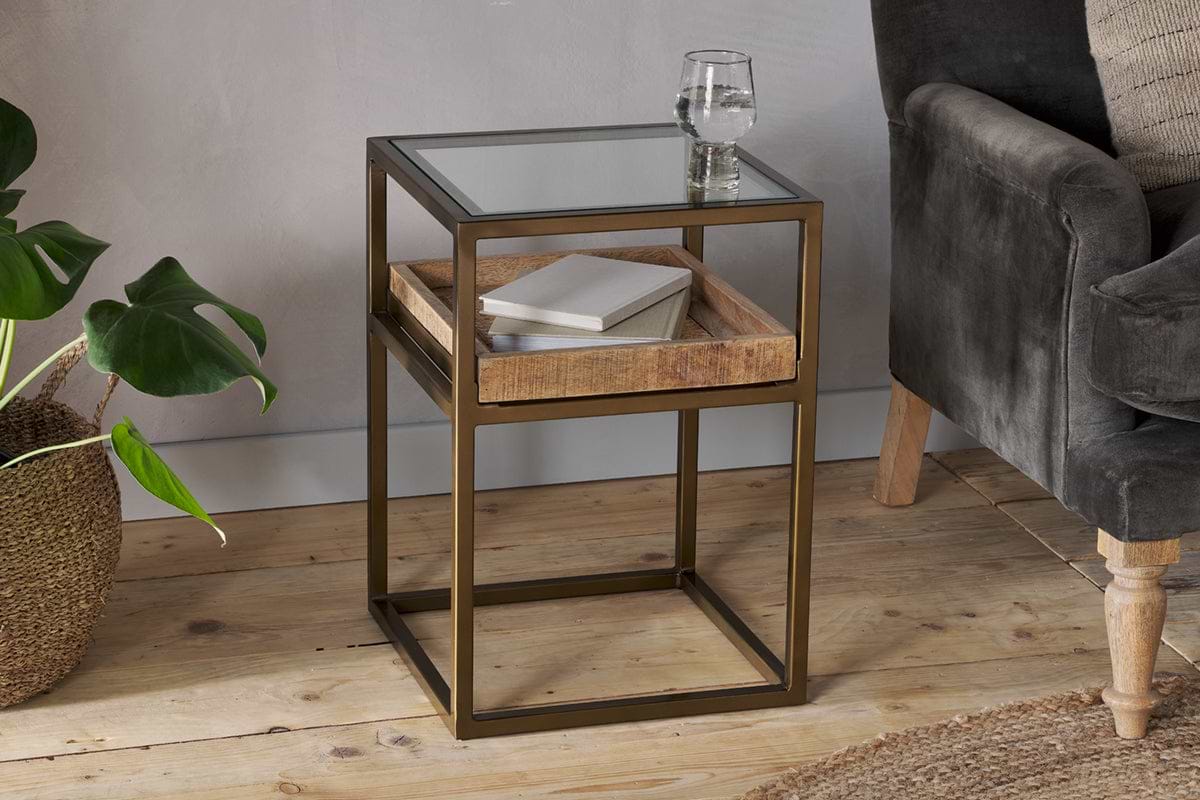
Luzon Side Table
Iron and mango wood with display shelf, small footprint, double function.
View at Nkuku →Some links above are affiliate links. If you buy through them we may earn a small commission at no extra cost to you. We only suggest pieces we think fit a calm, lived-in home.
Free guide
The Calm Shelf
12 styling ideas to help you compose calm, balanced shelves in natural texture homes.