

Low light, awkward windows, and clutter make many rooms feel unsettled, even after hours of careful arranging. Choosing dark red curtains to cover an odd-sized window or to tone down street light sometimes makes the space feel heavier instead of calmer, especially when the fabric or style is off.
Today’s guide helps you pare back, layer with care, and select the right depth and texture so the result reads warm and grounded, not busy or overdone. This works especially well in a small living room when the walls are light because it anchors the view and settles the energy of the space.
The short version: Dark red curtains work best in calm rooms when the fabric, fullness, and length suit the window and don’t crowd other furniture. Choosing heavier fabrics or layered textures shifts a cluttered feel to something grounded and restful without making the space dark or overwhelming.
Key takeaways
- Dark red curtains made of velvet, linen, or blackout lining each control light and add depth differently.
- A calm room works best when one bold color is balanced with neutral walls and natural materials.
- Full-length curtains are more grounding than short ones against tall windows or behind a sofa.
- Most ready made velvet blackout curtains come in ruby and claret shades, according to Terry’s Fabrics.
- Why do dark red curtains work in calm spaces?
- Which fabrics feel best: velvet, linen, or blackout?
- Where this works best
- How do you layer dark red curtains for a softer look?
- Styling and placement
- What heading style feels calmest: eyelet, pencil pleat, or pinch pleat?
- How to choose an affordable, natural look

Why do dark red curtains work in calm spaces?
Dark red curtains add depth to a room and cut harsh light, keeping corners from feeling exposed or cold. Pairing them with neutral pieces helps settle the eye and keeps the mood quiet instead of busy.
A living room with light-painted walls can feel scattered, throw blankets in one color, an awkward TV stand, a window that seems to float with no anchor. A set of ruby or wine-colored curtains pulled wide gives the room a base, making the corners feel less “on display” after sundown.
The reason dark red curtains work for calm is physical: longer wavelengths in this tint absorb excess light and define the view. A pale roller blind often looks colder than a panel of soft, lined beetroot or cranberry fabric. Calmer rooms usually have one bold piece, with the background quiet.
If walls, sofa, and curtains are all close in color, the result can feel muddy or flat instead of restful. Instead, one strong color grounded with lighter elements, wood, linen, or a pale rug, holds the room gently without crowding the space. Use on a main window where you want to draw the glance, not scatter it.
Which fabrics feel best: velvet, linen, or blackout?
Velvet absorbs light, making a window less sharp, while linen softens the look and blackout controls glare. Choosing the right fabric changes not only the mood but how the window behaves daily.
Velvet in a wine or claret shade is thick, matte, and slightly brushed, great for filtering sound and stop-start light from passing cars on a ground floor. Unlike cotton, velvet hangs with a heavier line, so it pulls the whole wall down visually, ideal for floor-length panels behind a sofa or in a bedroom with little street noise.
Linen falls more loosely, draping closer to the wall. It lets in some daylight even when shut but knocks down glare sharply, helpful in a north-facing apartment or where afternoon sun washes the paint. A crisp white wall behind burgundy linen reads softer than plain white or nothing at all, so this works in bedrooms or calm offices.
For full blackout, a thermal lining, often included as a free upgrade from Curtains-2go, means late sleepers or movie nights aren’t interrupted. A blackout layer behind a dark red front turns the whole panel into a light block, which is more effective than blinds alone. In rentals, a blackout lined ready-made panel in cranberry or claret offers coverage without a permanent fix.
Place velvet in large, echoey living rooms for warmth; linen in bedrooms or anywhere the curtains stay closed most days. Blackout works wherever sleep or privacy matters most but needs a lighter finish nearby, like a natural-wood side table, to keep things from feeling shut in.
Where this works best
Dark red curtains help settle rooms that feel too open or chilly, especially in spaces with plain or pale walls. Small, awkward living rooms and north-facing bedrooms benefit most.
Bedrooms on the colder side of the house often stay pale and a bit exposed, with natural light that never quite fills the corners. Hanging a set of full-length ruby or beetroot curtains brings warmth others struggle to match, especially if the only other options are thin white shutters or plastic blinds.
Living rooms with tall ceilings or narrow window frames look more put together when one bold vertical covers the tallest opening. Compared to busy patterned blinds or short sheers, a dark red panel looks quieter, even if everything else stays plain.
Avoid using heavy velvet or full-length blackout curtains in tiny, badly lit spaces or on windows right beside a deep-colored wall, this can make the room shrink visually and feel boxed in. Step back and let the curtain color lead against the lightest, simplest, or timber-framed surface for the calmest effect.
How do you layer dark red curtains for a softer look?
Layering dark red curtains with a light sheer or a textured blind lets you control privacy and glow while dialing down sharp contrast. The room feels finished, not heavy.
Layering means hanging a lighter fabric, a cotton or linen sheer, on a slimmer rod behind a dark red main panel. When the light shifts or privacy isn’t needed, the sheer softens the outside view without closing in the space. Only the front dark red curtain moves for full blackout or nighttime privacy.
A burgundy velvet curtain layered over a pale linen keeps glare out but doesn’t turn the window into a blank block during the day. The edge is warmed, the outside blurrier, compared to a single layer. This works especially well when the main curtain is frequently drawn open in the morning and pulled full at sundown.
Compared to a single dark layer, two fabrics, one light, one rich, break the line and soften the edges of the window. Keep the rods minimal and the sheers close to the wall so the room doesn’t feel crowded. This layering suits a main living room window facing a street or parking area, or a bedroom near neighbors, where you want light but not the full outside view.

Styling and placement
Dark red curtains look calmest when the rod extends just wider than the window, panels kiss the floor, and objects nearby stay simple. Placement keeps the look sturdy and light together.
Hang dark red curtains so they fall almost to the floor, even on taller windows. On a rental-friendly rod, allow both panels to gather slightly at the base, a clean finish trims weight while avoiding a ‘choppy’ look compared to high-water panels.
Where a window sits behind a sofa or below a low ceiling, extend the rod wider so the curtains open off the glass completely when drawn. This trick makes the whole wall feel broader, not boxed in by deep color concentrated on only the glass. Unlike a shade or blind, drapery above and beside the frame reads built-in, not temporary.
Compared to a patterned accent wall, a run of plain wine red or ruby curtains anchors the space without making it busy or loud. Place a natural wood accent, like a bench or basket, beside the curtains for a more finished look.
Quick calm checklist:
- Choose heavy linen, velvet, or blackout for depth (avoid shiny synthetics).
- Keep adjacent walls and furniture pale or wood-toned for balance.
- Let curtains just touch the floor without bunching.
- Use simple rods with minimal finials to avoid cluttering the header.
- Limit pattern in the room to one element (curtains OR rug, not both).
Try these in a room where the window needs quieting but not full darkness, especially above a built-in bench or next to a pale reading chair.
What heading style feels calmest: eyelet, pencil pleat, or pinch pleat?
Pencil pleat and pinch pleat headers bring softness and gentle folds, while eyelet gives a plainer, more modern line. Pleats blend well in calm, textured rooms.
Pencil pleat curtains, with their gathered top, soften a formal room without sharp contrast. They hang in loose, vertical folds that catch light at the edges, so the curtain feels less like a wall and more like a background. Dunelm offers 42 pinch pleat curtain options in red, so it’s simple to find ready-made dark shades across classic styles.
Pinch pleat has a more tailored feel, gathering in grouped folds, so the panel sits flat up top and waves at the hem. Unlike the eyelet or tab-top, which can look too sharp or plain in a cozy space, pinch pleat pairs well with linen or velvet to filter light in calm living rooms or bedrooms. On windows that don’t get much opening and closing, pinch pleat holds its shape year-round.
Eyelet curtains slide easily and sit flat against the rod, so the look reads modern, unfussy, and best in pared-back rooms with simple furniture. If the goal is to keep the eye moving quietly around the room, use eyelets in a minimal space and pleats anywhere texture and subtle movement help relax the feel.
| Header style | Look | Best for |
|---|---|---|
| Eyelet | Flat, modern | Minimal rooms, frequent use |
| Pencil pleat | Loose, soft folds | Classic, informal living |
| Pinch pleat | Tailored, gentle wave | Formal or textured spaces |
Use pleat headers for rooms with more layers (throws, rugs, baskets), and eyelet where every detail is stripped back and light bounces more freely.
How to choose an affordable, natural look
For an affordable, grounded look with dark red curtains, pick ready made panels in natural fibers, and keep the palette and decoration simple. This puts focus on the material, not the price.
Most major retailers, Terry’s Fabrics, Dunelm, and Blinds Direct, offer ruby, wine, or beetroot curtains in velvet or linen blends with blackout or thermal lining. A good set of ready made velvet blackout curtains is available for less than high-end custom, and Blinds Direct lists a five-year guarantee on most panels in red shades.
Where the budget doesn’t allow for bespoke fabric or made-to-measure, focus the spend on fabric feel, avoid the slick finish of poly blends or shiny jacquard unless layering under a thicker curtain. Test with fabric samples against your wall and choose the one that feels good to touch, not just to see.
Compared to patterned synthetics, a plain cotton-linen blend looks more settled and will last longer with less dust. Ground the look with baskets, throws, or benches in real wood or jute to echo the calm vignette styling seen in well-edited rooms. Use in rentals or starter apartments, where permanent changes aren’t possible, for the lowest-maintenance shift.
Sometimes the room looks “fine” on first glance, but after a week or two, it turns out something is off: the heavy curtain feels like it eats the window, or the color crowds every other object. It often happens when the fabric is too thick for the space, the header style conflicts, or the rod sits in the wrong place relative to the ceiling or furniture. If there’s friction between the color, material, and the rest of the room, the calm effect is lost, leaving a sense of unfinished effort. The practical fix is almost always this: let one material be the anchor, then pull back the others to support, not compete. The room feels lighter, not overloaded.
Once the curtain matches the space in both weight and color, daily use gets simpler, fewer adjustments, less visual noise, and more even light in every season.
Save this idea for later.

What tends to hold up with balancing color and fabric in curtains
Reviewers and stylists go back time and again to natural, matte finishes for window dressing. Matte linen and cotton blends hide wear better than polyester and pick up less dust, especially when used in rooms with pets or frequent use. Pleated headers, even on ready made panels, seem to last longer without sagging and make it easier to get a balanced fold every time you close the window. Professional decorators often recommend having one strong color, like dark red, only once in a room, supported by layers of pale wood or stone for contrast. These patterns hold up whether styling for resale, rental refresh, or the long-haul home.
, Mara, Loom & Glow
Common questions
Should curtains be lighter or darker than your walls?
Curtains can be either lighter or darker than the walls, but a darker curtain such as dark red against pale walls adds grounding without feeling overpowering. The contrast helps set the window as a feature and reduces the risk of the room feeling flat. Choose darker curtains to anchor airy, neutral-painted spaces.
What colour complements red curtains?
Neutral shades like beige, stone, soft grey, and off-white all complement red curtains well. Wood tones and black metal also suit wine or cranberry shades. Using natural materials elsewhere helps prevent the color from overwhelming the room while letting the curtains stand out.
Should curtains be lighter or darker than your sofa?
Curtains do not have to match your sofa exactly, but a slight difference creates gentle depth. Pale sofas with dark red curtains feel calm and pulled together, especially when other fabrics are kept simple. Avoid matching exactly; near matches can look muddled.
Should your curtains be lighter or darker than your walls?
Curtains slightly darker than the walls pull the room together and make windows more defined. A pale wall with a dark red curtain works better for calm, less busy spaces. Use lighter curtains only when the wall color is already deep, so the view does not feel closed in.
Explore more calm combinations inside our Shop The Look .
Shop the Look
Warm textures and candlelight pair naturally with deep red fabric.
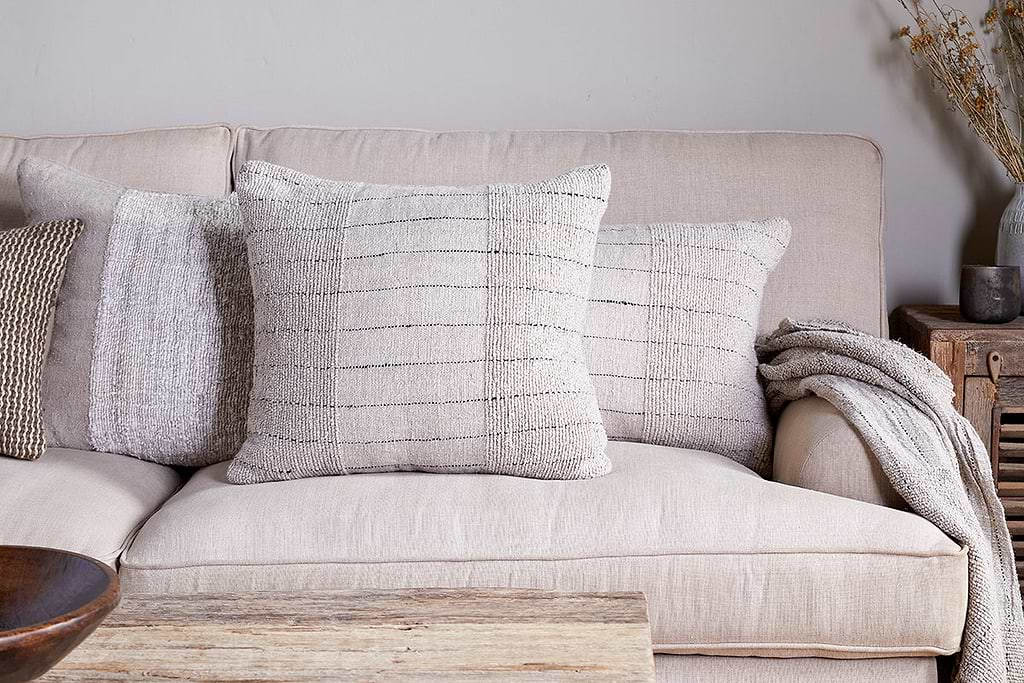
Mayla Cushion Cover
Soft hand-textured cover, instant warmth on linen sofas or chairs.
View at Nkuku →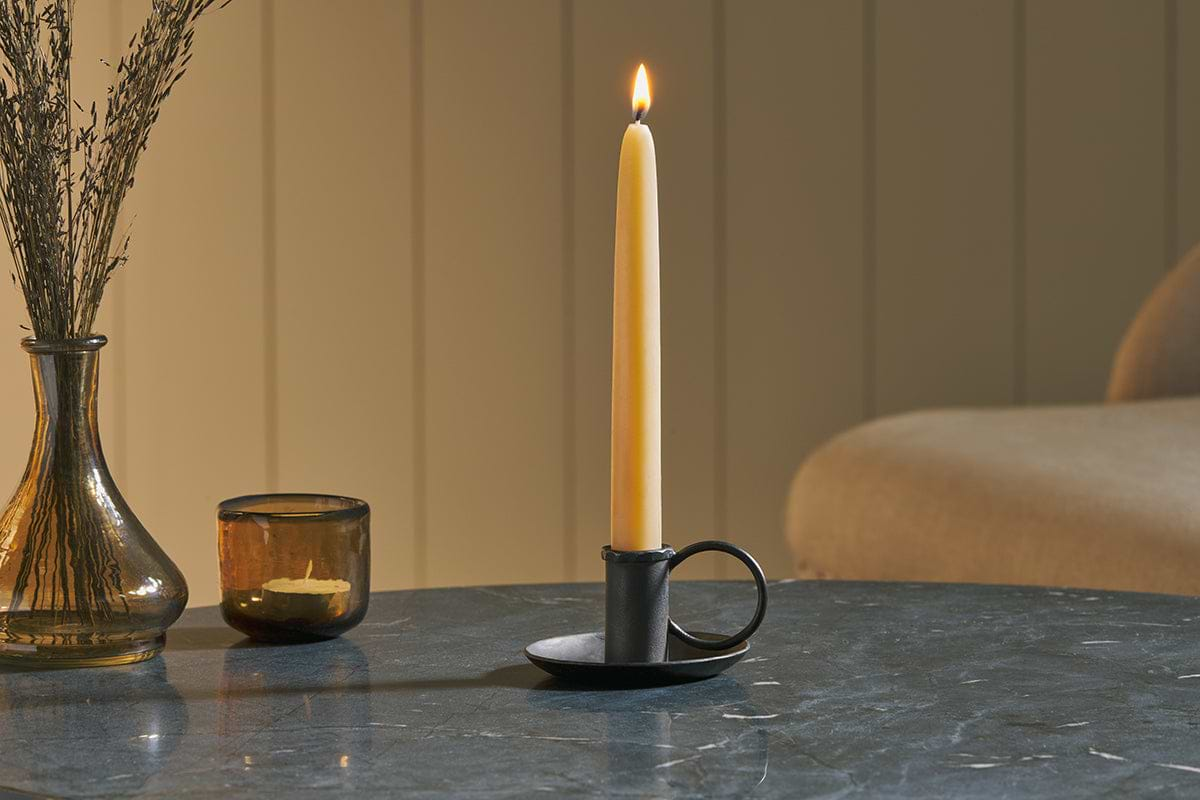
Amri Iron Candlestick
Slender iron with quiet presence, works alone or in clusters of three.
View at Nkuku →Some links above are affiliate links. If you buy through them we may earn a small commission at no extra cost to you. We only suggest pieces we think fit a calm, lived-in home.
Free guide
The Calm Shelf
12 styling ideas to help you compose calm, balanced shelves in natural texture homes.