

Trying different living room shelf decor ideas often seems to make open shelving look even busier. Adding more objects can turn shelves into storage, not style, with corners that always look half-done or heavy. Real homes rarely match the calm, minimal inspiration you find online, especially with open-plan layouts or small footprints.
Today, we’ll focus on what to leave out and how to choose key pieces that let shelves breathe. This works especially well in rental living rooms when built-in storage is limited because it shows restraint and feels finished. You’ll see clear steps—what to remove, what to group, and which details help shelves look lighter and more grown up.
The short version: The simplest living room shelf decor ideas use fewer objects, mix earthy textures, and leave space between items for a calm, finished look. Restraint, neutral tones, and one anchor piece per shelf keep open shelves from feeling cluttered or like storage, even in busy spaces.
Key takeaways
- Shelf decor in a living room should limit objects and use textural variety for visual calm.
- Statement objects on each shelf pull attention and let surrounding pieces recede.
- Neutral palettes and natural materials like linen, jute, and clay keep shelves from feeling crowded.
- Books and magazines can double as both storage and styled texture, according to John Lewis’s shelf-styling guide.
- Negative space—leaving part of each shelf empty—prevents shelves from looking like storage racks.
- Where this works best
- Why do more objects make a shelf look busier, not “styled”?
- How can you use the “rule of three” to create calm?
- Choosing one statement object per shelf: What does it change?
- How should you use books and magazines as quiet texture?
- What makes greenery and botanicals work on open shelves?
- Styling and placement

Where this works best
Minimal shelf styling works best in living rooms with open shelving, limited built-in storage, or busy sightlines. Fewer pieces and varied textures make shelves feel more finished in these cases.
Living rooms with open shelving, floating shelves, or built-in bookcases often lack doors or dividers. Everything stays visible. This means visual clutter stands out quickly, especially in small apartments, open-plan spaces, or rooms with limited natural light. Busy shelves in these spaces can feel heavy and unfinished, drawing focus in ways that don’t flatter the rest of the room.
For a rental with narrow shelving, or a shared family room with a built-in unit by the TV, restraint makes a shelf look styled instead of packed. Keeping fewer objects and mixing earthy materials (think linen boxes or jute baskets) helps a shelf blur from “storage” to “display.”
Avoid filling every shelf edge to edge with decor in a low-light or open-plan living room. Too many objects, or the wrong mix of sizes, breaks the flow and steals attention from soft furnishings or larger furniture. Leaving space between pieces on these shelves makes the room feel lighter and leaves no question which areas are meant for display.
Keep this approach in mind where your room welcomes guests—the first shelf you see by the entry, the long top shelf above a sofa, or the floating ledge near a sunny window.
Why do more objects make a shelf look busier, not “styled”?
Too many small objects on a shelf fragment the view and break up lines, making shelves read as clutter, not design. Limiting the number of pieces helps key items stand out.
A shelf crowded with vases, frames, candles, and baskets loses any sense of order. Each object starts to compete. The result is usually distraction, not calm. This is common in homes where open shelving gets used as overflow storage—a pile of souvenirs, mismatched trinkets, or daily-life catch-alls.
Unlike a pared-back arrangement, shelves filled wall to wall with decor send the eye in too many directions. The eye never settles. You can see this in many rental living rooms, where the urge to “fill” leads to a busy, sometimes restless look instead of a focused display.
Restraint works here because it gives key items room to breathe. Fewer objects—especially when varied in height or finish—group together more naturally, so the shelf reads as intentional. A shelf left partially empty draws attention to what is present, instead of hiding every surface. John Lewis’s shelf-styling guide describes this as focusing on “statement objects” and grouping by type or theme, not crowding with excess items.
Practical change: Try removing everything from a living room shelf, then returning only two or three items—one feature, one softer or smaller, plus space between. The difference is immediate.
How can you use the “rule of three” to create calm?
Grouping shelf decor in threes—one statement object, one mid-sized item, one small accent—keeps shelves from looking random or overly symmetrical. Odd numbers help simple styling feel relaxed and easy.
The “rule of three” is a classic shelf styling tip, and for good reason. According to John Lewis’s shelf-styling guide, using odd numbers creates a relaxed rhythm. Shelves grouped in pairs, or lined up in fours or sixes, look staged; three objects, naturally varied, feel casual yet deliberate.
In a long, open shelf over a sofa, try combining a matte ceramic vase with a stack of books and a small trailing plant. On a lower shelf, pair a neutral clay bowl, a wood frame, and a small linen box. Each group tells the eye where to pause and where to move, avoiding the matched look of sets or the fatigue of many tiny pieces.
Compared to lining up five similar-sized objects, a well-spaced group of three brings relief and gives each item a chance to stand out. A key design rule is that a shelf group works best when the heights and textures differ, but the spacing stays loose. The shelf looks edited, not unfinished, and never like leftover storage.
Apply this structure anywhere a shelf sits at eye level—above a radiator, across a built-in nook, or on an open wall with floating shelves. The same principle stops long bookshelves from becoming visual noise.
Choosing one statement object per shelf: What does it change?
One statement object per shelf—like a large basket, sculptural vase, or handmade bowl—anchors the eye and gives everything else on the shelf context.
Selecting a single statement object for each shelf shifts the feel of open shelving from accidental to finished. A big clay vessel or smooth wooden box draws the eye, while smaller pieces become accents, not distractions. This reduces the risk of shelves looking cluttered or scattered.
On any shelf with room for more than one object, start with the anchor piece first. Put it slightly off-center or close to one end. Supporting objects—books, a smaller dish, or greenery—can sit nearby, but never fight for attention. A shelf without a strong central piece looks scattered, no matter how many items line up.
Unlike rows of small decor or a mix of tiny collectibles, a large woven basket or bold ceramic stands out and helps group the rest. This approach works for floating shelves, built-in bookcases, or even the awkward short shelf above a door or radiator (where a basket tames the emptiness).

Try this method on a shelf behind your sofa, or near an entry, where one large piece gives purpose to everything else around it.
How should you use books and magazines as quiet texture?
Books and magazines add texture and weight to a shelf, keeping it from feeling too precious or bland. Stacking or standing them thoughtfully provides color, height, and a lived-in feeling.
Bookshelves aren’t only for storage—books and magazines work as low-key decor, especially with varied covers and natural bindings. John Lewis’s shelf-styling guide recommends “making use of books and magazines” not as overflow, but as textural anchors. A short stack under a bowl, or two books lying flat with a plant on top, creates height and adds softness without mess.
Unlike plain accessories, books bring built-in color and personal character. Leather-bound, cloth, or paper covers layer shades and keep things from feeling too uniform. In small living rooms where storage is minimal, books can act as both visual interest and an extra shelf filler, so long as they don’t take over every inch.
Compared to trinkets or multiple small vessels, books and magazines settle a shelf visually. They add weight and structure, letting single decorative objects—like a handmade jug or dried arrangement—stand out. Try alternating upright books with a horizontal stack to soften hard lines and break up any monotony.
Apply this idea in built-in alcoves, on a floating ledge, or in a long, low bookcase running along the floor. Aim for roughly two stacks per every three shelves, leaving space before and after each.
What makes greenery and botanicals work on open shelves?
Dried botanicals or potted greenery bring life and movement to shelving without demanding care or looking artificial. These natural accents soften hard lines and break up heavy surfaces.
Dried grasses, eucalyptus stems, or a small potted plant give open shelves a lived-in feeling that plain objects can’t. The Living House points out that even the best inspiration photos online get their warmth from leafy stems or trailing greenery, not just ceramics or books. Greenery brings in a fresh element while keeping the shelf calm, not busy.
Unlike plastic plants or rows of faux flowers, one or two simple stems look genuine and help lighten the overall effect. A trailing ivy or large bunch of dried lavender softens the edge of a shelf, making it feel less boxy. In rooms with low-light or north-facing windows, dried botanicals win because they require no upkeep but still catch light and move slightly if a window’s open.
Placing a single vase with a few dried grasses, or a pot of sage, breaks up solid objects and introduces subtle color. A shelf without any life can feel cold, but just one plant (even a small bud vase) is enough to break this. John Lewis’s shelf-styling guide calls this approach “Go green”—not as a filler, but as the gentle finishing touch.
For best effect, set botanicals next to a stack of books or contrast them with hard materials (metal, wood, or stone) so their softness stands out.
Styling and placement
Good shelf styling relies on placement, spacing, and subtle grouping—not just the objects themselves. Where and how you set each piece shapes the whole room’s mood.
Styling a living room shelf means looking at both eye level and the lines above and below. Place larger anchor objects slightly off-center, then group smaller items near them—never in strict lines. Negative space should always stay between clusters or at the end of shelves so the wall can show through.
Objects at the ends of a shelf can pull the gaze too wide, while grouping near the middle keeps attention tight. For floating shelves or wide ledges, avoid symmetry unless you want a formal feel. Most home decorators agree: a shelf looks best when about two-thirds is filled, leaving clear space around each group.
Lighting matters for mood. Spotlighting a shelf, or using a small lamp or LED strip nearby, pulls attention to texture after dark—a trick used in John Lewis’s guide. Balanced light stops corners from looking flat or unfinished. Use neutral shades for grounding, then repeat one or two textures (linen, jute, clay) for consistency. For more on this style, see neutral shelf styling that makes a room feel intentional.
Quick calm checklist:
- Choose natural materials—clay, wood, linen, jute—over shiny or plastic finishes.
- Keep part of every shelf empty (the “negative space” rule).
- Pair one large object per shelf with roughly two supporting pieces.
- Repeat colors and textures on every other shelf for flow.
- Anchor lighting near or under the shelves for evening use.
Try this: Rearrange one shelf with these steps, and notice how the difference changes the whole wall’s feel, not just the shelf itself.
At some point, standing back, most people see it—a shelf filled with too many things feels off, even if each piece has meaning. The display never quite settles. Guests look at the shelf first, not the room.
The problem hides in plain sight: trying to “finish” shelves by adding more only builds clutter. Most homes with open shelving miss the chance to let objects breathe, which is what creates calm and makes daily tidying easier. In busy seasons, this matters even more, since shelves become resting spots for purses, keys, and odds and ends.
Once the right piece is added—and space is left around it—the whole wall starts to look lighter and more welcoming for everyday use.
Save this idea for later.What tends to hold up with living room shelf styling
One thing that stands out, looking through many living room shelves, is how often the best results come from restraint—leaving clear sections free, even when there’s pressure to use every inch. Matte finishes get recommended again and again for shelves near windows, because they don’t catch glare the way a glossy tray does. Over time, shelves styled with natural materials, like linen and ceramics, keep looking fresh as seasons and tastes shift.
Decorators and reviewers consistently suggest picking one object to steer each shelf, then letting smaller pieces sit quietly around it. These choices tend to hold up—with far less rearranging and regret—because the shelf never tips into chaos or feels half-finished.
— Mara, Loom & Glow
Common questions
What to put on shelves in a living room?
The best items to put on shelves in a living room are a mix of natural materials, statement objects, books, and small accents like ceramics or dried botanicals. Keeping groups simple and spacing items apart lets each one stand out. This approach feels calm, not crowded, and works for open shelving or built-in bookcases.
How to style built-in shelves in a living room?
Built-in shelves style best when you anchor each shelf with one larger item and leave space between clusters. Mixing heights and textures—like stacking books beside a handmade bowl—softens the look. Using fewer, larger things instead of many small pieces avoids a cluttered feel and gives the eye clear places to rest.
What are some unique shelf decor ideas?
Unique shelf decor ideas include adding handmade ceramics, linen-wrapped boxes, artisan candles, or sculptural stone objects. Using vintage books for color and dried branches for height helps create a one-of-a-kind display. Playing with texture—rough clay, smooth wood, woven baskets—keeps shelves interesting. For more ideas, visit handmade shelf objects.
How to decorate a high shelf in a living room?
To decorate a high shelf in a living room, use larger objects like baskets, wide bowls, or tall vases that read well from below. Keep the number of pieces low. Light-toned objects or open baskets prevent the shelf from feeling too heavy or forgotten. Leave plenty of space to avoid a crowded look.
what is the rule of three shelf decor?
The rule of three in shelf decor means grouping items in odd numbers-one statement object, one mid-sized item, and one small accent-with space between them, which keeps shelves from looking random or overly symmetrical and allows key pieces to stand out instead of creating visual clutter.
what is the rule for book shelf decor?
The rule for book shelf decor is restraint: limit objects and use textural variety for visual calm, with statement objects on each shelf and negative space left empty to prevent shelves from looking like storage racks rather than styled display.
what are the disadvantages of open shelving?
Open shelving's main disadvantage is that everything stays visible, meaning visual clutter stands out quickly, especially in small apartments, open-plan spaces, or rooms with limited natural light. Too many small objects fragment the view and break up lines, making shelves read as clutter rather than design; busy shelves in these spaces feel heavy and unfinished, drawing focus away from soft furnishings or larger furniture.
Explore more calm combinations inside our Shop The Look .
Shop the Look
A few Nkuku pieces that sit quietly on open shelves without competing for attention.
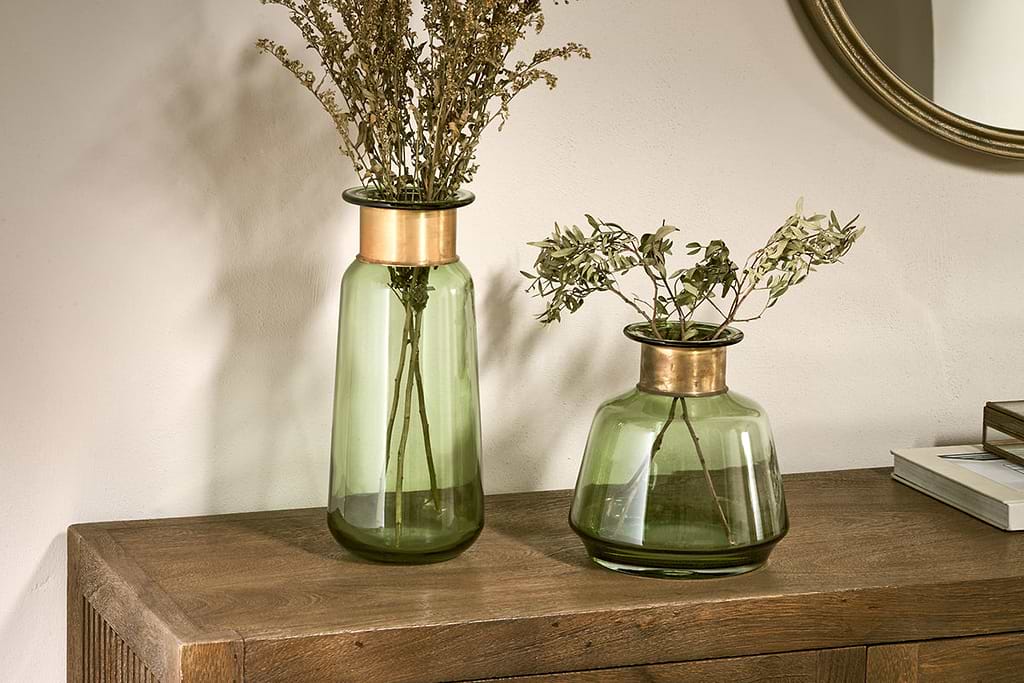
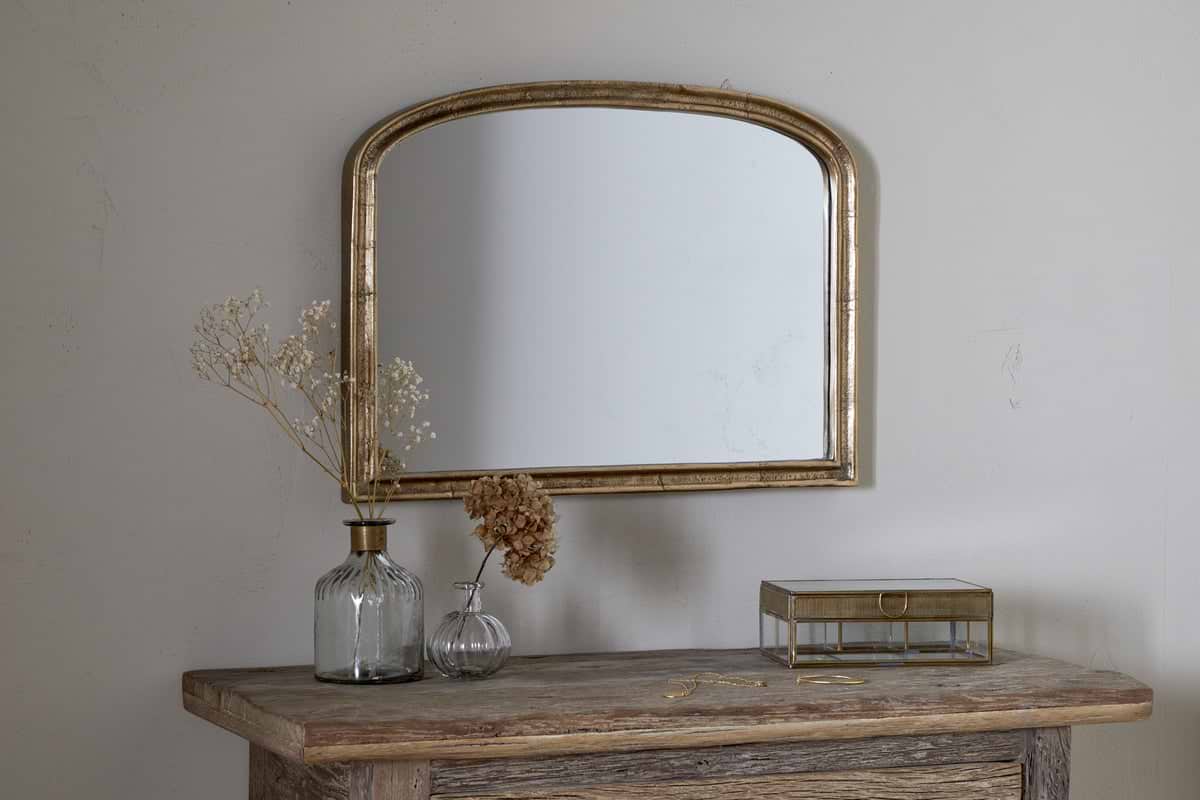
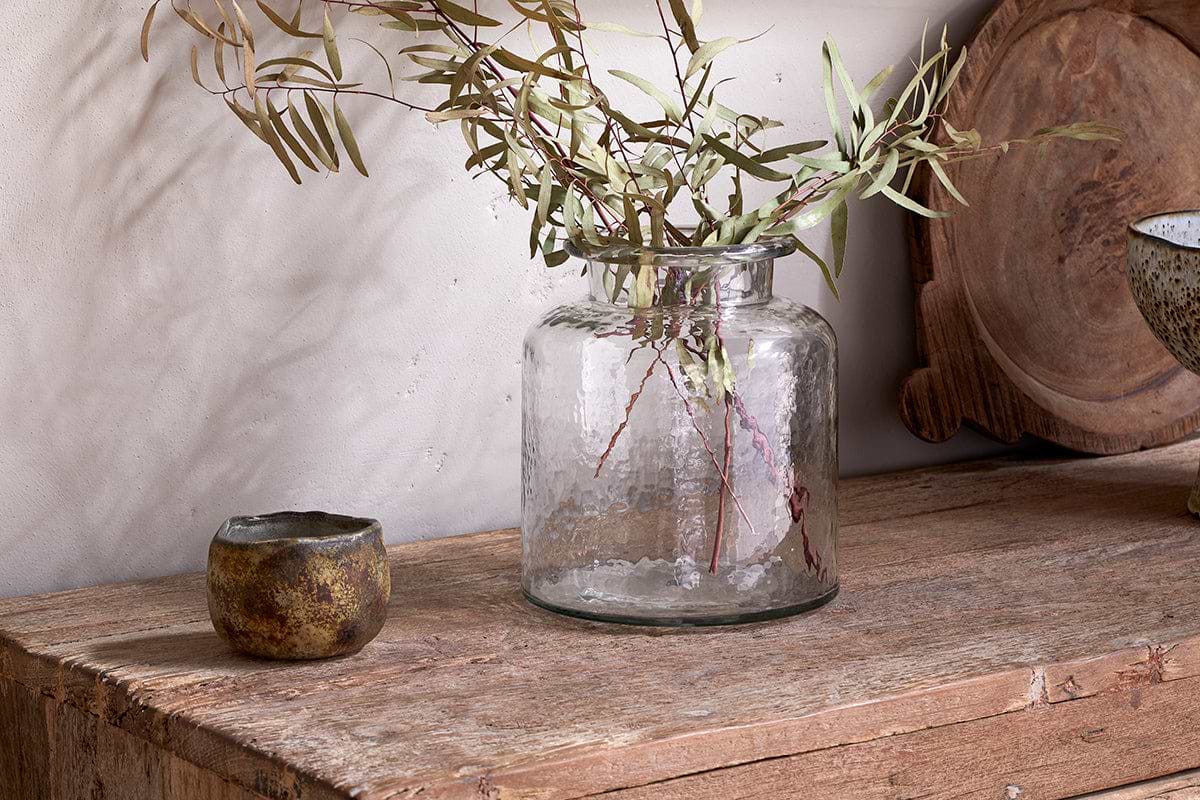
Akra Recycled Glass Vase
Clear cylindrical glass — pairs with stems or sits empty as a quiet accent.
View at Nkuku →Some links above are affiliate links. If you buy through them we may earn a small commission at no extra cost to you. We only suggest pieces we think fit a calm, lived-in home.
Free guide
The Calm Shelf
12 styling ideas to help you compose calm, balanced shelves in natural texture homes.