

Most coffee tables gather clutter fast—magazines, mugs, keys, a coaster here and there that never matches. If air dry clay coasters turn up on your feed, it’s probably because those little stacks solve a familiar problem: the constant drift of small things across every flat surface.
Today, you’ll make a set that looks unified and feels good in use, clearing away the extras and landing on forms that support both slow living and a calm home aesthetic. This works especially well in small sitting areas when side tables feel crowded because each finished piece gives everything its place without adding extra bulk.
The short version: Making air dry clay coasters means rolling the clay to a steady thickness, cutting even circles, and letting them dry fully before sealing. Taking your time with each step makes a slow living home feel more intentional—less busy, more grounded by touch and rhythm.
Key takeaways
- Air dry clay coasters work best when rolled consistently thick to avoid warping as they dry.
- Pressed botanical imprints or simple textures add visual interest without making the surface fussy.
- A basic kitchen glass is enough for cutting clean coaster circles from rolled air-dry clay.
- A gloss decoupage medium or spray glaze sealant protects homemade clay coasters from water stains and daily use.
- The white air-drying clay commonly used for coasters is well-rated by hundreds of reviewers, according to Hobbycraft.
- What materials do you need for air dry clay coasters?
- How do you roll air-dry clay to the right thickness?
- How do you keep air dry clay coasters from warping or cracking?
- Adding imprint, texture, or botanical detail
- Where this works best
- Styling and placement
- How do you seal air dry clay coasters for daily use?

What materials do you need for air dry clay coasters?
A basic air dry clay coaster set only needs air-dry clay, a rolling pin, a round cutter, and a flat surface for drying to work well.
Making a set of air dry clay coasters starts simple. All you need is a block of white or grey air-dry clay, a rolling pin (or a sturdy bottle), and something to cut circles—a kitchen glass works fine. Choose a smooth table or countertop as your work area, somewhere you can leave projects untouched overnight.
Some crafters add texture mats, lace, or fresh leaves to press details into the clay, but you can also leave them plain and let the hand-molded edges do the talking. Simple is best in a small apartment, especially if storage is limited and you want to avoid overloading drawers with gadgets.
Supplies like a circle cutter can be swapped for a water glass, and waxed baking paper can stand in for a fancy mat. A plain white air-drying clay is a favorite for beginners and, according to Hobbycraft, it receives high marks from hundreds who’ve worked with it before. One clear reason this works: the surface is naturally matte and easy to paint or seal.
Arrange your materials on a clear stretch of counter or a dining table for the best results in tight, multi-use spaces.
How do you roll air-dry clay to the right thickness?
Rolling air-dry clay evenly, about as thick as the width of two stacked coins, helps keep coasters flat and sturdy as they dry.
An uneven coaster warps or cracks as the clay shrinks, so roll the block on a flat surface using steady, gentle pressure. If you don’t have guide sticks, aim for a thickness just thinner than your thumb, turning the clay in quarter-turns as you go. Rotate between passes with the rolling pin to avoid a lopsided shape.
The right thickness matters more than the precise diameter. If coasters are too thin, they’ll curl or break at the edges; too thick, and they feel bulky or take too long to dry. According to Cottage on Bunker Hill, aiming for at least a quarter-inch thickness balances strength with a softer feel under cups.
Rolling pins with handles are easier to control, but a clean water bottle, a straight-sided tumbler, or even a section of PVC pipe will press clay smoothly. For a slow living home, spending a few minutes extra on this step makes the difference between a finished set that stacks clean and a trayful of pieces that never sit flat.
Work on a baking sheet lined with wax paper if you need to move coasters between rooms overnight, especially in homes with curious pets or little hands nearby.
How do you keep air dry clay coasters from warping or cracking?
Air dry clay coasters dry best when left untouched on a hard, flat surface with airflow on all sides, which helps keep them from warping.
Cracking or curling edges happen when clay dries unevenly. If you’re working near a radiator or sunny window, shift the drying tray further from the heat. A central coffee table or bookshelf works for overnight drying, as long as there’s no heavy draft or wobble underneath.
The cause-and-effect here is steady: clay loses water quickly from exposed edges. Turn each coaster over after 8–12 hours (when the underside no longer feels tacky). This allows both sides to shed moisture at nearly the same pace and helps avoid cupping.
Unlike a quick-baked ceramic tile, air dry clay shrinks as it cures. Leaving coasters sitting vertically or leaning against each other creates an uneven pull—better to lay them flat with a small gap in between each one. For those rushing to finish, rapid drying near heaters is tempting, but results in fine cracks and uneven textures.
Most air dry clay coasters are ready to paint and seal within 48 hours—but dry times stretch in cooler, damper homes.
Adding imprint, texture, or botanical detail
A sprig or leaf pressed into damp air-dry clay leaves a natural texture that gives homemade coasters quiet detail without making them tricky to clean.
Pressing botanical shapes into the clay is an easy way to add interest to your coaster set, especially if the rest of your home leans toward mindful home decor. Use a fresh piece of fern, parsley, or a textured kitchen towel and roll gently over the top before cutting out your circles.
The detail stays shallow—easy to wipe clean, but enough to catch light. A botanical coaster looks best when the imprint is made before cutting shapes, avoiding torn edges and awkward repeats near the rim.
Compared to store-bought rubber stamps, found objects like woven ribbon or pressed flowers give a personal, slow-home texture and look more relaxed than manufactured patterns. If you like more color, a simple swipe of ceramic marker or watercolor over the dry coaster highlights detail and makes each piece feel more considered.
Show these off on a quiet side table or stack by a reading chair for extra texture in a low-traffic spot.

Where this works best
Air dry clay coasters suit homes that need calm function on small tables or anywhere too many objects start to look cluttered.
Living rooms with compact seating areas or open-plan kitchens with only a ledge for drinks benefit from a cohesive set of coasters. The clay’s clean, matte finish blends into both bright and low-light spaces. You’ll notice the difference in spots where wood, glass, and ceramic all meet—like a crowded entry shelf or a bedside table where a glass of water tends to leave marks.
The best application is clear: keep sets together by the pot of tea in a small kitchen, or as a purposeful layer on a bench-style coffee table to break up hard lines. In a slow home, grouping several neutral-toned coasters with a linen napkin softens the sense of clutter and adds an anchor.
Avoid using air dry clay coasters on persistently damp surfaces, like bathrooms with little ventilation. These areas make the clay degrade over time, compared to drier, gentler living spaces. A simple coaster project fits especially well in rental homes where you can’t change fixtures, but you can choose the small things that ground the space.
Set them near the entry on a narrow shelf for the keys and mail, or next to an armchair for a cup of coffee—wherever a small shift keeps things calm at hand.
Styling and placement
A set of air dry clay coasters looks balanced when stacked neatly or set slightly apart, echoing the scale of the objects around it.
Styling means more than just tossing coasters on any surface. On a sideboard or tray table, line up two or three in a shallow dish, or set them out singly for each guest. Avoid over-layering—one set on a table feels thoughtful, but too many look busy. Repeating a clay tone from nearby planters or bowls helps create a steady look throughout the room.
Compared to glass or metal, clay’s matte surface draws less attention, so the set won’t steal focus from a favorite book or vase. For a calm home aesthetic, stick with three main textures in sight—too many and the eye jumps around; too few feels flat. Match the painted details or imprints to the color of your cushion, curtain, or lamp base for a subtle tie-in.
Unlike bright patterned cloth coasters, natural clay pieces settle into the room quietly, letting other objects breathe. Place coasters within easy reach but not crowding the front edge—favoring the spot your hand lands naturally with a mug.
Quick calm checklist:
- Stick to one or two clay colors for a cohesive set.
- Space coasters a finger-width apart if displaying in a row.
- Use imprints or texture sparingly—one per set is enough.
- Keep most of the table clear; let the coasters frame, not fill, the area.
On a mantel or dresser, place finished coasters as low-key anchors under candles or a quiet plant pot, keeping the styling gentle and easy to adjust.
How do you seal air dry clay coasters for daily use?
A sealed air dry clay coaster set stays water-resistant and stands up to daily cups when coated with a clear gloss decoupage medium or a spray glaze.
Leaving the clay bare looks beautiful, but clay is porous and picks up stains fast from coffee rings or condensation. A single coat of gloss decoupage medium or a spray-on clay sealant dries clear, guards the surface, and makes wiping clean much easier. Work in a well-ventilated spot and let each coaster dry fully between coats for best results.
For an extra-quiet look, matte spray works too, keeping surface glare low. Options like Mod Podge or specialty pottery spray can be found easily, but household sprays for crafting work almost as well for most uses. Letting the finish cure overnight adds durability, especially in homes where the same set gets daily use.
Unlike fired ceramic or glazed tile, air dry clay coasters need gentle cleaning—a soft cloth with a little water, rather than a soak. Over time, resealing keeps the surface looking calm and avoids the common stains you’ll see on older, unsealed clay. Choose sealants that are made for tableware to avoid any stickiness after drying.
Store stacks in a lidded container or drawer for longer breaks between uses to keep dust and oils off the finish.
What tends to hold up with air dry clay projects in calm homes
Makers and reviewers agree that clay is most forgiving when you work slowly—rushing the drying or skipping the sealing step nearly always leads to trouble down the line. Decorators consistently point out that a slight mismatch in thickness across even a small set often creates visible warping, which is distracting on a quiet table.
Matte finishes get recommended again and again for shelf displays, partly because they never glare in sunlight and feel smoother under a cup. The most reliable air-dry clay projects stick with one or two details, like a pressed leaf or subtle wash of color, instead of busy patterns or complicated shapes. Simpler choices wear best and stay flexible for use year-round.
— Mara, Loom & Glow
Common questions
Can you use air dry clay as coasters?
Air dry clay can be used to make coasters that are both functional and decorative. When rolled thick enough and sealed properly, these coasters handle daily mugs and glasses fine. Letting them dry flat and using a water-resistant sealant keeps them looking and working well for a long time.
Are air dry clay coasters durable?
Air dry clay coasters are fairly durable for regular home use, especially when rolled to a good thickness and fully sealed. While not as tough as fired ceramic, they withstand careful daily handling and support hot or cold cups if not soaked or dropped repeatedly.
What is the disadvantage of air dry clay?
The main disadvantage of air dry clay is that it remains more porous and less strong than kiln-fired clay, so it can chip or take on stains without sealing. It is less suited to overly damp spaces or heavy, repeated washing, but it’s perfect for many décor and craft projects where gentle handling is the norm.
What surfaces will air dry clay not stick to?
Air dry clay will not stick well to slick plastic, oily surfaces, or waxed parchment paper. These surfaces let you lift or move projects easily, which can be a benefit when shaping or cutting pieces. For best results, work on a flat, clean section of table covered with parchment or a baking mat.
Explore more calm combinations inside our Shop The Look .
Shop the Look
Two glass vases that pair naturally with handmade ceramic accents and botanical displays.
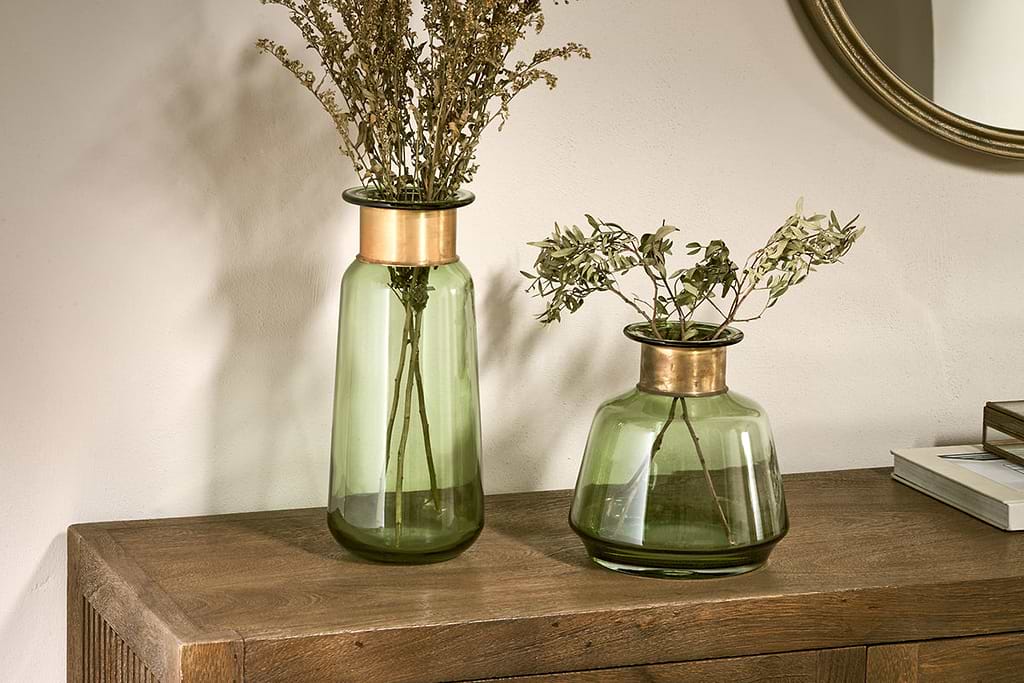
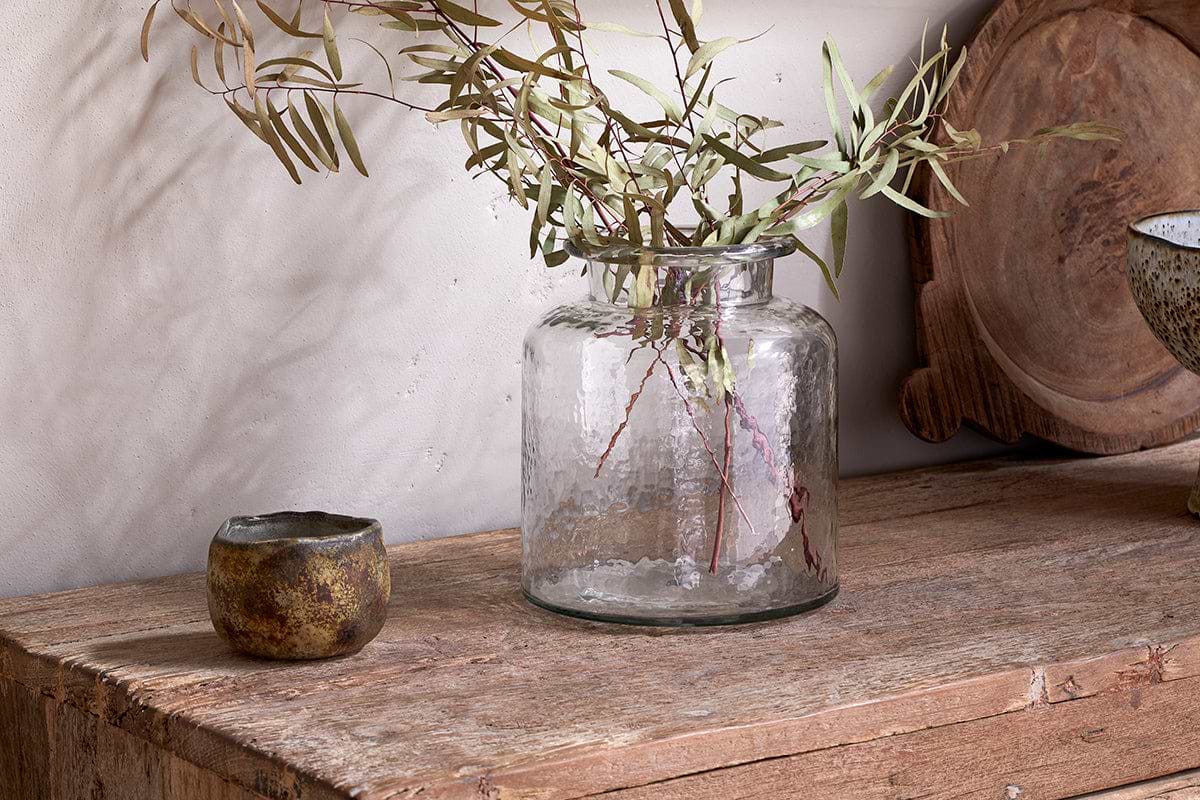
Akra Recycled Glass Vase
Clear cylindrical glass — pairs with stems or sits empty as a quiet accent.
View at Nkuku →Some links above are affiliate links. If you buy through them we may earn a small commission at no extra cost to you. We only suggest pieces we think fit a calm, lived-in home.
Free guide
The Calm Shelf
12 styling ideas to help you compose calm, balanced shelves in natural texture homes.