

Rental homes come with limits that can make rooms feel cramped, cluttered, or unfinished. Rules about paint, drilling, or permanent fixtures often make the question of how to decorate a rented home seem stressful. Some spaces hold mismatched furniture, tight layouts, noisy wiring, or white walls that collect dust and marks.
The right choices help these rooms look calm, lighter, and more open—even when you cannot renovate. Today, you can adjust what fills the space, remove what crowds the eye, and use natural textures for a clearer, calmer feel. This works especially well in a small apartment living room when corners collect shoes or boxes because clearing those little piles opens up the line of sight.
The short version: The key in how to decorate a rented home is making one clear focal point with natural textures, then repeating it sparingly to reduce visual noise. Small choices—removing clutter, limiting the colour palette, anchoring storage—help any room feel less busy and more restful without breaking rental rules.
- Where this works best
- How do you reduce visual clutter without losing comfort?
- What kinds of storage make a rented home feel cohesive?
- Styling and placement
- How do you use colour when painting isn’t allowed?
- Where do natural materials make the biggest difference?
- How to avoid making small rooms feel heavy

Where this works best
Calm, cohesive changes make the biggest impact in high-traffic and shared rooms, like living areas, hallways, or entryways, where clutter collects fast. These spaces benefit quickly from clearer surfaces and single, natural anchors.
Shared rooms in rentals—like living rooms, multipurpose dining areas, or entryways—often host shoes, bags, paperwork, and temporary furniture. Walls might be marked from past tenants, and floors can feel crowded by pieces left over from old flats.
You can see a quick difference by opening up entryways and hallways with a single anchor, such as a natural wood console or a shallow open bench. Unlike bulky storage cabinets, a slim table leaves more walking room and catches keys or mail without closing the space. This makes sense for renters, since the piece is easy to take along and does not damage the walls.
Avoid putting too many floating shelves or mismatched small tables in a tight hall, as it draws the eye in multiple directions and breaks up clear lines. Instead, place one main piece and keep most surfaces mostly clear, so the room feels lighter and easier to use.
How do you reduce visual clutter without losing comfort?
Clearing surfaces and repeating one soft material—like a linen throw or canvas basket—removes clutter without leaving a room cold. A little texture gives comfort where empty space alone can feel stark.
Rooms with low light or small footprints get crowded when every surface is filled: shoes line the entryway, paperwork lands on the counter, and throw pillows spill from the sofa. Removing all small items and leaving just a few favourite pieces draws focus but can look harsh, as if something is missing, rather than inviting.
Placing a thick knit blanket over a basic sofa, or tucking a woven storage basket under an open bench, softens hard furniture and breaks long lines. Jute and cotton work especially well in rental spaces because they’re neutral, easy to move, and hard-wearing. Compared to plastic bins or wire racks, these natural options add interest without adding distraction.
One smooth bowl for keys, a coil basket for chargers, and a folded throw are usually enough. If a surface feels empty and cold after decluttering, try adding a single, textured storage piece instead of more decor.
What kinds of storage make a rented home feel cohesive?
Low, mobile storage in natural wood, canvas, or jute blends in with most rental finishes and keeps the look unified. Open forms with similar textures prevent a mix of styles from feeling patchy.
Rental apartments with limited built-in storage make it tempting to bring in shelves, plastic drawers, or baskets from different rooms. But scattered closed bins versus open shelves, and synthetic baskets against raw wood, leave some rooms looking temporary or busy.
Using a small group of open trays or low bins in similar weaves keeps clutter tucked away but avoids heavy, boxy pieces that block the flow of the room. Mango wood or pale birch, canvas cubes, and uncoated jute are widely available, and a good jute basket usually runs between $20–$40 at most shops. The open weave lets small bits breathe and hides everyday mess.
Unlike metal or plastic storage, these natural options look settled even if you move them—under a console, beside a sofa, or in an open wardrobe. Group storage to one or two spots instead of several and the space feels more put-together every day.
Styling and placement
Keep the room calm by leaving clear gaps around furniture, repeating no more than two main materials, and anchoring with one piece per zone. Placement matters more than quantity.
Big furniture shoved against every wall or small tables scattered around makes a small space look even tighter. Instead, give each piece some breathing room: the main sofa in the living room, a slim entry table, and a reading chair work best when there’s open floor showing around them.
In rented homes where walls can’t be painted or drilled, anchor visual weight with moveable pieces—the Aasha Mango Wood Half Moon Console Table, for example—so there is a clear resting point for the eye. Choose pale wood, cotton, or ceramic to keep the look light. Compared to glass or mirrored surfaces, matte wood softens the space and avoids glare.
Quick calm checklist:
- Pick one or two natural materials for major pieces (wood, linen, jute).
- Leave open space around every seat or table—don’t block walks, windows, or heat vents.
- Keep wall art or shelves simple: one main piece per wall, not a mix of small frames.
- Land your palette with no more than three colours plus natural wood or woven tone.
Use this approach for any compact sitting room, narrow entry, or studio nook where scattered pieces make the room feel busy. Fewer gaps or repeating finishes help the space feel considered, not crowded.

How do you use colour when painting isn’t allowed?
Choose colour in moveable decor—textiles, vases, baskets—and stick to just one or two accent shades alongside the room’s default walls. Small pops show up clearly and are easy to swap if you move.
In most rented homes, changing the wall colour is either forbidden or can cost you the deposit. Still, colour makes a big difference in small room decor. Too many accent shades—mismatched cushions, bright art, patterned rugs—crowd the eye. One deep blue pillow or a set of clay bowls often gives more focus than five soft pastels scattered on the sofa.
Layering colour in textiles or mats helps because these can be packed or replaced without damage. Linen cushions or thick cotton throws in one main shade work well, as do small ceramics or coated baskets. Soft, textured colours read as calm against white walls, while glass or metal can feel stark. How colour works in a space often comes down to light levels and finish—the duller the surface, the gentler the look.
In a bedroom or studio, choose bedding or storage in one accent shade, repeat it once or twice, and keep the rest neutral. This makes it easy to adapt later without risking the walls or deposit.
Where do natural materials make the biggest difference?
Natural textures soften hard, basic finishes and cover rental flaws. Wool, jute, or linen add weight where rooms read cold, and let you swap clutter for warmth without long-term changes.
Rental floors and walls—laminate board, white paint, thin carpet—can look cold and show marks. Putting down a small wool rug under the coffee table, hanging a linen curtain, or adding a jute pouf near the bed helps the space feel more lived-in. Each piece absorbs sound and stops echoes in boxy, empty-feeling rentals.
Unlike plastic or melamine, natural fibres let the space breathe. Linen sheets or curtains get softer over time, and wool rugs can hide stains better than polyester. These materials also hold less dust and are simple to pack, which matters for renters who move often.
In a tight entry, stackable jute baskets can replace cluttered shoe racks; in a bedroom, a single knit throw across the bed softens the look. Use them most anywhere bare finishes feel hard.
How to avoid making small rooms feel heavy
Use fewer, lighter pieces and skip anything that blocks natural light or closes off corners. A low table or open bench makes space flow better than bulky cabinets.
Small rooms get crowded fast when large dressers, tall bookshelves, or overstuffed sofas fill most of the floor or block windows. The room seems narrower and light gets blocked, especially in apartment decor ideas where original finishes weren’t meant to be hidden.
Floating shelves also add weight if loaded with books or dense displays. Instead, leave two-thirds of them clear and use just a plant, a lamp, or a clay bowl. Small-space decorating experts widely suggest leaning on scale—short furniture, open legs, see-through stools—to visually open up the floor.
Rather than line every surface with objects, select one spot for books, one for baskets, and one soft layer (like a sheepskin or rug). The emptier the sightline to windows or doors, the more open the room feels each day.
What tends to hold up with small rental layouts
Solutions that consistently work across rental homes are plain and repeatable: match the major finishes, keep decor mainly on surfaces you can take with you, and aim for clear sightlines wherever possible. Most renters who pare back their colour palette and group small items see the room look calmer—not just less busy, but easier to keep looking clean. Standard advice from decorators often favours matte woods or textiles over shiny surfaces, because they add weight without reflections and don’t show dust as quickly.
It’s rare for a rental space to feel worse once surfaces are less crowded and the main materials relate to each other. These shifts usually cost less, demand less effort, and help a tight room feel more like it belongs to the person living there.
— Mara, Loom & Glow
Common questions
How can I reduce visual clutter in a rented home without making it feel cold?
Clearing surfaces and repeating one soft material-like a linen throw or canvas basket-removes clutter without leaving a room cold. A little texture gives comfort where empty space alone can feel stark. Placing a thick knit blanket over a basic sofa, or tucking a woven storage basket under an open bench, softens hard furniture and breaks long lines.
What types of storage work best in a rented home?
Low, mobile storage in natural wood, canvas, or jute blends in with most rental finishes and keeps the look unified. Open forms with similar textures prevent a mix of styles from feeling patchy. Using a small group of open trays or low bins in similar weaves keeps clutter tucked away but avoids heavy, boxy pieces that block the flow of the room.
Why should I focus on one main focal point when decorating a rented space?
The key in how to decorate a rented home is making one clear focal point with natural textures, then repeating it sparingly to reduce visual noise. You can see a quick difference by opening up entryways and hallways with a single anchor, such as a natural wood console or a shallow open bench.
what home decor style is trending right now?
Natural textures and minimal, cohesive styling define current trending approaches to rental decoration, focusing on one clear focal point with materials like jute and cotton that cost between £20-£40 and blend with most rental finishes. The key is making calm, cohesive changes by reducing visual clutter, limiting the colour palette, and using low, mobile storage in natural wood or canvas to keep spaces feeling put-together without breaking rental rules.
Explore more calm combinations inside our Shop The Look .
Shop the Look
Moveable pieces that anchor a rented room and lift with you when you go.
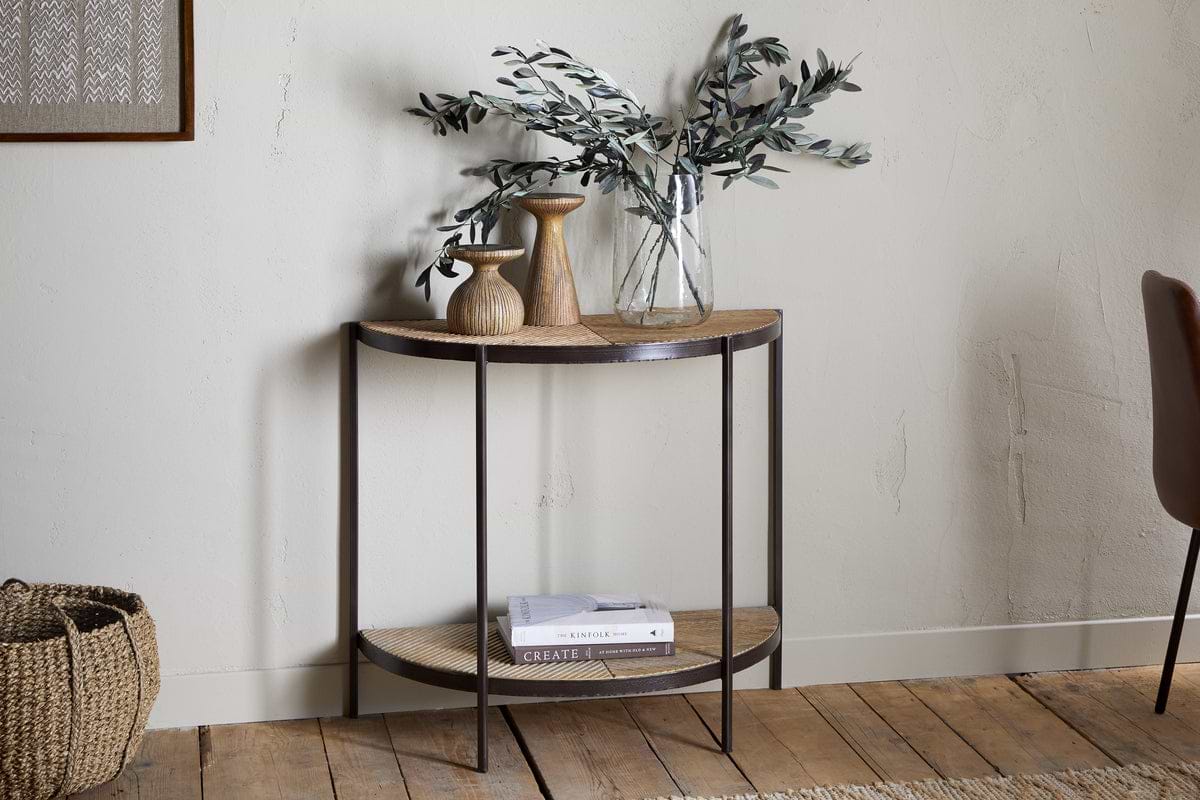
Aasha Console Table
Half-moon silhouette in mango wood; anchors entryways and narrow walls.
View at Nkuku →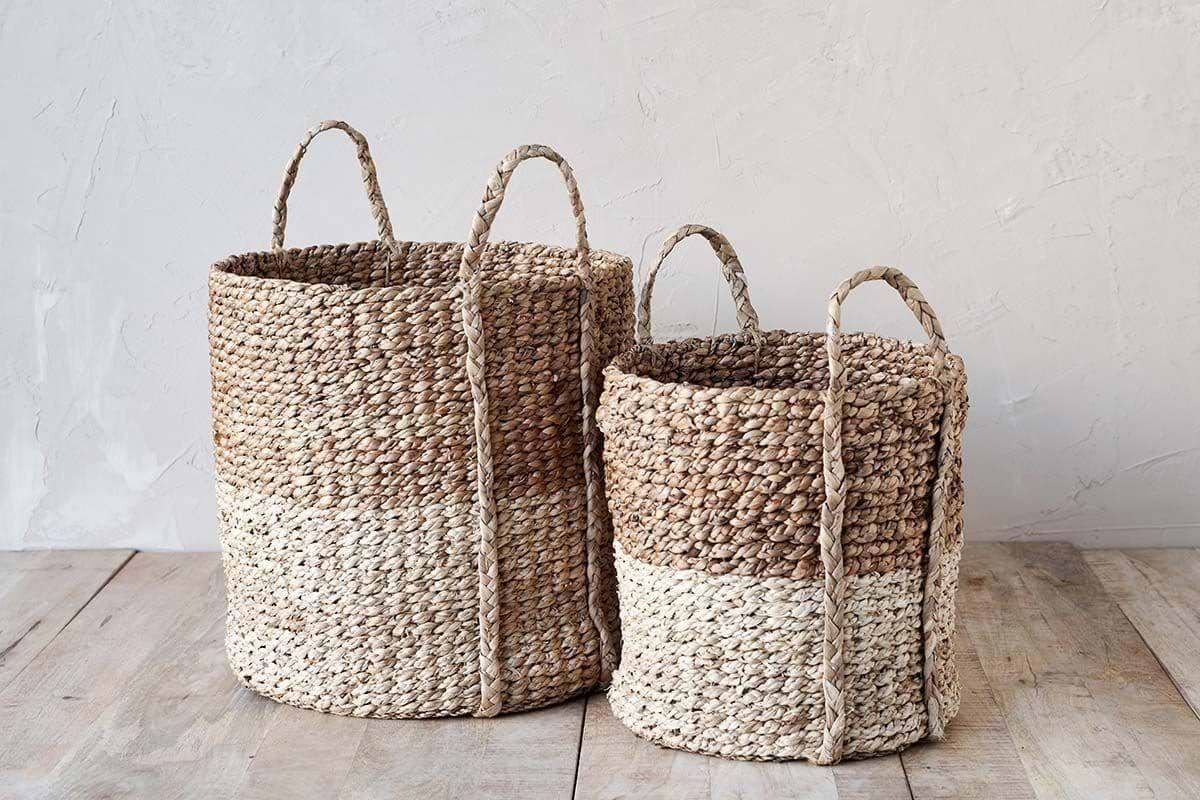
Nkomi Basket
Woven storage with a calm silhouette — works open or tucked under a console.
View at Nkuku →
Some links above are affiliate links. If you buy through them we may earn a small commission at no extra cost to you. We only suggest pieces we think fit a calm, lived-in home.
Free guide
The Calm Shelf
12 styling ideas to help you compose calm, balanced shelves in natural texture homes.