

Hallways in most homes end up feeling like a storage fix or a blank corridor. Long, narrow paths collect shoes, jackets, keys and bags. With no natural light and little space for furniture, it’s easy to give up and let clutter take over. The result is a spot that always feels tight and unfinished.
There are small changes that make even the skinniest hallway feel put together. Today you’ll see which things to remove, what kinds of materials last, and how to pick just one or two calm pieces. This works especially well in apartments when walls can’t be moved because light, texture, and placement do most of the work.
The short version: Use one useful surface, simple colours and natural textures to make a narrow hallway feel calm, open and lived-in. Removing clutter and sticking to one main focal point turns a tight corridor into a space that feels cared for instead of overlooked.
- Where this works best
- What’s the best first step for small hallway decor?
- How do you keep a hallway from looking crowded?
- Styling and placement
- What is the simplest way to use colour in a narrow hall?
- Why do natural materials feel better in small spaces?
- How do you use light to make a hallway feel bigger?

Where this works best
A narrow hallway decor plan works wherever walking space is tight, storage gets squeezed, or the area feels like a pass-through. Keeping things simple makes the most difference in busy or rental corridors.
Landlords make choices that work for the whole building, not for calmness. These halls turn into dumping spots, especially if there’s no closet or built-in shelf. A calm hallway setup is most useful in apartments, older homes, or any rental that lacks open entry space or hanging storage. Even a slim spot by the back door can feel more welcoming and less like a utility path.
Small changes show fastest in spaces that run between main rooms. A single, neat surface gives somewhere to leave a bag or mail. Choosing one or two things that can stay out makes the rest of the hall read as cared for. Hallways with low ceilings or few windows also benefit, because less clutter lets what little light there is actually reach the end.
Avoid trying to fit standard entry furniture into a skinny hallway. Overlarge shoe racks, stiff sideboards, and chunky wall hooks take away from the open feeling. Instead of squeezing in pieces meant for other rooms, look for shapes and materials that actually match the depth and width of the walk-through.
What’s the best first step for small hallway decor?
Start by clearing off all surfaces and removing extra pieces. Most hallway makeovers begin by showing less, not adding more.
Many people try to dress up a space by adding baskets, art, hooks or mirrors everywhere at once. But in narrow hallway decor, this quickly turns the tight space into a jumble. The best first move is to walk the hall, pick up everything, and see what really needs to live there. Most homes keep too many coats and pairs of shoes at the door, which clogs up both sight and foot traffic.
This works because a nearly empty hallway feels bigger, catches more light, and welcomes you instead of nagging at the edge of your vision. Removing just two unused hook racks and a mail pile is enough to take the pressure off the whole space. A bare table is warmer than a crowded one, while a blank wall can always gain art, too much, and the room presses in and feels busy.
Unlike a living room, the hallway rarely gets styled for sitting or resting. Focus on clearing, then add back one piece at a time. Swapping a plastic shoe tray for an open basket in seagrass or coir keeps mud off the floor and adds subtle texture instead of visual weight.
How do you keep a hallway from looking crowded?
Limit the visible items to essentials, and store extras inside closed baskets or drawers. Moderate spacing and blank wall stretches help the eye rest.
Cramped hallways often become landing zones for all the “in progress” things, returns, bags, sports gear, umbrellas. Each stray thing, though practical, adds to the crowding. The quickest fix is to give everything a place to disappear, such as a solid-lidded storage basket in a pale fibre or a drawer unit that sits flush against the wall. For things that can’t be hidden, choose just one per surface, a ceramic bowl for keys instead of a full tray, or one folded scarf by the door.
The effect is immediate: visual breathing room. A clear top on a table pulls the eye down the hall, while mixed bins, piles or mail on display slows the gaze and makes the passage feel busier. In decoration, negative space is as powerful as the pieces themselves, especially in small room decor.
Compared to shelves lined wall-to-wall with family photos or books, a hallway feels wider when art and storage objects are grouped and spaced. Keeping about two-thirds of the top of a side table clear is common advice among apartment decor ideas, because it naturally limits the urge to fill up every inch.
Styling and placement
Choose one anchor surface in a natural finish, add one textile or vessel, and leave room around each item. Placement works best when objects sit at a natural pause point in the walk through.
Styling a hallway needs restraint. Most designers pick a single, low-profile piece as an anchor, a console table in mango wood or ash, or a narrow bench in oak or teak. Place it on the long wall where footsteps naturally slow down, never blocking door swings or bedroom doors. Lightweight objects, like a folded linen runner or a matte ceramic jug, break up empty surfaces without looking busy. Hard-edged trays or heavy glass can tip the scene from calm to crowded.
Colour and material matter. A sandy rug or neutral woven basket softens the area, while plastic or metal containers catch the eye and break the sightline. For walls, one piece of framed art or a small mirror is enough. In small space ideas, a pale wall colour makes everything feel wider, especially near low-natural-light entryways.
Quick calm checklist:
- Stick to one main surface (console, slim bench, or wall-mounted shelf).
- Use natural fibres, linen, rattan, or coir, for storing small items.
- Keep all visible objects spaced apart, not clustered.
- Limit wall colour to one or two light-neutral tones throughout the hallway.
- Add a vessel (bowl, tray, low basket) made from wood, stone, or clay to anchor the scene.
Placing the anchor surface at the widest point, slightly set back from the main door, opens up the passage and draws movement naturally. Hallways styled this way work especially well where shoes and outerwear often get tossed aside, since closed baskets and calm surfaces invite tidying up with a single sweep.

What is the simplest way to use colour in a narrow hall?
Use pale, neutral wall colours with a single accent in art or one textile. This keeps the hallway feeling wide and lets a single detail stand out.
Colour plays a bigger role in tight hallways than most people think. Brighter or darker walls shrink the sense of space, while a uniform pale background makes edges disappear and light flow farther. A sandy off-white paint, a natural linen curtain, or an oat-coloured rug all work, even in rental homes, keeping to a light palette also makes it easier to spot and sweep up dust.
Unlike bold paint or wallpaper, sticking to plain walls puts eyes on what you want to feature, a framed print, a handmade wooden stool, or a vase with quietly dried twigs. According to how color works, neutral backgrounds reflect more natural light and help colours in art or objects stay clean instead of looking muddy or busy.
Darker accessories used sparingly have more impact than repeating them across every surface. Letting a single navy runner or walnut-framed print do the heavy lifting keeps the overall impression relaxed instead of fussy. For most rental and apartment decor ideas, a change of rug or artwork does more than repainting every wall, especially when the hallway has little or no direct daylight.
Why do natural materials feel better in small spaces?
Natural materials absorb light and soften hard lines, making small spaces read less busy and more welcoming. They’re also practical for daily use and look good as they age.
In a small hall, anything shiny or hard-edged bounces light and calls attention to itself. Wood, rattan, linen and stone all mute glare and break up the straight lines that make a tight corridor feel even longer. The weight of a solid wood bowl or the slight softness of a jute mat add depth that metal and plastic can’t. According to Britannica’s entry on linen, natural fibres also tend to last longer and resist static, so they stay looking lived-in instead of collecting dust or feeling cold.
The difference is immediate. A rattan lidded bin looks softer and leads the eye down the corridor, while a plastic tote jars the overall look. Over time, a mango wood table or woven tray darkens slightly and smooths with touch, getting better instead of looking worn out, a big reason natural pieces suit minimal entryway surfaces styling guides.
Most small space ideas repeat one or two textures. Compared to a mix of glass, chrome and lacquer, two visible wood tones and a flax runner keep the scene quiet. Using the same family of textures along the length of the hallway matters more than matching exact colours, soft undertones blend together better than isolated shiny pieces.
How do you use light to make a hallway feel bigger?
Use soft, indirect lighting, wall sconces, table lamps, or clip-on LEDs, to brighten the ends of the hallway and keep shadows gentle. A single glow works better than harsh spots down the full length.
Most narrow hallways have no ceiling fixture, so corners get lost in shadow. Adding a low lamp on a console or a plug-in sconce lets you keep the light spread out, bouncing softly off walls and baskets. This also makes it easier to see what’s on the floor without catching ugly overhead glare. Instead of using a bare bulb or high-watt ceiling light, pick a warm LED or a fabric shade, this calms the space instead of pushing everything into hard contrast.
A layered lighting setup, such as one lamp at a surface and a single string of battery lights, makes the corridor feel wide and gradually brightened. This trick is especially helpful for halls that connect bedrooms in low-light apartments, because direct light everywhere can make the boundaries starker.
Unlike keeping lights off until guests arrive, having soft light always ready in the hall means shoes and coats are easier to find in early mornings or late at night. Using the same lamp finish or shade-type throughout keeps the look cohesive. Plug-in sconces are a favourite for renter decor ideas because they can be put up and taken down without drilling into the wall.
The moment most people notice something’s not right in their hallway is after a quick tidy. The baskets, hooks or table are all in place, but somehow it still looks busy or awkward, either too many small things competing, or one big thing making the space feel tight. This uncomfortable feeling usually starts with overfilling surfaces or mixing up storage types and colours.
The big shift that solves most of these cramped hallway frustrations is anchoring the space with one main piece in a natural texture, and then letting everything else stay simple and spaced out. Removing clutter first, choosing a light palette, and sticking to one surface and one vessel gives the right base. The rest is about staying calm with arrangement and not letting little things collect again over time.
Many homes make the hallway mistake of putting every storage solution in one spot, shoe racks, wall hooks, key bowl, umbrella stands, and mail bins, until it looks stuffed and heavy. The downside is feeling pinched just walking by and never really seeing a calm surface. Cleaning up only works for a moment if the arrangement is still busy. With one main piece and less clutter, the hall stays open and looks finished. Save this idea for later.
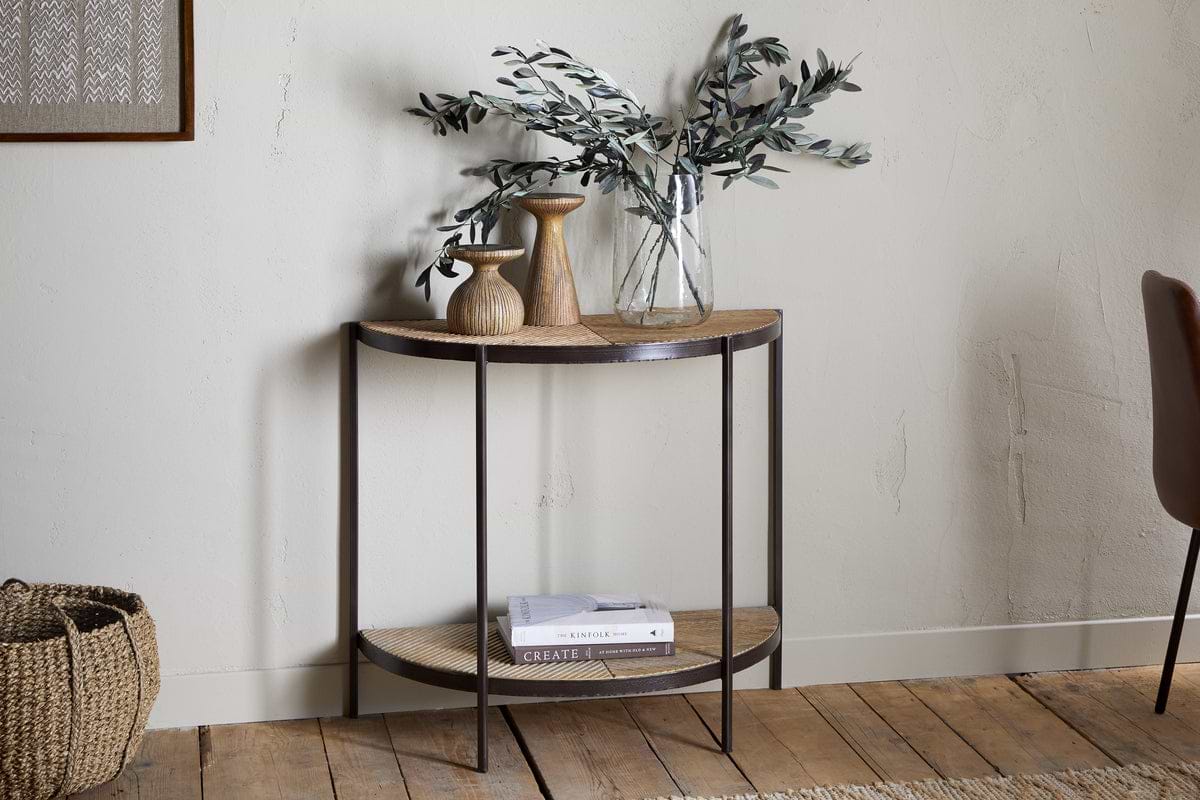
Aasha Mango Wood Half Moon Console Table
adds quiet structure and warmth while keeping the room balanced.
What tends to hold up with narrow hallway decor
Looking through hundreds of hallway projects, one clear trend is that a narrow space stays visually open the longest when there’s only one anchor piece and one type of storage on display. Patterns and reviewers both repeat that natural materials, especially paler woods and woven baskets, manage scuffs better than painted MDF or plastic. Overhead lights are a common regret, while plug-in wall sconces get called out again and again for solving dark corridor problems with less glare.
Matte finishes in baskets and soft runners work best against light walls, not just for looks, but because they hide daily dust and shoe marks longer. Designers also point out that a simple, well-placed table almost always lasts in a hallway, outliving trendier shelf styles that crowd up over time. Stick with these material choices and spacing habits for the most consistent calm.
, Mara, Loom & Glow
Common questions
What’s the first step to improving a cluttered narrow hallway?
Start by clearing off all surfaces and removing extra pieces. Most hallway makeovers begin by showing less, not adding more.
How do I keep a narrow hallway from looking crowded?
Limit the visible items to essentials, and store extras inside closed baskets or drawers. Moderate spacing and blank wall stretches help the eye rest.
What materials work best for styling a hallway without adding bulk?
Lightweight objects, like a folded linen runner or a matte ceramic jug, break up empty surfaces without looking busy. Hard-edged trays or heavy glass can tip the scene from calm to crowded.
Explore more calm combinations inside our Shop The Look .
Shop the Look
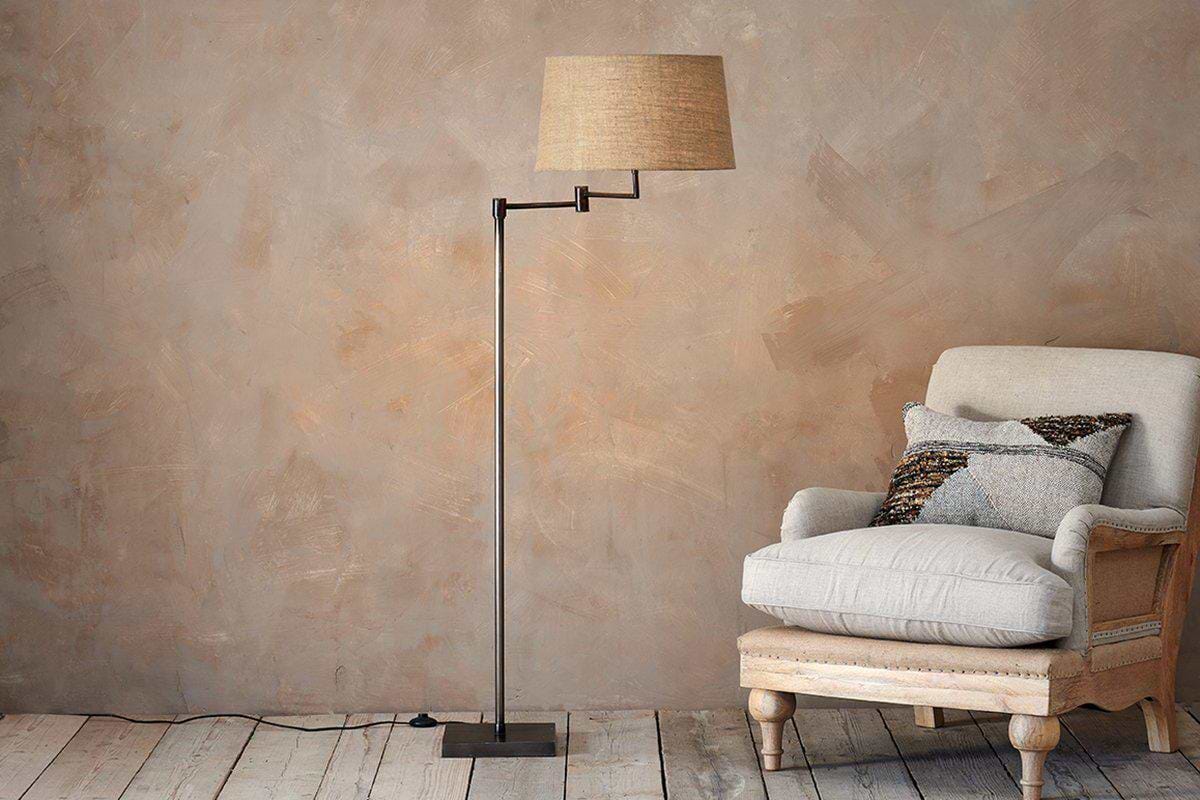
A console, shelf, and slim lamp that make a narrow hallway feel intentional and open.
Aasha Console Table
Half-moon silhouette in mango wood; anchors entryways and narrow walls.
View at Nkuku →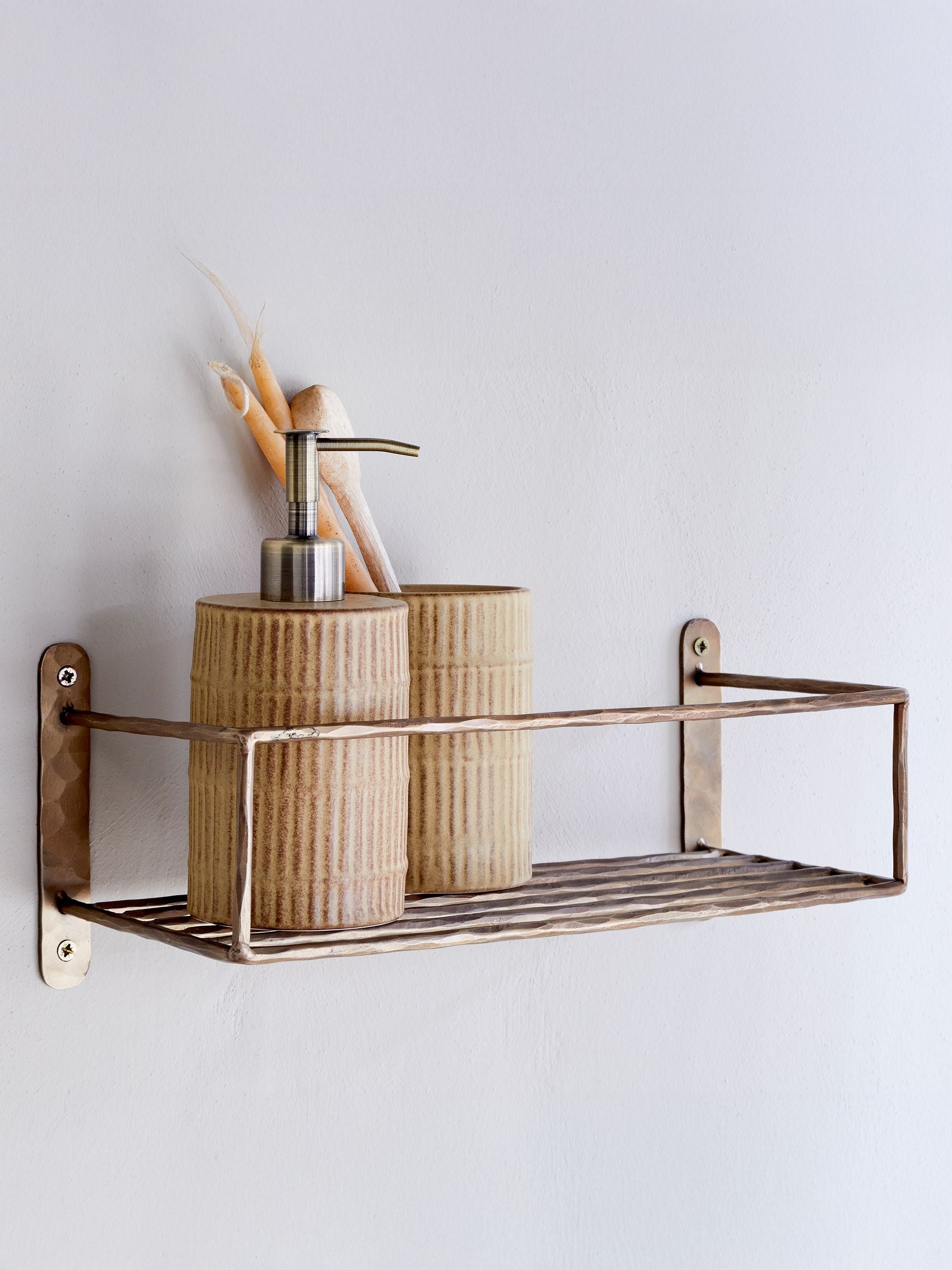
Some links above are affiliate links. If you buy through them we may earn a small commission at no extra cost to you. We only suggest pieces we think fit a calm, lived-in home.
Free guide
The Calm Shelf
12 styling ideas to help you compose calm, balanced shelves in natural texture homes.