

Most small balconies end up crowded with tangled fairy lights or plastic solar stakes that feel more cluttered than calm. Many outdoor lantern ideas look simple on Pinterest but create a mess in tight spaces, especially when there’s no room for cables or extra surfaces.
Today, you’ll see practical steps to get warm, layered lighting on your balcony, without wires, plastic clutter, or floor lamps that block every path. This works especially well in a rental with a narrow ledge or shared rail when you need all the space for seating because it takes the glow off the floor and lifts it to eye level.
The short version: For a calm balcony, focus on outdoor lantern ideas that anchor one main light source instead of filling the space with lots of small lights. This simple shift keeps your balcony warm after dark and free from mess, even if there’s no floor space to waste.
Key takeaways
- A single outdoor lantern looks cleaner and less cluttered than a string of fairy lights on a small balcony.
- Battery, solar, and candle lanterns each suit different balcony needs and lighting moods.
- Layering lanterns at different heights adds warmth without crowding floor space or tabletops.
- Pinterest boards for outdoor lantern ideas often show DIY upcycle projects with glass jars or reclaimed wood lanterns.
- Why is one lantern better than fairy lights for a small balcony?
- Outdoor lantern types: candle, solar, or battery?
- Where this works best
- How do you keep lanterns from looking messy?
- Styling and placement
- What can you put inside an outdoor lantern besides a candle?
- Which outdoor lantern ideas work for rainy weather?

Why is one lantern better than fairy lights for a small balcony?
A single outdoor lantern draws the eye to one spot instead of spreading small pinpoints everywhere, making the balcony feel calmer and less busy. Fairy lights, while cheap and easy, often turn a tight balcony into a clutter trap.
Balconies with low rails and limited outlets usually end up tangled in thin wires or small stake lights poking through plant pots. The space feels full even before you add a chair. A heavier lantern with a clear centre point is easier on both the eye and the mind.
Fairy lights pull focus in too many directions at once. Instead, a proper lantern gives shape to the corner or table, guiding your gaze to one soft, contained glow. The effect is quieter and steadier after dark.
A bare string of lights reads colder than a single glass lantern with a real or faux candle. The lantern softens the scene rather than scatter light randomly, creating a glow that reads as calm instead of busy.
This works on a low wall, small bistro table, or grouped by a folding chair, wherever your balcony can spare a steady spot for one main piece.
Outdoor lantern types: candle, solar, or battery?
Outdoor lanterns come in candle, solar, and battery-powered forms, each with a different strength for small balconies. Picking the right power source depends on placement, weather, and how much light you need.
Candle lanterns carry a classic warmth, a small real flame flickers in a glass or metal box, throwing natural shadows. They do not need a plug or strong sun, but you need to relight them and they’re best where wind is mild and nothing flammable sits close.
Solar lanterns build their charge through the day and glow at dusk, hands-off. You just need a few hours of daylight on your balcony for a solar model to run all evening. They tend to be lighter, mostly plastic or thin metal, but the true advantage is fuss-free use in hard-to-reach spots.
Battery outdoor lanterns offer steady light even on cloudy days or shaded balconies where solar can’t keep up. Many run off simple AA or rechargeable batteries and last several evenings before swapping out. Unlike candles, battery lanterns are always ready after a late workday when you don’t want to fuss with wax.
Battery and solar lanterns are best where access is tricky or rental walls rule out wires. Candle lanterns suit a table or railing out of the wind, adding movement to a small, sheltered spot.
| Type | Strength | Best use |
|---|---|---|
| Candle | Natural flicker, cozy | Tables, corners out of wind |
| Solar | No wires, easy | Sunny rails, awkward spots |
| Battery | Any weather, reliable | Shaded balconies, rentals |
In a shared building, battery or solar power avoids breaking rental rules about burning real flames. Metal lanterns and glass frames last against weather, while all-plastic feels cheaper and fades faster in sun.
A metal-framed lantern like the “Kiko Brass Frame” holds up well on a ledge and stays neutral, matching both wood and urban concrete. Choosing the right power source keeps your calm glow reliable, whatever weather or building rules you face.
According to Lights4Fun, a retailer with a Trustpilot rating of 4.6 out of 5, outdoor lantern styles now range from classic glass to modern matte steel and can handle lots of real-world weather.
Where this works best
Outdoor lanterns fit best in balconies with low shelves, narrow rails, or awkward nooks where floor lamps and string lights feel clumsy. A sturdy lantern can anchor a spot where nothing else fits.
Small urban balconies often have little more than a ledge for a drink or a stool for a single guest. Lanterns shine on slim tables, grouped by a plant, or clipped to a rail, where every inch matters and surfaces stay uncluttered. In a rental with strict rules about plugs or nails, a lantern requires no hard wiring or sticky strips that leave marks after move-out.
Lighting the right corner shapes how the whole space feels. One glass or metal outdoor lantern draws plants, seating, and rugs together so even a tiny balcony looks like a finished room, not a leftover storage space. The effect is immediate: it signals that the balcony is for slow evenings, not just shoe storage.
Avoid using tall floor lanterns in a balcony with no shelter, since wind or rain will tip them fast. Instead, smaller tabletop or wall-mounted models work best, the weight keeps them steady, and they never block a walkway. Many balconies also use small balcony styling strategies to keep clutter out of sight.
On a narrow balcony, the best lantern is wide and low, fitting right beside a folding chair or small pot of basil, never crowding the only seat or tripping up bare feet.
How do you keep lanterns from looking messy?
Lanterns stay neat when you keep to one or two focal points instead of a cluster, and match finishes so nothing fights for attention. Mixing too many shapes, colors, or sizes leads to visual clutter.
Lanterns themselves look tidy, if you let them be the centrepiece. Start with one main frame, then place a smaller backup on a table or next to a low plant. For example, a brass lantern on a side table pairs easily with a small wooden cube tucked by a plant.
Too many styles at once break the calm. Unlike a row of cheap solar stakes jumbled in pots, a pair of neutral lanterns pulls everything together and lets plants, tiles, or textiles take their own place. Each style should echo something already on the balcony, a terracotta pot, a rough concrete tile, or a wood tray.
Matching metal or glass finishes help a lantern blend instead of shouting. A matte black or brass frame connects easily with most outdoor side tables, while shiny chrome or clashing colors usually stand out and crowd tight spaces.
Capsule grouping keeps attention where it belongs. Place two lanterns at different heights, never shoulder-to-shoulder, one up on a crate or shelf, the other at table height. A lantern works best when there’s space around it to let the glow spread.

Styling and placement
A balanced lantern setup needs both the right surface and enough space, so the light falls evenly and nothing gets blocked. Placement matters more than sheer number.
Styling is easiest with the “rule of three”: pick one lantern for height, one for texture, and one for placement. A tall glass frame on a metal stand gives height; a wood or jute-wrapped base softens the metal; careful placement on a stool or clipped to the rail spreads the light without tripping over any piece.
Using fewer, bigger shapes calms the look. Compared to a cluster of small, rainbow-colored lanterns, one solid brass or matte black shape holds attention without fuss. On cold evenings, a lantern with a frost-proof glass frame won’t fog or crack, unlike plastic versions that turn brittle in weather.
Quick calm checklist:
- Use glass, matte metal, or wood, avoid soft plastic or neon colors.
- Keep two-thirds of the space around each lantern clear to let the light breathe.
- Limit the palette to two main tones (e.g. brass and green, or black and wood).
- Place lanterns on railings, side tables, or wall brackets, skip floor spots in windy areas.
- Repeat one texture (like brushed brass) in at least one other object on the balcony.
Main lanterns look best where people gather, by the table or chair, or grouped near low planters, not hidden in an awkward corner. Pair a lantern’s finish with a metal side table, or repeat the frame’s texture on an outdoor tray.
Grouping matters: a lantern cluster belongs where you naturally set things down, like a tray or pot ledge. Leave clear lines for feet and bags, and make the light the focal point for evening use.
What can you put inside an outdoor lantern besides a candle?
Beyond candles, lanterns hold fairy lights, battery tealights, dried botanical displays, or even seasonal cuttings. The right filler depends on your mood and weather.
Filling a lantern with a pop of dried eucalyptus or grasses keeps things fresh even if you rarely light a real candle. In bad weather, battery fairy lights are safer than flame. Replacing candles with a neat string of micro-LEDs, draped or wound inside the glass, gives steady brightness with less worry about heat or wind.
For summer guests, load a glass lantern with natural citronella pellets or shells for bug control and subtle scent. In autumn, fill a wide lantern with acorns, pinecones, or even a string of wood beads for texture. A popular approach on many Pinterest boards for outdoor lantern ideas is the “layered look,” where you swap out candles for bits of nature or tiny objects as the season changes.
A jar-style lantern does well with sand or pea gravel in the base to anchor a faux pillar candle, so nothing tips in a breeze. Compared to a bare candle in a metal cage, a filled lantern adds both steadiness and a bit of secret color or softness, seeing light filtered through dried stems reads warmer than through cold, plain glass.
Lantern filler works best for renters or families who don’t want open flames but still miss the look of real “stuff” inside a lantern. This method keeps table surfaces clean and gives you a new way to change up the look each month.
Which outdoor lantern ideas work for rainy weather?
Lanterns built from metal and thick glass with rubberised seals stand up best on rainy balconies, and battery powers mean you can use them through wet weather. Waterproof clusters made for outdoors will last for many seasons.
Weatherproof design matters. Many outdoor lanterns now use silicone seals around the battery compartment or tight glass panels that keep out water. Products listed on an Amazon UK search for outdoor lanterns show labels for “waterproof” or “splash resistant”, look for these for peace of mind against wet spells.
Unlike wood or thin woven baskets, which soak up water and warp, metal frames and plastic inserts hold up through repeated rain. A zinc or powder-coated steel lantern, especially when grouped by a covered wall, does not rust or tip easily. Place a rain-proof lantern on a corner stand or mount under the eaves for extra shelter.
Replacing real candles with battery lights is safer and stops melted wax from ruining your lantern. The modern waterproof lanterns also work on windy days; glass walls stop the light from blowing out, keeping the glow steady even when it’s stormy outside.
Group waterproof lanterns in odd numbers for a finished look, one on a side table, two on adjacent plant shelves. Clustering lower to the ground, under a roof lip, adds both shelter and visual stability in bad weather.
There comes a point, often after the third attempt at stringing up fairy lights or picking up toppled plastic solar stakes, when the space feels off. The light is patchy, or the balcony looks more like a storage zone than an evening retreat. You notice the frustration most when you’re trying to make room for a cup of tea or want to actually sit down without untangling wires.
For most homes, the problem sticks because adding “more” lights rarely solves it. Stacking extra lanterns, using mismatched shapes or rushing for the cheapest option just builds clutter and confusion. It matters now because even the smallest balcony deserves one reliable, steady glow, something you look forward to lighting, not arranging every time.
But when you commit to anchoring one main lantern, matching your finish, and placing it with purpose, the whole scene steadies. The balcony turns quieter and feels built for evenings.
Save this idea for later.

What tends to hold up with outdoor lanterns on small balconies
Most styling ideas for outdoor lanterns look good in daylight but reveal weak spots in tight, lived-in spaces. Reviewers, especially renters, note that glass frames and stable metal bases cope better with strong wind and sudden rain, plastic cracks or fades too soon. Decorators often suggest limiting lanterns to just one or two per zone, since more add to crowding and block movement.
One pattern stands out: matte finishes and neutral metals get recommended most for balconies and patios because they catch less glare and show less weathering. Minimal styling and less color grab let the light do the work, so the balcony stays calm even during the day.
, Mara, Loom & Glow
Common questions
What are the best things to put inside an outdoor lantern?
The best things to put inside an outdoor lantern are candles, battery-powered tealights, or string fairy lights. Some also add dried flowers, small stones, or seasonal cuttings. Everything inside should be weather-safe and not catch fire easily, use flameless lights if children or pets are nearby.
How can I make my own outdoor lantern?
You can make your own outdoor lantern using a jar, a metal tin with punched holes, or a small basket with a waterproof LED. Fill with a tealight or micro-LED strand. DIY options are popular on Pinterest boards for outdoor lantern ideas and often cost less than shop-bought lanterns.
What type of outdoor lantern is best for a small patio?
The best outdoor lantern for a small patio is a medium-sized glass and metal lantern with battery or solar power. These take up little space, are easy to move, and work safely under shelter. Avoid oversized floor lanterns or anything that tips easily in wind, choose a style that fits your table or railing.
Which outdoor lanterns are fully waterproof?
Fully waterproof outdoor lanterns are made with rubber gaskets and sealed glass or plastic frames, often labeled “weatherproof” or “IP44 rated.” Many are sold by large retailers and described in detail on Amazon UK search results. Check the product details and avoid anything with exposed wiring or open seams.
Explore more calm combinations inside our Shop The Look .
Shop the Look
A few Nkuku pieces that bring soft light and calm texture to a small balcony.
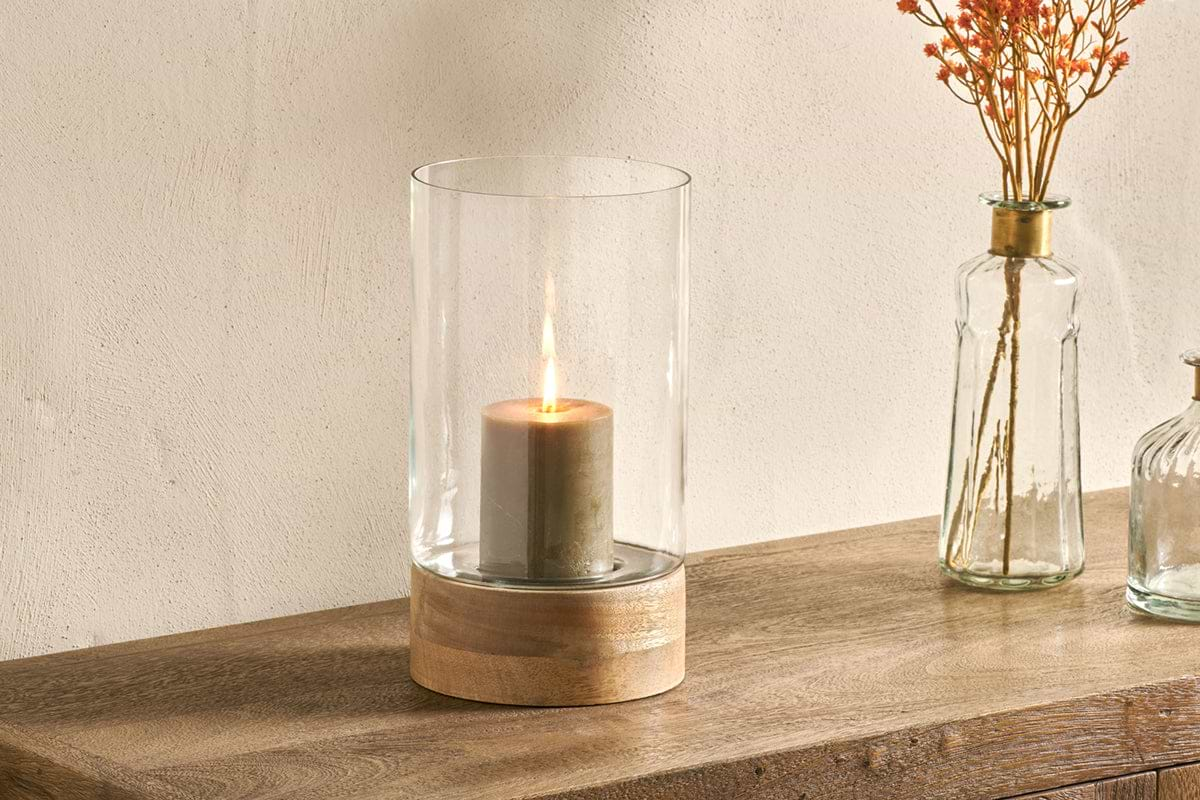
Idha Hurricane Lantern
Straight-sided glass, for candles indoors or sheltered patios.
View at Nkuku →
Some links above are affiliate links. If you buy through them we may earn a small commission at no extra cost to you. We only suggest pieces we think fit a calm, lived-in home.
Free guide
The Calm Shelf
12 styling ideas to help you compose calm, balanced shelves in natural texture homes.