

Open shelves quickly fill with odd trinkets, and end tables become catch-alls for mail, chargers, and worn-out candles. Many people want handmade details, but the results can look busy or uneven, not calm or inviting.
Today, this guide walks step-by-step through making and styling handmade decor that actually improves a room—by using natural materials, keeping one focus, and placing pieces with intention. This works especially well in a small living room when there’s limited space because it forces you to pare back and select only what you really like.
The short version: Handmade home decor feels right when you choose one material, keep the shape simple, and give it room to breathe. Try fewer, larger items with natural textures and you’ll avoid the usual clutter or craft-store look.
- What makes handmade decor feel calm, not crafty?
- Where this works best
- How do you choose natural materials for DIY home decor?
- What’s the easiest handmade decor idea for beginners?
- Styling and placement
- How do you keep a handmade vignette from looking cluttered?
- Why handmade home decor is better when it’s imperfect

What makes handmade decor feel calm, not crafty?
Handmade decor looks more refined when it’s kept simple and made from a natural material like clay, linen, or wood. Grouping just one or two larger pieces leaves the space feeling intentional instead of busy.
On a living room sideboard, a chunky clay bowl or a set of hand-formed candle holders draws the eye and leaves enough negative space to avoid feeling crowded. Paired with natural fabrics, these pieces soften the look and don’t take over the room.
Using a single type of material, like all wicker or all unfinished wood, keeps everything grounded. A shelf full of multiple colored jars and fabric scraps has a mismatch of textures and looks jumbled, whereas repeating one main texture makes a room feel finished.
The reason simple, handmade pieces work is that the natural surface and slight flaws (a swirl in the clay, an uneven rim) show a human touch, which adds warmth. Compared to bright plastic or perfect store-bought decor, these pieces blend better with soft lighting and calm palettes.
Try setting a hand-shaped clay bowl at the end of a dining table, leaving the rest empty except for a folded linen runner. The bowl becomes the focus, and everything feels more relaxed and less patterned.
Where this works best
Handmade home decor works in any room, but it stands out most in smaller or busier spaces where too much visual noise easily creeps in. Focusing on a single spot gives each piece room to show its character.
Entryways with floating shelves or compact consoles highlight pieces like a single tall vase, rough pottery, or a woven tray. These spots tend to collect clutter, so starting fresh with one or two objects helps set the tone for the whole home.
Bedrooms benefit from calmer details. On a nightstand with little surface area, one large handmade lamp or a small, hand-built ceramic tray for jewelry stands out better than a mix of store-bought organizers. Handmade home decor thrives in these zones where daily routines can easily overrun the space.
Avoid crowding narrow shelves or overusing multiple bright colors in open rooms. A mantel or console can quickly get overwhelmed if every inch is filled, especially under strong lighting. Instead of filling gaps, keep some open space and let one textured piece do the work.
In a narrow hallway, for example, a woven basket on a wall hook looks warmer than a plastic tray, and there’s no sense of crowding. The result is a calmer entry and less mess by the door.
How do you choose natural materials for DIY home decor?
Choose a natural material that feels good in your hand and suits the room’s use—clay, linen, wood, rattan, or wool all work. These age well and don’t look out of place as trends change.
A living room might need something stronger, like a wood bowl or clay planter, while a soft linen runner suits a low-traffic area. Compared to glossy plastics or painted resin, real materials show honesty in their uneven lines, color shifts, and patina as they wear.
The surface of natural clay or rattan absorbs light differently from glass or lacquer. This matters in rooms with overhead light or windows, where softer materials cut down on glare and shine.
A material’s feel shapes the whole space. Linen absorbs moisture and softens over time because it’s naturally absorbent and durable. If the room is used often, these wear patterns add character instead of looking dated.
Place a hand-built clay plate on a dresser or a rattan basket by the couch. Over months, touch and daylight make the piece fit the way you actually live.
What’s the easiest handmade decor idea for beginners?
A hand-rolled clay candle holder or a simple linen wall banner is easy for beginners because it takes few steps and no special tools. Larger, single-surface pieces usually come out looking calmer than a project with many parts.
Making a clay candlestick is one of the lowest-barrier projects. Air-dry clay or oven-bake clay forms easily without a kiln and responds well to smoothing by hand. A natural beeswax candle or two can be pressed in while the clay is still soft.
Crafting a linen wall banner fits minimal homes best. Trim a rectangle, fold the top edge, sew or glue it loosely for a basic pocket, and slide in a found branch or wooden dowel. This suits renters or anyone avoiding paint because it hangs with a single hook or nail.
Most handmade decor ideas that succeed are the ones that aren’t overcomplicated. Unlike papercraft garlands or multistep wreaths, these simple shapes keep a sense of calm. A single clay dish near the window looks warmer than a dozen tiny trinkets spread through a room.
Leave your first project out in the open, on a console or above the bed, to give it presence. Let it stand on its own.

Styling and placement
Keep handmade pieces grounded by giving each one space, repeating textures, and limiting finishes to one or two per group. Place on empty surfaces first, not already-full zones.
A small sideboard quickly fills with lamps, speakers, and piles of mail. Swapping out all but one item, like a handmade iron candlestick beside a linen runner, draws the focus and visually lightens the surface.
Repeating one main material, such as two clay bowls or a clay bowl and a matching candlestick, ties the look together naturally. Multiple colors or mismatched textures distract from the piece you want to highlight.
Placing objects away from the edges leaves “breathing room” so the eye can rest. A white wall banner at head height on a bedroom wall softens sharp shadows, while a low-profile wooden keepsake box centered on a shelf adds weight without adding clutter.
Quick calm checklist:
- Choose one main natural material (clay, linen, raw wood, or rattan).
- Place handmade pieces where they aren’t crowded by daily-use items.
- Stick to a muted or neutral palette—no more than two accent shades.
- Leave empty space around each object to avoid crowding edges.
- Group no more than two handmade items per surface for clear focus.
Try a hand-built bowl on a mantel with nothing around it. The space feels calmer and less cluttered than a run of shop-bought frames.
How do you keep a handmade vignette from looking cluttered?
Use fewer pieces, keep similar textures together, and avoid layering many small objects. Let each handmade item have a clear role—catchall, centerpiece, or accent—never all at once.
On a bookshelf or coffee table, group just a couple of items: a bowl for keys, a plate for matches, or a paired set of candle holders. When everything is small or scattered, the setup reads messy, not calm.
The effect comes from keeping roughly two-thirds of the surface open, with only one or two pieces taking focus. Clutter happens when every unfilled spot is stacked or layered.
Unlike grouping tiny crafts, using a single broad item pulls the whole view together. The room feels larger and less busy. Placing a simple wooden keepsake box on a shelf draws more attention than a collection of small, store-bought trinkets.
As an example, try two iron candlesticks side by side and nothing else on the table—no more mail, no knickknacks—so the pieces stand out.
Why handmade home decor is better when it’s imperfect
Irregular shapes and visible tool marks remind you that a real person made the piece. These soft flaws add comfort and keep rooms from feeling flat or lifeless.
Store-bought vases and bowls are always perfectly round and smooth. Handmade ones often show fingerprints, seams, or a gentle lean, which warms up sharp, cold corners in practical rooms.
The slightly uneven rim on a clay bowl or the frayed edge of a linen runner can feel softer than a perfectly neat edge. These details show craft, not carelessness. Authentic marks of process give a room more warmth than anything mass-produced.
Studies of natural materials show the eye reads repeating patterns as more “machine-made” and ignores them, while irregular details like hand-woven lines catch and hold our attention because of small color and texture shifts.
Try leaving minor marks or a gently tilted profile; over-polishing removes what makes a piece special. A handmade candle holder on a windowsill throws softer shadows than a perfectly finished one, adding comfort to dusk or early morning.
What tends to hold up with handmade home decor
Reviewing rooms and reader stories, the difference between decor that feels calming and decor that feels homemade often comes down to material choice and placement. Clay, linen, and unfinished wood tend to wear in, not out. Decorators often recommend avoiding too many tiny projects; one large, imperfect piece draws the eye and doesn’t add clutter.
Matte or textured finishes are suggested again and again for rooms that get changing light. They hold up to daily use and don’t reflect every shift, helping even a small apartment feel settled over time.
— Mara, Loom & Glow
Common questions
What are some easy handmade pieces that still look intentional?
A short list includes clay bowls, linen banners, handmade candle holders, simple wooden trays, and rattan baskets. Each uses basic techniques, looks sturdy, and fits into calm spaces without extra fuss. One or two handmade objects in a room often feel cleaner than a pile of small ornaments.
What materials do I need for handmade home decor?
The basics are air-dry or oven-bake clay, plain linen fabric, raw wood, rattan, natural wool, and simple hand tools like scissors, a rolling pin, and basic glue. These materials work in most rooms and are easy to finish without special training. Start with just one for simpler projects.
How do I make handmade decor look refined rather than cheap?
Stick to a single main material per project and avoid bright colors or busy patterns. Larger, plain shapes feel more intentional than tiny, detailed work. Leaving empty space around your piece helps it read as a choice, not as filler—this is how decorators often finish calm rooms.
How do you mix handmade pieces into a minimal home without clutter?
Use fewer objects and group by texture or color, not type. Place one or two handmade items in key spots like the entryway table or a shelf, and clear away extras. A strong, well-placed piece looks designed, not accidental, even in the simplest homes.
Explore more calm combinations inside our Shop The Look .
Shop the Look
Two handmade-feeling glass vessels that celebrate imperfect beauty on a shelf or table.
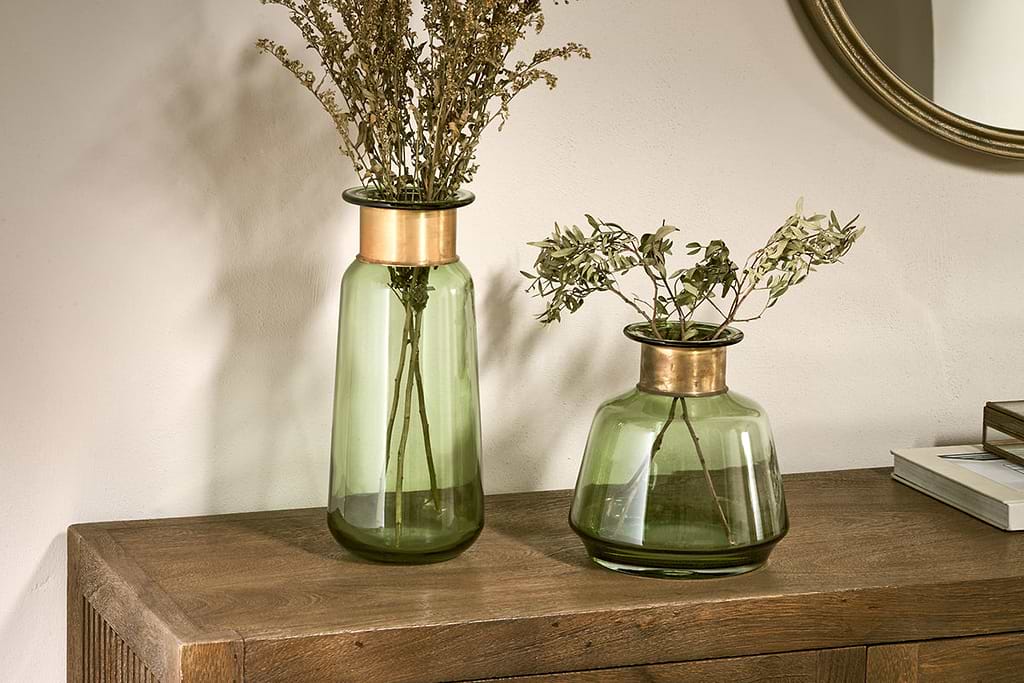
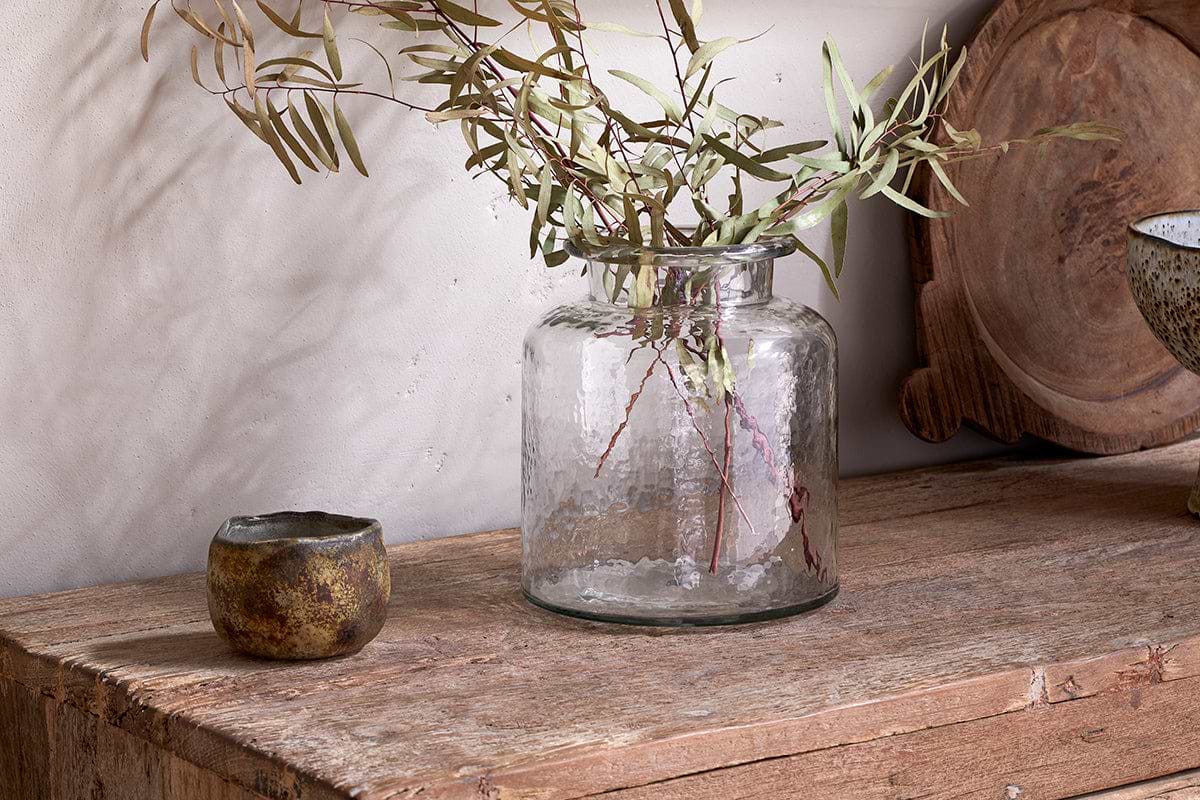
Akra Recycled Glass Vase
Clear cylindrical glass — pairs with stems or sits empty as a quiet accent.
View at Nkuku →Some links above are affiliate links. If you buy through them we may earn a small commission at no extra cost to you. We only suggest pieces we think fit a calm, lived-in home.
Free guide
The Calm Leaf
12 quiet ways to bring dried botanicals, stems, and natural textures into calm spaces.