

If a bedroom feels cramped, it’s often not because of clutter but the way the eye stops short at heavy furniture or blank walls. A full length wall mirror can sound like an obvious fix, but standing in a small room with a long mirror boxed into a corner or hung too high quickly shows how easy it is to get the placement, scale, or style wrong.
Most people want a bedroom that feels light and open, not just functional. Today’s guide is about picking a mirror type, finding proportions that actually read as full length, and choosing a calm frame—all to make the best use of your wall and natural light. This works especially well in small bedrooms when corners feel boxed-in because a clean, well-placed mirror can trick the eye into seeing twice as much space.
The short version: A full length wall mirror, if hung close to the floor and in line with common sightlines, makes a bedroom feel larger and lighter without crowding the space. Find the right type, frame, and spot, and a compact room becomes easier to live in and keep calm.
Key takeaways
- A full length wall mirror reflects more natural light than any lamp, brightening small bedrooms without adding bulk or glare.
- A wall-mounted mirror is more stable than a leaning one for small or high-traffic rooms, according to rstore’s expert categorisation.
- The best mirror size reads as full length when it shows your entire figure from a normal standing position.
- Oak, rattan, and soft brass frames age gently and stay calm in neutral rooms, while gloss black or mirrored frames can feel harsh in low light.
- Rental-friendly options exist that let you hang or lean a full-length mirror without damaging the wall.
- Where this works best
- What size actually reads as full length?
- Wall-mounted or leaning: which type actually suits your space?
- How do you hang a full length mirror without damaging a rented wall?
- Frame finishes that feel calm for years
- Styling and placement
- Why does a full length wall mirror do more for small rooms than a bigger lamp?

Where this works best
A full length wall mirror works best in bedrooms, hallways, and entryways where space is tight and natural light is limited. The right mirror makes a narrow or windowless spot feel bigger and less boxed in.
Bedrooms in shared homes or old flats often end up with just enough wall for a dresser and bed, but not much else. Many skip a full-length mirror thinking there’s no space, only to end up crowding a cheap standing model in front of the wardrobe. Instead, wall-mounting a slim profile mirror along a clean stretch—even behind a door—lets you get the function without using any floor.
In a small entryway, a wall-mounted mirror helps spot shoes or check your coat without needing a bulky hall tree. The mirror bounces whatever daylight is left, and the glass reads airy, not solid. Unlike a wide mirror hung too high, a tall mirror close to the skirting board tricks your eye into reading the wall as longer than it is.
Avoid mounting a full length wall mirror directly facing a cluttered shelf. All those reflections double the mess and make the room look busier, not bigger. Instead, use it opposite a blank wall, a clean window, or a simple bedside setup for the best effect. A full length mirror in these spots changes the sense of space without adding objects to clean around.
What size actually reads as full length?
A mirror reads as full length when, mounted vertically, it shows your entire figure from head to toe from a normal standing spot. Most adults need a mirror roughly as tall as their body, starting close to the floor.
Many major brands agree that for a mirror to read as “full length,” it should show your whole body—not just your face. That means a tall rectangle, usually at least as long as your own height, and hung so you don’t see a gap at your feet. According to IKEA’s large mirrors range, a wall-mounted mirror that sits just above the floor with no tall frame works for most average-height people.
If a mirror is too short or starts too high, you see a cropped version of yourself and the wall behind stays bare. Unlike a wide decorative panel, a true full length mirror runs nearly the full vertical space you have, almost like a door. A floating or art-size mirror may look dramatic, but it rarely shows shoes or longer clothes and can make routines awkward.
Mirrors called “cheval” or “standing full length” tend to come with a frame that props up on its own, while “wall-mounted full length” refers to mirrors with a slim back for hanging. Both can work, but the goal stays the same: if you can stand four or more steps away and see your whole reflection to the floor, it’s the right size for daily use.
Wall-mounted or leaning: which type actually suits your space?
Wall-mounted mirrors are safer and save floor area in narrow or busy rooms, while leaning mirrors give a casual look and move easily if you rearrange. The type depends on your floor space and how many people pass by.
In tiny flats, a wall-mounted full length mirror gives you all the reflection you need with zero footprint. These are fixed directly to the wall or door, which means nothing to trip over—a better choice if children run through or if your floor stays cluttered. Most shops such as rstore separates its mirror range into “wall-mounted” for stability and “standing” for flexibility, and frames tend to be thinner on the wall versions.
Leaning mirrors, with chunky frames or back stands, can look easygoing and work if you like to shift things around or redecorate, but in a small bedroom, these eat floor space and dominate close by beds or doors. Unlike a fixed wall mirror, a leaning one risks tipping if bumped or if shoes pile against the base. If you need to hide wall marks in a rental or just want to avoid new holes, leaning works—but every time you vacuum, you’ll have to move it.
Table: Wall-mounted vs. Leaning Full Length Mirrors
| Type | Pros | Cons |
|---|---|---|
| Wall-mounted | Stable, no floor space, safe for kids | Needs drilling or secure fixings |
| Leaning | Flexible, no wall damage, easy to move | Takes floor space, can tip if bumped |
If you have a boxy bedroom with furniture close together, a wall mount makes sense. In a spare room or large hallway, leaning can add more visual weight—just place it where nothing blocks the base and you aren’t likely to knock it over.
How do you hang a full length mirror without damaging a rented wall?
The safest way to hang a full length wall mirror in a rented room is to use stick-on hooks, reliable adhesive strips, or floor-leaning mirrors placed against a wall with non-slip pads to prevent sliding.
Rental rules often block drilling holes, leaving many people thinking they can’t have a full length wall mirror. Luckily, heavy-duty adhesive strips—rated for mirrors—offer a fix on painted plasterboard or wood. These strips come away clean if you move out, according to most damage-free mounting guidelines. Heavier mirrors may still need support from the floor, so placing the base on the ground and anchoring up top with removable hooks takes weight off the wall.
Wall surfaces matter. Adhesive and hooks grip best on smooth, matte paint and can peel on textured plaster or brick. Unlike command-stripped posters, a mirror pulls down hard if pressed. Always use strips rated for mirrors or “large frames”—not all general adhesive strips will hold a glass object safely.
If you need something completely loose, a freestanding mirror, such as the “KARMSUND” in IKEA’s large mirrors collection, is light to move, but even then, non-slip furniture pads at the feet stop sliding. For rental safety, always check your agreement before using screws or permanent fixtures.

Frame finishes that feel calm for years
Simple frames in oak, rattan, soft brass, or matte black tend to feel gentle and do not overpower a small room, while mirrored or glossy plastic frames often read cold or busy over time.
The finish you choose on a full length wall mirror does more than just match decor—it changes how the mirror blends in or stands out. Wood frames, especially pale oak or soft ash, soak up light and bring a gentle grain. Rattan frames add texture without much weight and work nicely in relaxed bedrooms. Brass, especially brushed or matte, gives a subtle glow that warms up the reflection, rather than bouncing glare like chrome.
While black frames can work, they often pull the eye harder than wood or rattan, so they’re best on a wall that’s otherwise bare or neutral. Unlike a mirrored frame, which picks up fingerprints, or a plastic gloss, which can feel sharp in low light, a soft finish lasts longer and hides wear better. According to Perch & Parrow’s mirror range, wood and MDF frames each carry dozens of styles, but MDF can chip near the corners and rarely feels as steady under touch as solid oak.
Concrete frames, now popping up in some shops, bring a sculptural look but feel heavy and risk smudges. For the bedroom, frames that fade quietly into your color palette—the way the Kiko Brass Frame does—make calm last. In a bright spot, pale wood and soft brass hide both dust and the wear of daily fingerprints, while glossy or dark frames need more cleaning to hold that new look.
Styling and placement
Placement should let the mirror reflect open space or a clean window, not clutter or odd corners. Keep nearby decor minimal—a mirror already draws the eye and can anchor a room on its own.
Many struggle with where and how to place their full length wall mirror, especially in small bedrooms that double as laundry spots or storage. The cleanest look is to start with one open wall. Position the base of the mirror just above the skirting, so it looks built-in. If there aren’t many empty walls, try to hang it where it won’t reflect piles of clothes, wires, or kitchen bins—a mirror doubles everything it sees.
Unlike artwork, which can sit higher, a mirror needs to show your whole self from only a step or two away. Try not to bracket it with tall bookshelves or a wardrobe crowding up to one edge—a lone mirror surrounded by heavy furniture looks boxed in, not calm. If the room feels flat, a linen curtain or woven storage basket near the base softens the edges and gives the glass a friendlier position.
Surrounding objects matter. A naked mirror on a color-drenched wall stands out more than on off-white, beige, or gentle sage. Even a slim brass or oak frame can read loud if stationed right beside something bold. When mirrors, textiles, and lighting are all quiet, the space breathes. Try pairing a small jute rug in front, or a ceramic bowl nearby for keys, for a gentle setup. For more detail on balancing a single object in tight spots, see entryway styling and styling small rooms for calm.
Quick calm checklist:
- Choose frames in oak, rattan, or softly brushed brass for a natural, quiet finish.
- Hang or lean the mirror so your whole figure is visible just above the floor, not floating mid-wall.
- Keep the area around the mirror clear—a potted plant or woven basket at the side, not blocking the view.
- Stick to a gentle palette; avoid mirrors facing colorful bedding or a laundry pile.
- Don’t crowd with extra wall hooks or heavy frames nearby—give the glass space to read as a focal point.
A full length wall mirror, paired with minimal styling and natural finishes, brings both function and breathing room to any spot where you stop to dress or check out the day’s look.
Why does a full length wall mirror do more for small rooms than a bigger lamp?
A full length wall mirror reflects daylight and stretches the sense of floor space, while a bigger lamp only brightens one area and adds bulk that can crowd a small room.
Natural light, even on a cloudy afternoon, bounces and moves deeper into your space when a tall mirror faces a window or pale wall. Unlike a lamp, which stops light at the shade, a full length mirror makes sunlight feel more generous across the whole room. This has a real impact in small flats or bedrooms with only a sliver of glass—not just by brightening, but by making walls recede. For small spaces where energy bills matter, using daytime light efficiently can even let you use lamps less often.
The physical footprint of a tall lamp, especially styles with wide shades or visible cords, easily eats up an entire bedside or floor corner. A wall mirror does its work flat to the wall, so dressers and beds can stay closer to each other. The difference is clear as soon as you try rearranging—what seemed the only spot for a lamp often becomes open when a slim mirror takes the wall.
Compared to adding more objects, even nice ones, a mirror keeps a room feeling clear. Most decorators favour one strong reflective surface in small bedrooms instead of a cluster of lights and decor. If sunlight is your best free asset, using a mirror lets you paint with nature instead of running another extension cord for brightness.
What tends to hold up with styling full length wall mirrors
Reviewing thousands of bedrooms and hallway photos, a few patterns repeat: mirrors with slim, pale frames and clear glass work across the most room shapes and last longest in style. Heavy or glossy frames, though smart in showrooms, often feel cold or streaky in everyday use, especially near windows. Matte brass, oak, and rattan keep their calm finish even as fingerprints or dust build up week to week.
Decorators almost always recommend letting a wall mirror anchor one spot, not share the wall with lots of hooks or clashing art. Giving the mirror space to breathe keeps a room lighter and the mirror easier to clean. A wall mirror is a practical tool, not just an accent: everyone uses it, so the finish and placement ought to make sense in real daily light.
— Mara, Loom & Glow
Common questions
What are full-length mirrors called?
Full-length mirrors are often called “full length wall mirrors,” “standing mirrors,” or “cheval mirrors.” These terms describe mirrors tall enough to show your entire body while standing. The term “wall-mounted” refers to ones fixed on a wall; “leaning” means they rest on the floor.
Where can I get a full-length mirror?
You can find full-length mirrors at home furnishing stores and online shops. Several UK retailers—such as IKEA’s large mirrors and Melody Maison’s full-length collections—offer a wide range of sizes and styles. Always check delivery terms and product material before ordering.
Can you hang a full-length mirror on a wall?
Yes, you can hang a full-length mirror on a wall using appropriate fixings or adhesive strips. Wall mounting is often the safest option for small or high-traffic rooms, especially with children or pets. Always follow manufacturer instructions and make sure your wall can hold the weight safely.
Are full-length mirrors slimming?
Full-length mirrors do not naturally “slim” your reflection; how you appear depends on the quality and flatness of the glass. Some cheaper mirrors may distort the image, creating a slight slimming or widening effect, but most reputable mirrors reflect your body as it actually is.
are wall mirrors still in style?
Wall mirrors remain a practical choice for small bedrooms and spaces. A full length wall mirror, if hung close to the floor and in line with common sightlines, makes a bedroom feel larger and lighter without crowding the space, and reflects more natural light than any lamp.
Explore more calm combinations inside our Shop The Look .
Shop the Look
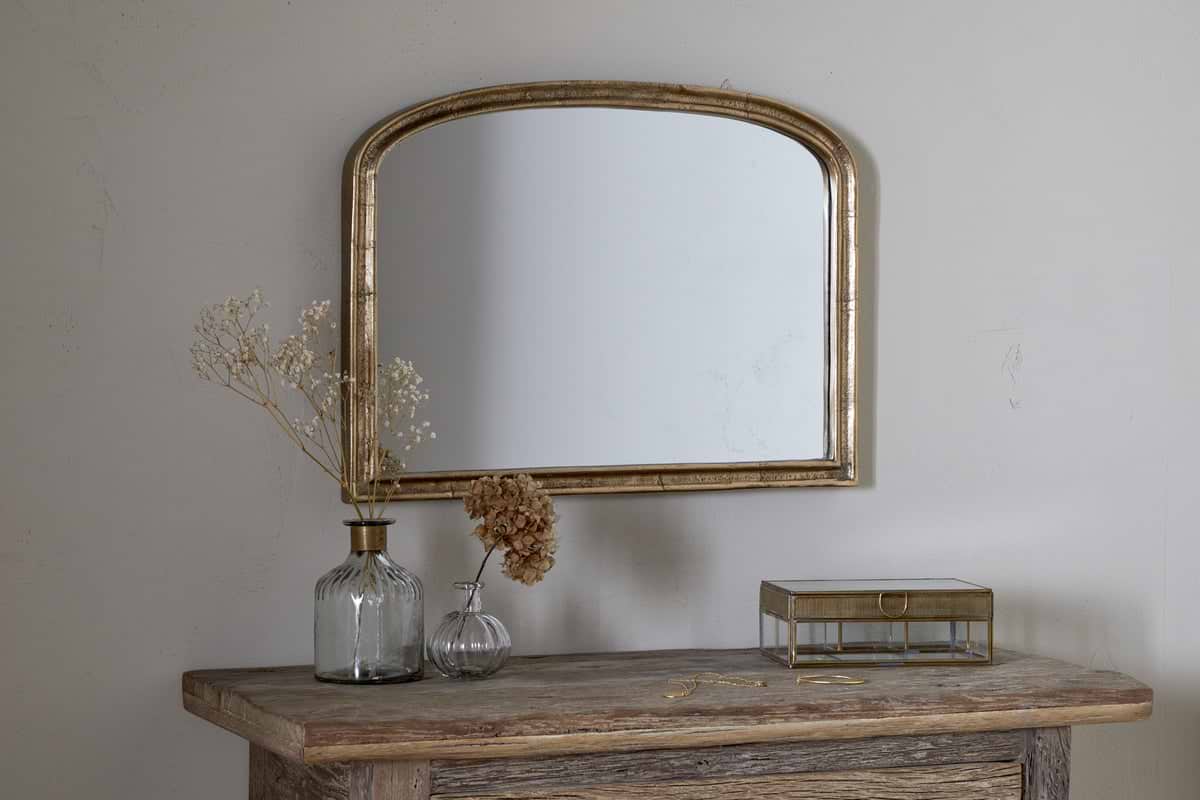
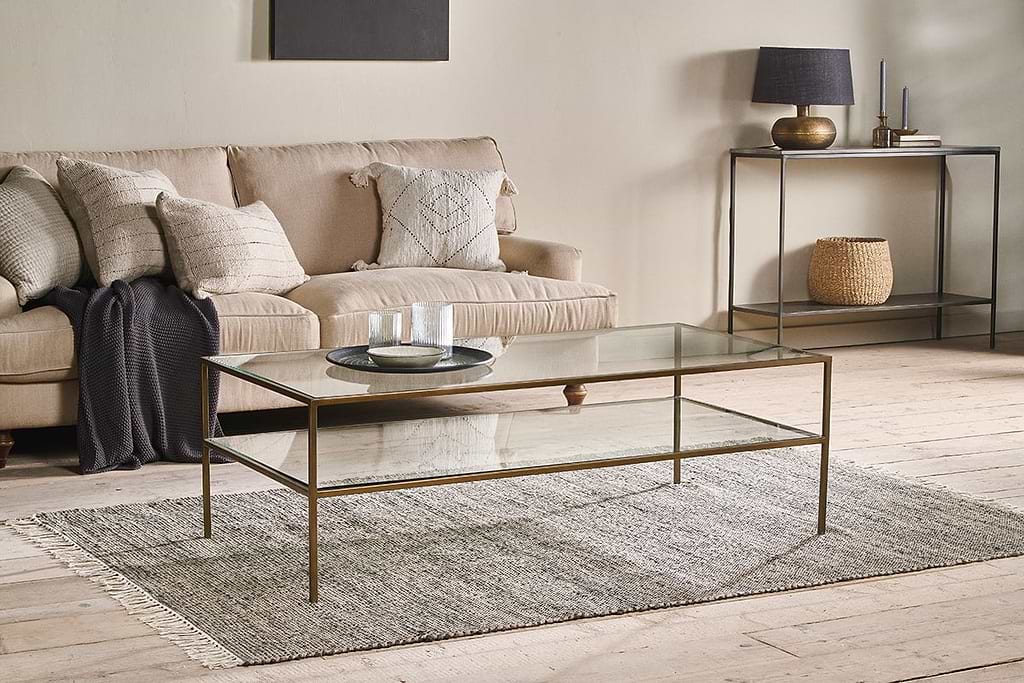
The Almora mirror and Nakuru table work together to open up sight lines without visual clutter.
Some links above are affiliate links. If you buy through them we may earn a small commission at no extra cost to you. We only suggest pieces we think fit a calm, lived-in home.
Free guide
The Calm Shelf
12 styling ideas to help you compose calm, balanced shelves in natural texture homes.